

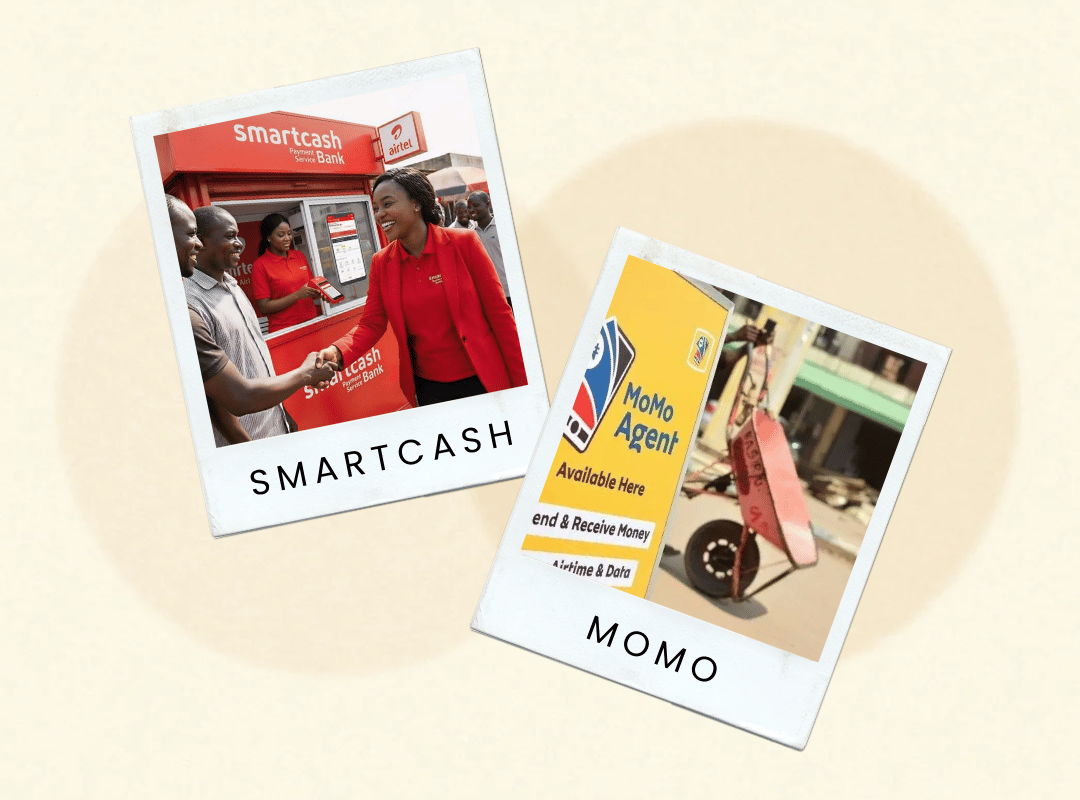
Airtel’s SmartCash is offering Nigerians free transfers and 15% annual interest on savings. MTN’s MoMo Payment Service Bank, meanwhile, has seen its core mobile money revenue more than double, largely because customers are keeping more money in their wallets.
The two companies are pursuing the same opportunity, but recently released figures point to different approaches to building a mobile money business in Nigeria.
For SmartCash, the immediate priority appears to be attracting customers and deposits. For MoMo, the growing value of funds held in customer wallets is already contributing significantly to revenue.
The difference offers a useful glimpse into the economics of Nigeria’s telco-backed payment banks, where attracting customers is only half the battle. The bigger challenge is turning their financial activity into a business that can sustain itself.
SmartCash wants customers to stay. MoMo is earning from the money they leave behind
SmartCash has made price incentives central to its latest growth push. In March 2026, the Airtel-backed payment service bank introduced zero charges on transfers and bill payments, alongside a savings product that offers 15% annual interest, paid daily.
The offer is designed to make the platform attractive to customers who regularly move money or want their balances to earn interest. SmartCash has also promoted cashback on selected transactions, using financial incentives to encourage repeat activity.
SmartCash reported nearly three million active users in March 2026. It defines active customers as those who had transacted within the previous 30 days. By September, Airtel Africa’s half-year results put its Nigerian mobile money customer base at 4.2 million, up from two million a year earlier.
Its Nigerian mobile money revenue also rose from $4 million to $10 million during the six months ended September 2026, a growth of 176.4% in reported dollars.
The customer expansion is encouraging, but Airtel has not provided a detailed Nigerian revenue breakdown that would explain the economics behind the growth.
The figures, however, are not directly comparable. Airtel disclosed $10 million in mobile money revenue for the six months ended September 2026. MTN Nigeria, on the other hand, reported a 102.2% increase in core MoMo PSB revenue for the nine months to September but did not disclose the actual revenue generated by the business. Its ₦97.5 billion fintech revenue covers a wider category that includes MoMo and Xtratime, MTN’s airtime and data advance service.
Meanwhile, MTN attributed the growth mainly to higher income from customer wallet balances, which more than quadrupled to ₦43.8 billion (~$31.36 million) from ₦9.8 billion (~$7.02 million) at the end of December 2025.
The company invested ₦42.55 billion (~$30.47 million) of those customer deposits in treasury bills. That means approximately 97% of the reported wallet deposit balance was invested in the instruments disclosed by MTN.
The results suggest that MoMo is already generating substantial income from the money customers leave on its platform. Its challenge is to keep growing those balances while increasing transaction activity and customer engagement.
Read also: Curb your enthusiasm: payment service banks and financial inclusion in Nigeria
The customer race is not quite what it seems
At first glance, SmartCash appears to have a larger customer base than MoMo. Airtel reported 4.2 million Nigerian mobile money customers, compared with the 3.2 million monthly active users MTN reported for MoMo PSB at the end of September.
However, MTN’s 3.2 million figure covers customers on its new Alipay+ platform, which it adopted in August. The company said migration from legacy wallets was still underway.
There is also a difference between attracting a customer and building a relationship that generates revenue. SmartCash’s zero-fee transfers and savings incentives may help it acquire users and deposits.
MoMo’s results offer stronger evidence of income from wallet balances. But neither company has disclosed the real revenue from individual wallets.
The real competition is for deposits, activity and loyalty
Both businesses operate as payment service banks, which gives them an opportunity to use their parent telecom companies’ distribution networks and customer relationships to expand financial services.
However, their strategies raise different commercial questions. For SmartCash, the question is how long it can sustain a 15% savings return and free transactions while building a larger customer base. The bank needs to generate enough income from its deposits and payment activities to support those incentives.
For MoMo, the question is whether higher wallet balances can translate into sustained income while the company grows its active user base. Its move to the Alipay+ platform is intended to provide a more scalable foundation for a broader digital financial services business. At the end of September, MTN reported 3.2 million monthly active users on the new platform, with transaction volumes in the third quarter up 69.1% from the second quarter.
Neither strategy is guaranteed to produce a stronger business. A high savings rate can attract deposits, but deposits alone do not establish profitability. Higher wallet balances can generate investment income, but the business must also retain customers and manage the costs of operating its payment network.
The available disclosures reveal something important about the next stage of competition.
Nigeria’s telco-backed payment banks are competing to become places where customers keep money, pay for everyday services and return frequently enough to create a sustainable source of income.
Last updated: November 12, 2026