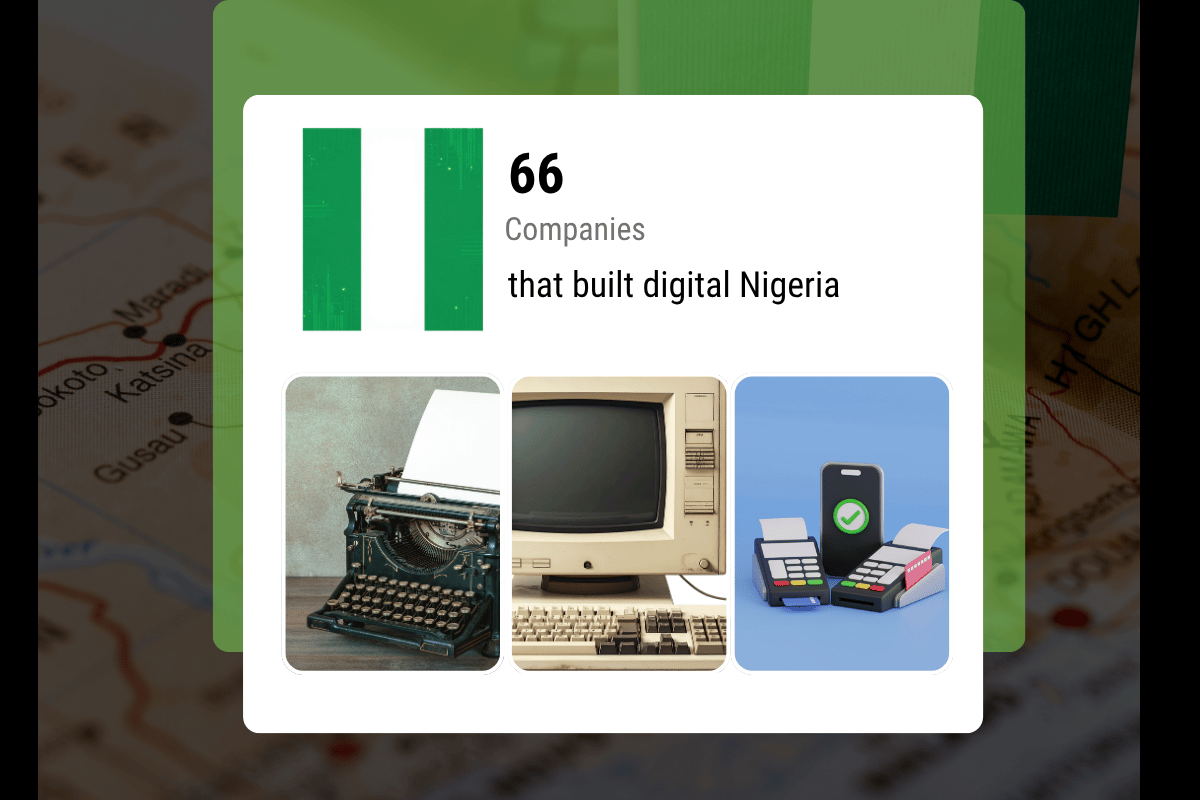
Nigeria’s digital history did not begin with startups raising venture capital.
Long before fintech apps and cloud infrastructure, there were typists, mainframes, telephone exchanges, computer distributors, systems integrators and engineers building the machinery of a modern economy.
Nigeria’s digital evolution is a 66-year relay race, and as the country turns 66, we look back at history.
This is a chronological sweep of the companies, institutions and infrastructure builders that carried the baton, from the first generation of computing and telecommunications to today’s fintech, commerce and diaspora platforms.
Era 1 (The foundations: 1960s–1987)
Sovereign administrative, postal, early telecoms, and the initial corporate hardware/software footprint.
1. National Cash Register Plc
What it is: One of Nigeria’s oldest ICT companies
What independence it unlocked: Pioneered automated teller machines with the first ATM in 1989 and electronic transactions.
2. IBM Nigeria
What it is: The local operating subsidiary of the global computing titan that deployed the earliest mainframe and enterprise computing systems to the Nigerian public sector and universities.
What independence it unlocked: Unlocked advanced institutional data processing, introducing the first heavy-duty computing power to government ministries, telecoms, oil/gas and higher education.
3. Siemens Nigeria
What it is: German engineering giant.
What independence it unlocked: Before GSM, Nigeria needed automatic telephone exchanges; Siemens, along with other companies, built them across the country in the 70s. Siemens also supplied power plants, small gas turbines and compressors for oil/gas.
4. Data Sciences Nigeria Ltd
What it is: The FIRST indigenous computer company in Nigeria and the first to be owned, managed, and staffed by Nigerians.
What independence it unlocked: Before Data Sciences, all computer companies in Nigeria were owned by foreigners. Data Sciences proved a Nigerian could own the means of computation, and its staff founded many other indigenous companies, including CWG and Zinox.
5. Olivetti Nigeria
What it is: A national distributor of typewriters and calculators.
What independence it unlocked: In 1960, Nigeria had independence on paper, but files were still handwritten by colonial clerks. Olivetti unlocked the ability to produce documents as a modern state. Before we had programmers, we had typists.
6. International Computers Ltd
What it is: The main rival to IBM and NCR in Nigeria, it supplied the ICL 1900 Series mainframe to the University of Ife, the first mainframe in a Nigerian university.
What independence it unlocked: ICL unlocked human capital. Most of Nigeria’s first systems analysts were trained on the ICL 1900. Those analysts went on to found Data Sciences, INLAKS, Chams, and CWG.
7. International Telephone & Telegraph (ITT) Nigeria
What it is: Local subsidiary of the American telecommunications firm. It played a major role in Nigeria’s telecoms history in the 1970s.
What independence it unlocked: Before ITT, Nigerians had to go through an operator to make long-distance calls. ITT installed automatic telephone exchanges that made direct long-distance dialling possible. When NITEL was formed on January 1, 1985, it inherited many of the exchanges ITT had built.
8. Nigerian Postal Service (NIPOST)
What it is: The state-backed national postal and logistics agency.
What independence it unlocked: Unlocked physical reach, creating the foundational logistics, mail routing, and addressing network for early national commerce and governance.
9. Nigerian Telecommunications Limited (NITEL)
What it is: The defunct national telecoms provider that controlled landline and early gateway infrastructure.
What independence it unlocked: NITEL unlocked early voice and landline connectivity, laying the primary state-controlled grid for national telecoms before its ultimate collapse.
10. Inlaks
What it is: Technology infrastructure and system integration powerhouse that supplied core banking applications and hardware to major financial institutions.
What independence it unlocked: Inlaks unlocked core banking technology distribution, supplying the robust ICT backbone required to run institutional finance.
11. Chams Plc
What it is: One of Nigeria’s oldest indigenous information technology, identity management, and smart card technology companies.
What independence it unlocked: Chams proved local capacity for large-scale citizen verification and transactional systems. It is famous for pioneering the first e-payment card in Nigeria — Valucard.
12. Telnet Nigeria
What it is: An early pioneer in custom telecoms engineering, networking, and enterprise infrastructure integration.
What independence it unlocked: Unlocked specialised corporate engineering solutions, reducing reliance on foreign technical contractors for enterprise communications.
13. Task Systems
What it is: An indigenous information technology distribution and desktop computing pioneer founded by Leo Stan Ekeh.
What independence it unlocked: Unlocked structured corporate IT procurement, bringing localised desktop computing and professional software tools directly to Nigerian corporate offices including companies like Total, Shell, and Chevron.
Era 2 (The PC, Software & Internet Era: 1988 – 2002)
Nigeria stops importing mainframes and starts assembling PCs, writing banking software, and connecting to the Internet.
14. Omatek Computers Ltd
What it is: The first factory-assembled PC maker in Africa.
What independence it unlocked: Hardware manufacturing independence — the first “Made in Nigeria” computer on a box.
15. SystemSpecs LTD
What it is: Built the HR/payroll software SpecMan and later Remita/PayDirect.
What independence it unlocked: Software and fintech independence. SystemSpecs was one of the first Nigerian software running through all banks.
16. Computer Warehouse Group (CWG) PLC
What it is: DELL reseller, grew to become Nigeria’s largest systems integrator.
What independence it unlocked: Systems integration independence — moving Nigeria from simply buying computers to deploying and running complete enterprise systems.
17. Nigerian Communications Commission (NCC)
What it is: Created by Decree 75 of 1992, the NCC is Nigeria’s telecommunications regulator.
What independence it unlocked: Regulatory independence — it unlocked licensing for private telcos and GSM.
18. Cyberspace Network Limited
What it is: One of Nigeria’s first ISPs offering dial-up internet over NITEL lines.
What independence it unlocked: Internet access independence — helping Nigerian businesses get online, use corporate email, and browse the web.
19. Linkserve Limited
What it is: The first private company to commercially connect Nigeria to the internet.
What independence it unlocked: Commercial internet independence. It proved private ISPs could operate outside NITEL.
20. Computer Village, Ikeja
What it is: An open market cluster in Ikeja that organically transitioned from a residential and artisan area into Africa’s largest technology market.
What independence it unlocked: Retail and repair independence by creating a nationwide hub where any phone, computer or accessory could be bought, sold or fixed.
21. Private Telecom Operators
What it is: Intercellular, Multi-Links, and Starcomms offered fixed wireless connections after getting licensed by the NCC between 1998 and 2000.
What independence it unlocked: Pre-GSM competition independence. They were the first alternatives to NITEL landline.
22. Technology Distributions Ltd
What it is: Technology solutions distributor for HP, Microsoft, and IBM.
What independence it unlocked: Distribution independence. TD Africa built a national channel to move tech to every city.
23. Zinox Technologies Limited
What it is: First internationally certified computer manufacturer in Nigeria.
What independence it unlocked: Certified manufacturing independence – mass-produced Nigerian PCs with Intel/Microsoft certification.
24. National Information Technology Development Agency (NITDA)
What it is: Government agency created to regulate and develop information technology in Nigeria.
What independence it unlocked: IT policy independence by creating the framework for IT development and local content.
25. Econet Wireless Nigeria now Airtel Nigeria
What it is: Telecoms company
What independence it unlocked: Mobile independence. Alongside MTN Nigeria, Econet moved Nigeria from 450,000 NITEL lines to 100m+ mobile lines.
26. MTN Nigeria Communications PLC
What it is: Nigeria’s first GSM operator to launch commercially.
What independence it unlocked: Mobile connectivity independence. MTN took Nigeria from a limited landline network to mass-market mobile communication and made it possible for millions of Nigerians to connect by phone.
27. ipNX Nigeria
What it is: Pioneered fibre-to-the-home.
What independence it unlocked: Broadband independence — moved Nigeria from dial-up to fibre.
Era 3 (The Portal, Payments & Broadband Era: 2002 – 2010)
This is the era where Nigeria stopped just connecting and started transacting. GSM had put phones in hands. Era 3 asked, ‘What can we do with it?’
28. Interswitch Ltd
What it is: Payment infrastructure provider that built Nigeria’s first shared ATM and POS network.
What independence it unlocked: Electronic payments independence by making it possible for any bank card to work at any ATM in Nigeria.
29. SocketWorks Ltd
What it is: Software development company focused on enterprise solutions.
What independence it unlocked: Enterprise software independence by providing locally built platforms for businesses and government.
30. Globacom
What it is: Nigeria’s second national carrier that launched on per-second billing.
What independence it unlocked: Pricing independence by crashing SIM costs from ₦25,000 to ₦500 and introducing per-second billing, forcing MTN and Econet to drop prices.
31. eTranzact Ltd
What it is: It is Nigeria’s first multi-channel electronic payment platform company.
What independence it unlocked: Multi-channel switching independence by enabling payments across ATM, mobile, internet and POS.
32. Nairaland
What it is: Nigeria’s largest online discussion forum.
What independence it unlocked: Community independence by giving Nigerians the first large-scale platform to discuss anything online.
33. Galaxy Backbone
What it is: Federal government’s ICT infrastructure and shared services provider.
What independence it unlocked: Unlocked government digital independence by providing unified internet and hosting for all MDAs.
34. Etisalat Nigeria now T2
What it is: Nigeria’s fifth GSM operator, launched with the 0809ja number series and one of the country’s earliest 3.5G mobile data networks.
What independence it unlocked: Data price independence by making cheap 3G data, BlackBerry plans and youth-focused bundles mainstream, forcing Glo, MTN and Airtel to crash data prices and introduce affordable bundles.
35. MainOne Cable
What it is: Submarine fibre cable company that landed the first private subsea cable on the West African coast.
What independence it unlocked: International bandwidth independence by crashing the cost of internet access from satellite to fibre.
36. Wakanow
What it is: Nigeria’s first major online travel booking platform.
What independence it unlocked: E-commerce independence for travel by proving Nigerians would pay online for flights and hotels.
37. Nairabet
What it is: Nigeria’s first full-fledged online sports betting platform.
What independence it unlocked: Online betting independence — giving Nigerians a local platform to place sports bets online instead of relying on foreign-based intermediaries.
38. Jobberman
What it is: Nigeria’s first major online job placement and recruitment portal.
What independence it unlocked: It unlocked employment search independence by moving recruitment from newspaper classifieds to online.
39. Co-Creation Hub (CcHUB)
What it is: Nigeria’s first technology innovation hub and pre-incubation space in Yaba.
What independence it unlocked: Startup incubation independence by giving developers and founders a place to build together.
Era 4 (The Streaming, Commerce & Fintech Boom: 2011 – date)
If era 3 proved Nigerians could pay and post online, era 4 proved they could build BIG businesses online.
40. iROKO Partners/iROKOtv
What it is: Parent company built Africa’s first major Nollywood streaming platform.
What independence it unlocked: Content streaming independence by proving African content could be paid for online globally.
41. YabaCon Valley — Yaba Tech Cluster
What it is: A geographic cluster of startups and tech hubs in Yaba, Lagos.
What independence it unlocked: Startup cluster independence — creating Nigeria’s version of Silicon Valley, where founders, developers and tech companies could work side by side, share ideas and build together.
42. Paga
What it is: Nigeria’s first major mobile money and agency banking company.
What independence it unlocked: Mobile money independence and the first proof that you could send money with just a phone number. Before banks understood agency banking, Paga built the first agent network that OPay and Moniepoint later scaled.
43. Konga
What it is: One of Nigeria’s first large-scale e-commerce marketplaces.
What independence it unlocked: Online retail logistics independence by building warehousing and delivery for e-commerce.
44. Jumia Nigeria
What it is: Africa’s largest e-commerce marketplace operating in Nigeria.
What independence it unlocked: Marketplace independence — making online shopping accessible to millions of Nigerians and proving that e-commerce could work at scale.
45. Motomedia Ltd
What it is: An innovative out-of-home advertising company with operations in Lagos and Nairobi.
What independence it unlocked: Digital OOH independence — introducing interactive LED billboards to Nigeria and moving outdoor advertising beyond static displays.
46. Hotels.ng
What it is: Nigeria’s first major online hotel booking platform.
What independence it unlocked: Hospitality e-commerce independence by digitising hotels across the country.
47. Andela
What it is: A global talent accelerator that trained African developers for international companies.
What independence it unlocked: Talent export independence, proving Nigerian and African developers could work for leading global companies, and creating a pathway for local tech talent to access international jobs remotely.
48. Printivo
What it is: Nigeria’s first online printing marketplace and design-to-print platform.
What independence it unlocked: SME printing independence by moving printing orders away from physical visits and online.
49. Uber Nigeria
What it is: The first foreign-owned ridehailing company in Nigeria.
What independence it unlocked: E-hailing independence — making it possible for Lagosians to order rides through an app.
50. Paystack
What it is: An online payment infrastructure for businesses.
What independence it unlocked: Developer-first payments independence — making it possible for businesses to start accepting online payments quickly through simple, developer-friendly tools.
51. TeamApt/Moniepoint
What it is: An agency banking and business banking platform.
What independence it unlocked: Offline fintech independence by powering POS agents in every local government.
52. Flutterwave
What it is: Payment infrastructure provider building rails for global payments from Africa.
What independence it unlocked: Pan-African payment independence by making it possible for African businesses to receive money from anywhere.
53. Bolt Nigeria
What it is: Estonian ride-hailing and delivery platform that localised faster and cheaper than Uber.
What independence it unlocked: Gig mobility independence — expanding ride-hailing beyond cars to include keke, okada and delivery services, making app-based transport more accessible across Nigeria.
54. PiggyVest
What it is: Savings and investment platform that started as Piggybank.ng.
What independence it unlocked: Retail savings independence — bringing Nigeria’s everyday savings and thrift culture into a digital format.
55. Carbon
What it is: Pioneering digital lender and consumer finance bank.
What independence it unlocked: Digital credit independence — making it possible to access small loans instantly without collateral or a bank visit.
56. LifeBank
What it is: Medical logistics platform that delivers blood and oxygen.
What independence it unlocked: Healthtech logistics independence by using technology to solve blood shortages.
57. Farmcrowdy
What it is: Digital agriculture platform that connects farmers to investors and buyers.
What independence it unlocked: Agritech crowdfunding independence by creating a model for funding smallholder farmers online.
58. Thrive Agric
What it is: Agritech company providing finance, data and market access for farmers.
What independence it unlocked: Agritech value-chain independence — giving farmers access to financing, data and markets in one digital platform.
59. Kobo360
What it is: Digital logistics and trucking platform.
What independence it unlocked: Freight logistics independence by matching truck drivers with cargo owners via app.
60. FairMoney
What it is: Privately held digital lending platform and CBN-licensed microfinance bank.
What independence it unlocked: It unlocked credit-to-bank independence by turning phone-based instant loans into a full bank for the underbanked.
61. OPay
What it is: Financial services provider offering payments, savings and agency banking services.
What independence it unlocked: It unlocked agency banking scale independence by pushing mobile money to the mass market.
62. PalmPay
What it is: Mobile payments and agency banking platform backed by Transsion.
What independence it unlocked: It unlocked mobile-first payments independence by leveraging phone distribution to drive financial inclusion.
63. Kuda Bank
What it is: Nigeria’s first licenced digital-only bank with no physical branches.
What independence it unlocked: Neobank independence by proving Nigerians would trust a bank that lives only on their phone.
64. Cowrywise / Bamboo / Risevest / Chaka Cluster (2017-2020 to date)
What: A cluster of SEC-licenced retail investment apps that let Nigerians buy US stocks.
What independence it unlocked: Retail investing independence by letting any Nigerian with NGN5,000 own fractional shares of Apple, Tesla and Google from Lagos.
65. Quidax
What: Pioneering crypto exchange that made crypto trading mainstream.
What independence it unlocked: Crypto asset independence — giving Nigerians new ways to buy and trade digital assets such as Bitcoin and USDT.
66. LemFi
What it is: Diaspora remittance fintech built by Nigerians for the diaspora.
What independence it unlocked: Remittance independence by making it cheaper and faster for Nigerians abroad to send money home.
Last updated: October 1, 2026