

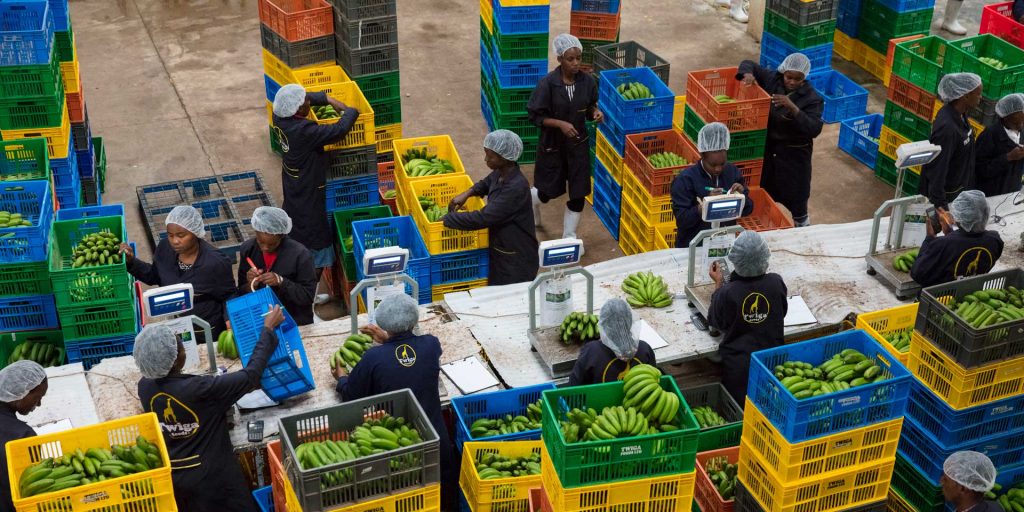
Twiga Foods, a Kenyan business-to-business food distribution company, has entered administration. The company never became profitable in its 12-year history, despite raising about $185.4 million and becoming one of Kenya’s most funded startups.
GT Flow Limited, formerly known as Twiga Foods One Limited, was placed under administration on August 17 with Mohamed Mohamed appointed administrator.
He now controls the company’s assets and management affairs. Under the notice, company directors can no longer deal with the firm’s assets unless he permits them. The move is meant to help recover money owed to suppliers and other creditors.
Twiga Foods was founded in 2014 to connect farmers and food suppliers directly to small urban shops and kiosks, cutting out middlemen. It raised funding from major investors over the years but never turned a profit.
Read: Uber alum’s floating nuclear startup raises $50M weeks after $10M pre-seed
By late 2023, the pressure was visible. Co-founder Peter Njonjo closed a $35 million bond deal to help the company pay suppliers, then took a sabbatical before stepping down from the board in early 2024. Former Jumia executive Charles Ballard took over as CEO, and more layoffs followed through 2024.
In 2025, Twiga tried to reset its business model. It acquired three fast-moving consumer goods distributors and began setting up a new holding company, referred to internally as “newco,” to sit above the group.
The plan was to shift Twiga toward an asset-light model, powering the distributors with its software while outsourcing most of its own operations. Of 435 employees, roughly 319 were laid off.
In June 2025, Twiga temporarily suspended its Nairobi operations for two months, calling it the final stage of its overhaul. By October 2025, the company was ordered to pay a former employee $7,800 over an unfair dismissal.
Twiga’s troubles also spread to its property arrangements. In early 2026, creditors petitioned the High Court to liquidate Twiga Tatu SEZ Limited, a company tied to Twiga’s logistics hub, over unpaid debts. Kenya’s Insolvency Act allows creditors to seek liquidation of a company that cannot pay what it owes, which can lead to a court-appointed liquidator selling off assets to settle claims.
Workforce data from Revelio Labs shows the scale of the decline. As of March 2026, Twiga Foods employed about 2,097 people worldwide, down 32.4% from 3,104 employees in 2023.
Last updated: September 14, 2026