
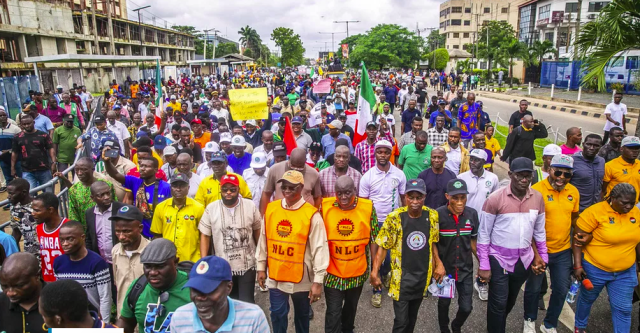
The Nigerian civil servants strike is set to beginning on October 2, 2026. The Federal Government has been given until September 30, 2026, to respond to their demands or face a three-day warning strike.
The warning was issued by the Joint National Public Service Negotiating Council (JNPSNC), which represents eight public sector unions. The council said workers have been mobilised across the country for the planned action.
The dispute is mainly over the rising price of petrol, a demand for an immediate wage award and the start of negotiations for a new national minimum wage ahead of 2027.
Why Are Nigerian Civil Servants Planning a Strike?
The workers have three main demands.
First, they want the Federal Government to reduce the price of petrol to ₦500 per litre. The JNPSNC said petrol prices ranging from about ₦1,450 to ₦2,000 per litre, and reaching about ₦2,500 in some locations, are putting more pressure on workers and their families.
The council also wants an immediate wage award to provide relief to workers dealing with higher living costs.
Its third major demand is the immediate creation of a tripartite committee to begin negotiations for a new national minimum wage expected to take effect in 2027. The unions have previously called for negotiations around a minimum wage of at least ₦500,000 from 2027.
When Will the Civil Service Strike Start?
The proposed strike will begin on Friday, October 2, 2026, if the government does not address the workers’ demands by September 30.
It is currently planned as a three-day warning strike, not an indefinite strike.
The JNPSNC said the September 30 deadline remains in place and asked President Bola Tinubu to address the issues in his Independence Day address.
Who Is Leading the Planned Strike?
The planned action is being coordinated by the Joint National Public Service Negotiating Council, rather than by the Nigeria Civil Service Union alone.
Gbenga Olowoyo, the JNPSNC National Secretary and General Secretary of the Nigeria Civil Service Union, signed the latest statement restating the deadline and warning of the October 2 action.
The Nigeria Civil Service Union’s National President is Comrade Oluwole Sunday. He recently led the union’s 114th anniversary activities in Abuja.
Which Sectors Will the Strike Cover?
The JNPSNC brings together eight public sector unions, meaning the planned action cuts across several parts of Nigeria’s public service.
They are:
- Nigeria Civil Service Union
- Medical and Health Workers Union
- Association of Senior Civil Servants of Nigeria
- National Association of Nigerian Nurses and Midwives
- Amalgamated Union of Public Corporations, Civil Service Technical and Recreational Employees
- Nigeria Union of Public Service, Reportorial, Secretarial, Data Processors and Allied Workers
- National Union of Printing, Publishing and Paper Products Workers
- National Union of Agriculture and Allied Employees
The affected areas therefore include civil service, healthcare, nursing, public corporations, technical and recreational services, administrative and support services, printing and publishing, agriculture and related public-sector work.
How Has the Federal Government Responded?
The Federal Government has acknowledged the workers’ demands.
The Budget Office of the Federation said it received the JNPSNC’s September 21 letter concerning the wage award, salary and allowance concerns, and the proposed committee for the 2027 minimum wage review.
In a letter dated September 29, Budget Office Director-General Tanimu Yakubu said the office recognised the concerns over the rising cost of living and its effect on workers’ purchasing power and family welfare.
The office said it was awaiting further directives from higher authorities.
This means the government has acknowledged the demands, but the latest response does not show that the workers’ three main demands have been accepted.
What Happens If the Government Misses the Deadline?
If the JNPSNC does not receive a response it considers satisfactory by the September 30 deadline, the council has said the three-day warning strike will begin on October 2.
The Nigeria Labour Congress has also backed the public sector unions’ position.
NLC Assistant General Secretary Chris Onyeka said the labour centre supports the demands and warned that the dispute could grow into a wider national strike if the issues remain unresolved.
For now, however, the announced action by the JNPSNC is a three-day warning strike.
Frequently Asked Questions
Is the Nigerian civil service going on strike?
Public servants under the JNPSNC have threatened a three-day warning strike from October 2, 2026, if the Federal Government does not address their demands by September 30.
Is the civil servants’ strike indefinite?
No. The current notice is for a three-day warning strike beginning October 2. The JNPSNC has not announced an indefinite strike in its latest statement.
How long will the Nigerian civil servants’ strike last?
The announced warning strike is scheduled to last three days, beginning Friday, October 2, 2026.
Why are Nigerian civil servants going on strike?
The main demands are a reduction of petrol prices to ₦500 per litre, an immediate wage award, and the creation of a committee to begin negotiations for a new national minimum wage for 2027.
Who is leading the civil servants’ strike?
The action is being coordinated by the Joint National Public Service Negotiating Council. Gbenga Olowoyo, its National Secretary and General Secretary of the Nigeria Civil Service Union, issued the latest warning on behalf of the council.
Which workers are covered by the strike?
The JNPSNC represents eight public sector unions covering areas including the civil service, healthcare, nursing, public corporations, technical services, administrative services, printing and publishing, and agriculture.
Has the Federal Government responded to the strike threat?
Yes. The Budget Office of the Federation acknowledged the workers’ demands and said it was awaiting further directives from higher authorities.
When is the strike expected to start?
If the demands are not addressed by the September 30 deadline, the warning strike is scheduled to begin on Friday, October 2, 2026.
Last updated: October 1, 2026