

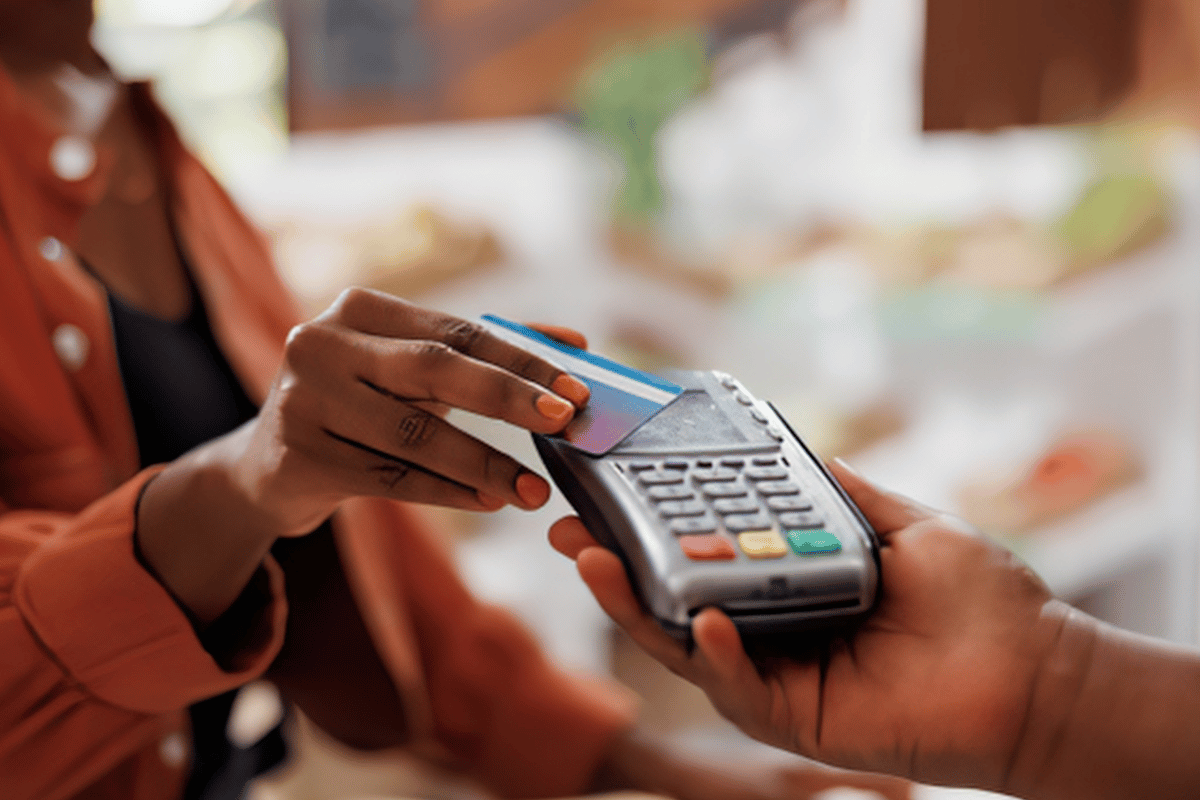
Visa has signed a memorandum with Transsion, the Shenzhen manufacturer behind TECNO, Infinix and itel, and the agreement looks like the latest attempt to fix a problem that has defeated every tap-to-pay effort in Nigeria since 2015.
The partners have disclosed no launch date, no target countries, no commercial terms and no eligible phone model, so the deal today describes a direction of travel and little else.
Transsion’s reach explains the appeal. Omdia puts its Q2 2026 shipments in Africa at 8.3 million smartphones, more than double those of Samsung, its closest rival. Those shipments fell 14% compared with a year earlier, which narrowed its lead, and the average smartphone price across Africa rose by $41 to $202, with the budget tier under $100 taking the heaviest hit. Transsion still leads the market, and that market is getting more expensive every quarter.
The phones have to change first
Shipping phones and enabling payments are different things, because tap-to-pay needs an NFC chip, and most entry-level Transsion phones carry none. Transsion does not publish NFC figures, so any split is an estimate, and ours, based on model specs and price tiers, is that 20 – 30% of current volume has NFC. That works out to roughly 1.7 million to 2.5 million phones a quarter, and the rest cannot tap or accept a tap today. The memorandum therefore reads as a bet that future Transsion phones will close that gap.
Nigeria shows why the bet matters. NIBSS data for 2026 shows roughly 11.2 billion transactions worth about 1.07 quadrillion naira, close to $797 billion, and contactless payments make up 0.1% of that volume. In 2015, Unified Payments and local banks launched PayAttitude with stick-on NFC tags to get around phone limits, and it never became an everyday retail habit.
The QR wave of mVisa, Masterpass QR and the NIBSS NQR followed with a promise to remove the hardware problem altogether, and a 2026 CashAfrica user study found QR codes at 0% as a primary payment channel. Google Wallet reached Nigeria in 2026, and contactless barely moved, while South Africa received it in 2022 on top of an upgraded NFC terminal base and now sees contactless accounting for over half of all digital transactions.
Read also: Is Google Wallet and Pay launch in Nigeria a game changer?
The same 2026 study shows where the bottleneck sits inside Nigeria. Some 53% of surveyed users blamed a lack of bank support or merchant terminals for not tapping, and 0% blamed their phones. About half of Nigerian Android phones already have NFC, and that share drops sharply across the lower-income African markets Transsion serves.
Most POS terminals in Computer Village, Balogun Market and Wuse lack NFC readers, and domestic cards such as Verve and AfriGO still lack universal wallet integration. The Central Bank of Nigeria (CBN) caps taps without a PIN at ₦15,000 per transaction and ₦50,000 a day, which is tight in an inflationary economy where traders want instant credit alerts.
This is where the Transsion partnership fits. An NFC phone can act as the terminal through Tap to Phone, so a trader could accept cards without buying a separate machine, and that links the hardware gap to the merchant gap.

A November 2026 SIIPS report adds an opening on the demand side, because 55% of African digital payment users fall back on cash half the time when bank transfers suffer network downtime and delayed alerts. People use transfers because they have few alternatives, and that gives a better option for room to grow.
Transsion has its own reasons to want the deal. Its Q3 2026 revenue fell 27.45% to 14.85 billion yuan, and core phone profit dropped 47.72% once one-time gains are removed, as rising memory and component costs made very cheap phones hard to sell at a profit. A payment feature gives a market woman or a provision store owner a reason to choose a TECNO over a rival, and it gives Transsion a case for a slightly higher price. Transsion brings distribution, and Visa brings a utility that justifies the extra cost.
The incumbents own the terminals
Visa will meet a crowded field in Nigeria. By December 2025, the country had 6.54 million POS terminals, with 5.90 million active. Moniepoint holds roughly 38.5 to 42% of that market, OPay about 27% and PalmPay near 18%, which gives the three of them more than 80% between them. Moniepoint moved ₦412 trillion in 2025, and OPay reported $339.1 billion in gross transaction value in the first half of 2026 alone. PalmPay has come preinstalled on Transsion phones for years, so Visa arrives on a pitch where the home team already owns the terminals and the habits of buyers and sellers.
Read also: How AI & global chip shortages are driving up smartphone prices in Nigeria
A regulatory change could shift that balance. The CBN has ruled that from December 31, 2026, any institution holding more than 25% of consumer issuances may hold no more than 15% of merchant acquisitions. If the rule applies to Moniepoint and OPay, they will have to pull back from merchant acquiring, just as Visa wants to offer merchants a terminal inside their phone, and a phone-based terminal could become a useful relief valve for the market.
Pricing will settle the question faster than any press release. Montra, a Lagos-based fintech, charges 0.5% per Tap and Pay transaction, capped at ₦2,000, and a Moniepoint POS costs 0.5% per transaction, capped at ₦100 (for transactions of ₦20,000 and above). In South Africa, Tap to Phone can cost 2.45% plus a fixed fee.
The partners have disclosed no pricing for Nigeria, so these figures mark the benchmark Visa has to meet, because a trader on thin margins will compare any card fee with a bank transfer that costs very little.
Visa gains access to the manufacturer that puts the most phones into African hands and to a channel that could bypass the physical POS bottleneck. Transsion gains a feature that keeps its hardware relevant while margins fall. Local fintech giants keep the agents, the street trust and the lowest fees.
If Transsion puts NFC into its cheap phones and Visa prices for the roadside trader, the partnership could finally break Nigeria’s long run of contactless failures. If either side falters, it will join PayAttitude and the QR codes among the payment bets that meant little a year later.
Last updated: November 23, 2026