
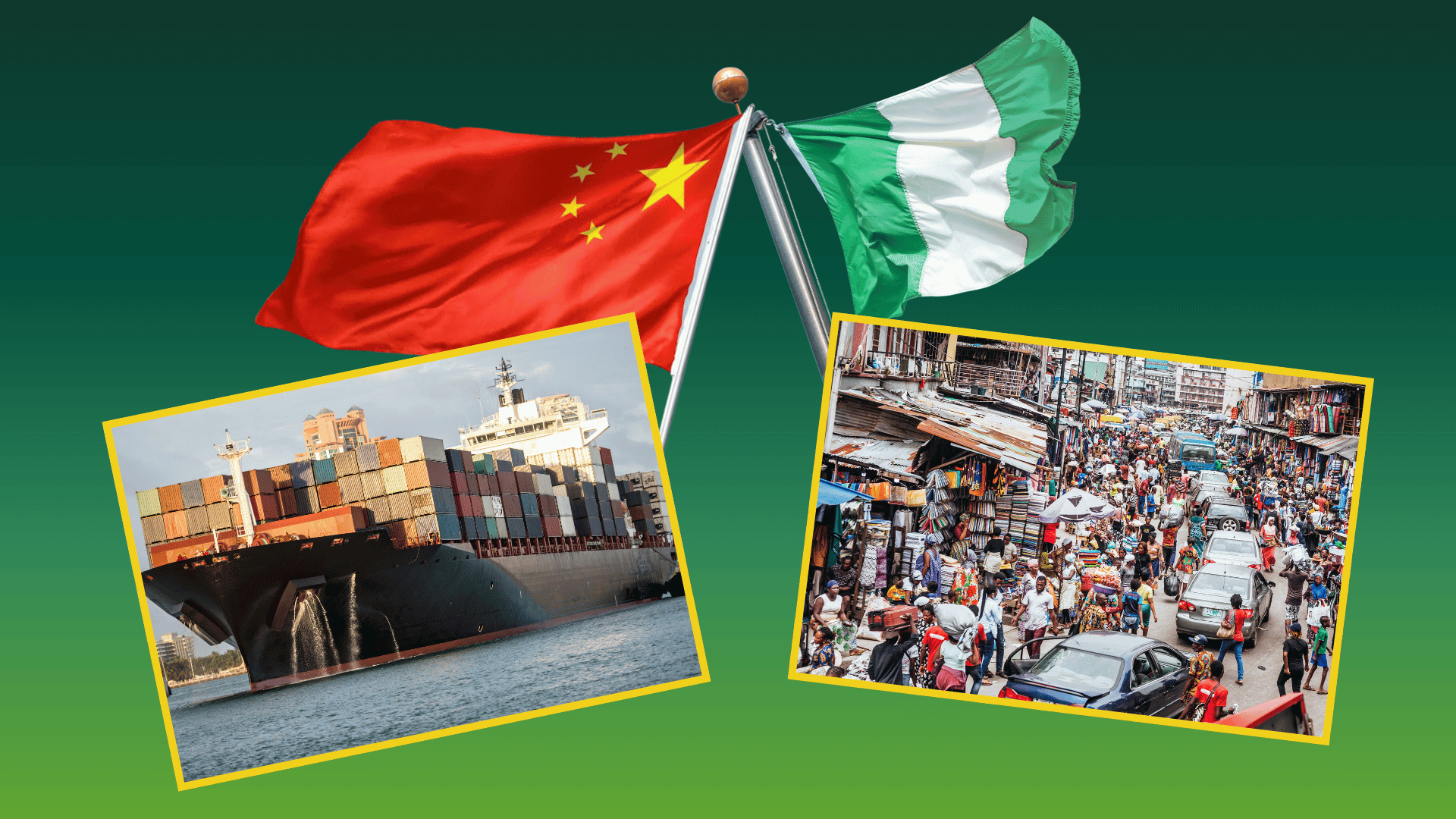
Nigeria imported ₦11.01 trillion worth of goods from China in the first half of 2026, accounting for 39.27% of its total imports, according to figures from the National Bureau of Statistics (NBS). That was a 14.49% increase from the ₦9.62 trillion recorded in the corresponding period of 2025.
So, Nigeria’s appetite for Chinese goods is growing, but getting money to suppliers remains a challenge for businesses that depend on imports. Nigerian fintech platform Clea is betting that stablecoin-powered payment infrastructure and local clearing networks can make that process faster.
The trade relationship is heavily tilted towards imports. Nigeria exported ₦1.09 trillion in goods to China during the same period, resulting in a trade deficit of approximately ₦9.92 trillion.
Those figures capture the scale of Nigeria’s dependence on Chinese suppliers. They also raise a less discussed question about the infrastructure behind that trade: How easily can Nigerian businesses move money to the companies supplying their goods?
For importers, securing foreign currency is only part of the transaction. The money must also reach the supplier in the right amount and within the time agreed. A payment that takes longer than expected can delay the release of goods, disrupt shipment schedules and leave businesses with additional costs.
Clea, a Nigerian stablecoin-powered cross-border payments company, is attempting to address that problem with new US dollar payment routes to Mainland China and Hong Kong.
Announced on November 17, the routes use China’s Foreign Exchange Payment System (CFXPS) for payments to Mainland China and the US dollar Clearing House Automated Transfer System (CHATS) for Hong Kong. Clea says the routes can settle payments within 1-3 hours during Chinese working hours, compared with the 1-2 business days it says conventional SWIFT transfers can take.
This means that rather than relying entirely on international correspondent banking processes, Clea is using local clearing infrastructure for the final stage of payments.
But the clearing networks are only one part of the arrangement. The more interesting question is how a Nigerian business, funding its account in naira, gets dollars to a supplier in China through infrastructure that also relies on digital assets.
The stablecoin infrastructure behind the payment
Clea’s founder and chief executive, Sheriff Adedokun, describes the company as a technology provider that connects African businesses to international payment corridors. Customers do not directly interact with crypto. They fund their accounts in naira, while stablecoins are used behind the scenes to facilitate conversion and settlement.

Adedokun told Condia that Clea works with Nigerian virtual asset providers Quidax and Luno to convert naira into stablecoins. Those assets are then passed to a payout partner, which converts them back into fiat for the final payment.
The arrangement places Clea between the customer and a network of financial and payment providers. It also means that the company’s ability to deliver payments depends on more than its own platform. The conversion providers, payout partner and institutions that provide access to local clearing systems all have a role in the transaction.
Meanwhile, Clea’s model raises a broader question about the role stablecoins could play in international trade payments. They may help move value between financial institutions, but the final transfer to a supplier still depends on access to regulated banking and payment infrastructure.
Read also: Paystack is making a play for Nigeria’s onchain payment infrastructure
Faster payments at the same stated price
Speed is Clea’s main selling point, but the company says customers will not pay an additional fee for the new route.
Adedokun told Condia that the pricing remains the same as its existing SWIFT service. The stated charges comprise $35 in bank charges and a 0.2% fee charged by Clea.
The company is therefore pitching the China route as a faster alternative without an additional charge for the shorter settlement time.
That is a meaningful proposition for importers, particularly those who have already secured the money for an order but cannot afford uncertainty over when a supplier will receive it. However, the cost comparison still needs to be considered alongside the exchange rate, any other applicable charges and the total amount ultimately received by the supplier.
The speed claim also comes with conditions. Clea says payments settle within 1-3 hours during Chinese working hours. The company tested the service with about eight customers before launch and says those transactions were completed within the stated window.
That is an encouraging initial result, but it is not yet evidence of performance across thousands of transactions. Clea will need to demonstrate that the turnaround remains consistent as usage grows.
The company also requires verified business accounts and an invoice for each transfer. Its new routes currently support US dollar payments.
A growing business, but how much of it is China?
Adedokun said Clea has processed approximately $56 million in cumulative transaction volume and is now handling around $10 million in monthly volume. He also put registered users at more than 8,400, with over 500 actively transacting.
Those figures suggest the company has grown beyond an early-stage payment experiment. But they cover Clea’s wider business, not necessarily the new China and Hong Kong routes.
Adedokun identified several customer sectors that use Clea’s services, including electric vehicles, solar panels, lithium batteries, clothing, consumer goods, electronics and industrial machinery. He also cited a customer that recently paid for an ice-making machine and another that purchased equipment for manufacturing phone cases.
Adedokun said a failed or delayed payment can prevent a supplier from releasing goods, cause an importer to miss a shipment and damage trust between trading partners. He recalled customers who had previously complained that intermediary deductions meant suppliers received less than the amount expected.
Those experiences are useful, but direct conversations with importers are needed to establish how frequently these problems occur and whether Clea’s service has materially improved their experience.
The regulatory question
The Central Bank of Nigeria (CBN) issued its Regulations for the Operations of Non-Security Virtual Assets on November 5, 2026. The rules introduce requirements for virtual asset activity involving cross-border transactions, including regulatory approvals, transaction reporting and documentation.
For imported goods paid for using stablecoins, the regulations also address the need for valid import documentation, including Form M where applicable.
Read also: VitalSwap CEO Akinsola Jegede on how CBN’s Form Q impacts fintechs
Adedokun said Clea uses licenced Nigerian providers for its stablecoin conversions and that customers do not directly handle crypto. But the licencing of those providers does not, by itself, establish the regulatory status of every other stage of the transaction. The responsibilities of the payout partner, the cross-border settlement arrangement and the approvals applicable to the overall structure still need to be understood.
Clea’s model will have to operate within the requirements governing the entities and activities involved in each transaction. That makes the company’s undisclosed banking and payout relationships more than a question of commercial confidentiality. They are also relevant to understanding the regulatory chain.
The company has an opportunity to demonstrate that stablecoin infrastructure can work alongside regulated payment networks to solve a practical problem for African businesses.
Last updated: November 17, 2026
Dojah is taking fraud prevention a step further this Fraud Awareness Week. Through a Free Fraud Stack Assessment, businesses can identify potential gaps in their existing fraud prevention systems, while Dojah Double Take, a free fraud discovery audit, helps uncover potential duplicate faces and conflicting identities in customer records. Businesses also gain expert insights into their fraud prevention strategies, with practical recommendations to address vulnerabilities and strengthen their defences. Check Your Fraud Exposure For Free