
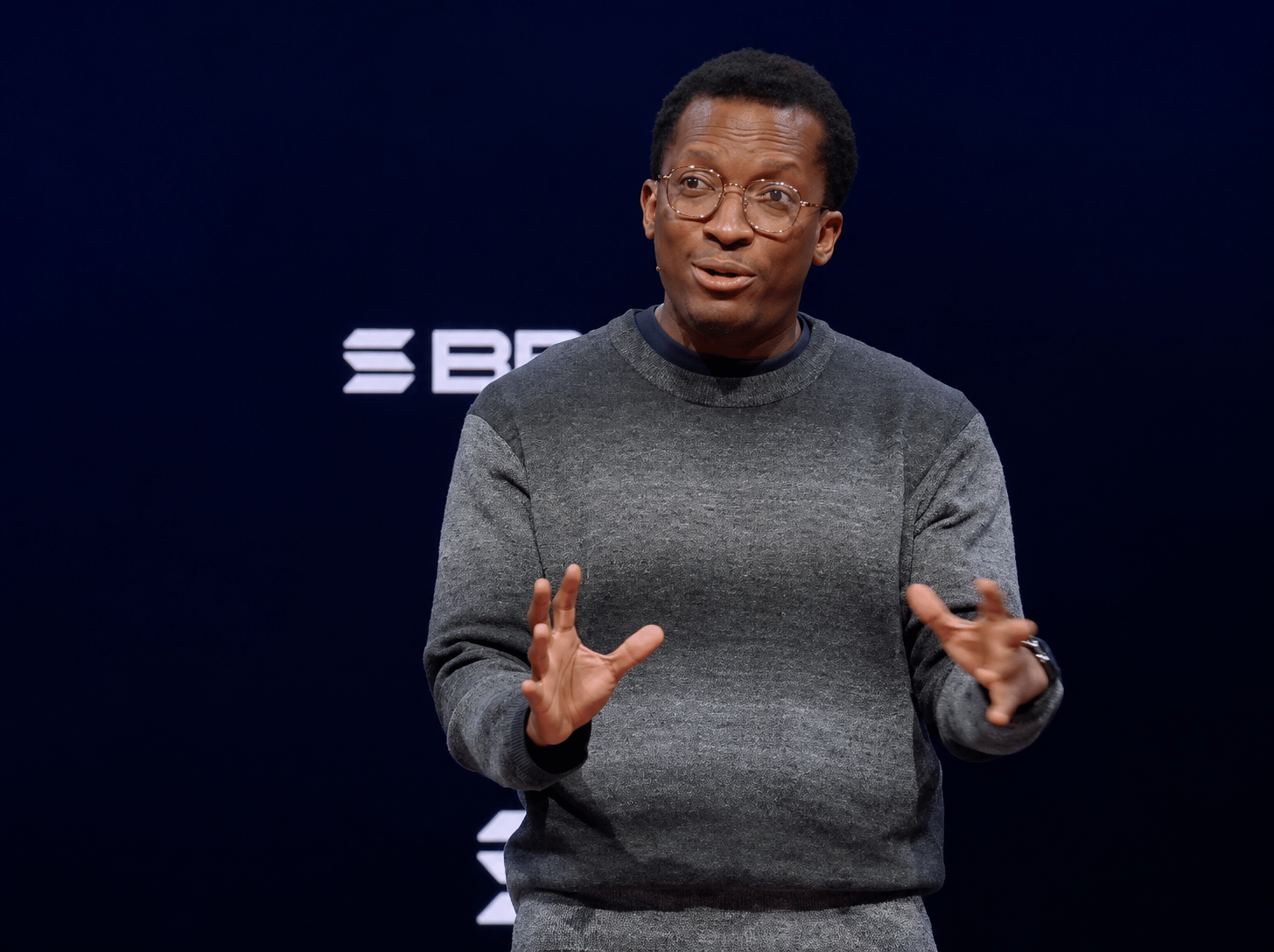
In a significant development for blockchain-powered payments in emerging markets, Paystack CEO Shola Akinlade took the stage at Solana Breakpoint 2026 to outline how the Nigerian fintech is connecting its vast payment infrastructure to the Solana network.
Speaking during the conference at Olympia London, Akinlade highlighted Paystack’s scale. He said the platform now serves more than 400,000 businesses across Africa that collectively process over $15 billion in payments annually.
The company handles more than 60 million payments every month, maintains partnerships with over 50 banks, and holds 11 licences spanning seven markets.
The announcement centred on Global Stack, a new single API designed to connect traditional African payment methods, including bank transfers, mobile money, M-Pesa and cards, to the on-chain economy.
Through the integration, Paystack aims to provide on-ramps and off-ramps across multiple African markets, allowing businesses and users to move value onto and off the Solana blockchain using local payment rails.
The move also comes as Paystack navigates a changing regulatory environment for virtual asset businesses in Nigeria. In March 2026, the Central Bank of Nigeria selected the company for its initial Virtual Asset Service Provider (VASP) supervisory pilot, alongside Flutterwave, KuCoin, KoinKoin, Juicyway and cNGN.
The programme gives the CBN a closer look at how participating companies manage virtual asset-related risks, including customer onboarding, sanctions screening, transaction monitoring and cross-border activities. Participants are also expected to submit monthly compliance indicators and demonstrate preparedness for the FATF Travel Rule.
The selection, however, does not amount to a licence to provide virtual asset services. The CBN has described the initiative as a supervisory exercise rather than regulatory authorisation.
Read also: Exclusive: Why Allawee sold to Paystack
For Paystack, the timing is notable. Its proposed connection between African payment rails and Solana will involve the same kinds of questions regulators are increasingly concerned with, particularly how money moves across borders, how transactions are monitored and how financial institutions maintain oversight of those flows.
Paystack, founded in Nigeria and acquired by Stripe in 2020, has grown into one of Africa’s leading payment service providers. Its interest in Solana reflects a broader shift towards using blockchain networks for practical financial infrastructure rather than purely speculative activity.
By connecting existing bank and mobile money networks to Solana, Global Stack could reduce friction for merchants, freelancers and platforms seeking faster cross-border and local settlements.
The announcement also comes as Solana positions itself as a settlement layer for real-world assets and payments. Breakpoint 2026 has brought developers, institutions and fintech leaders to London to explore these intersections.
For African businesses already relying on Paystack, the integration could offer a route into the on-chain economy without requiring them to abandon the payment methods their customers already use.
If scaled successfully, Global Stack could bring more commercial payment activity onto blockchain rails and demonstrate how these networks can complement existing financial systems.
Akinlade’s presentation points to a future in which African payment infrastructure does not have to choose between traditional financial networks and blockchain-based settlement. Paystack wants to connect the two.
People in this article

Last updated: November 16, 2026
Dojah is taking fraud prevention a step further this Fraud Awareness Week. Through a Free Fraud Stack Assessment, businesses can identify potential gaps in their existing fraud prevention systems, while Dojah Double Take, a free fraud discovery audit, helps uncover potential duplicate faces and conflicting identities in customer records. Businesses also gain expert insights into their fraud prevention strategies, with practical recommendations to address vulnerabilities and strengthen their defences. Check Your Fraud Exposure For Free