
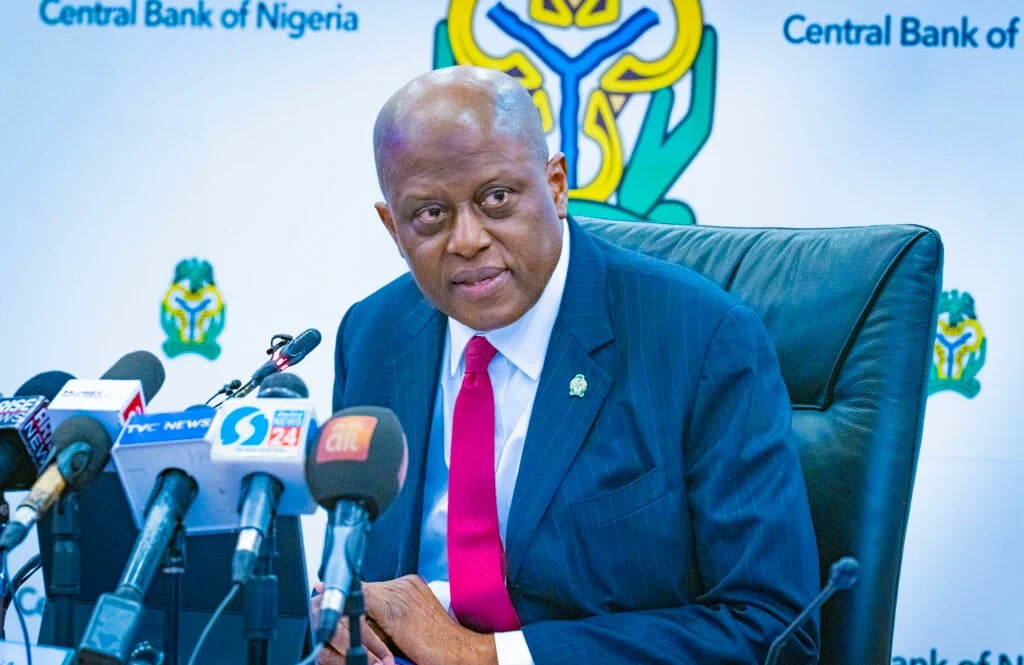
The apex bank in Nigeria, the Central Bank of Nigeria (CBN), has issued a new directive to clarify the ownership status of Deposit Money Banks, Payment Service Providers, and digital finance institutions in the country.
The CBN, through a recent circular, PSS/DIR/PUB/CIR/001/004, commented on several issues, which range from market structure requirements and data localization to ultimate beneficial ownership disclosure and systemic oversight measures in the Nigerian payments system.
The Ultimate Beneficial Owners (UBO) directive from the CBN stipulates that regulated fintech solutions in the country must verify, identify, and disclose all natural persons who own, control, and influence their business. They are also expected to keep a public record of this information, ready for impromptu checks by the CBN.
The directive is in line with CBN’s Anti-Money Laundering and Counter-Terrorism Financing efforts, as it works hard to clean up Nigeria’s financial sector and remove bad actors.
A Welcomed Check to a Turbulent Industry
For many years, the fintech industry has outperformed its peers in terms of scale, revenue, and the sheer number of foreign and local investments it attracts. Fintech researchers Segun Adeyemi, Precious Ehiwario, and Florence Dairo reported that Nigeria was home to more than 430 fintech companies as of February 2025,
Several reports also peg Nigeria’s fintech industry at 28% of all African fintech companies and note that it attracted roughly 36% of total fintech equity funding in Africa between 2020 and H1 2024. The Fintech frenzy in Nigeria, driven by the success stories of unicorn brands like MoniePoint and Flutterwave, as well as the influx of foreign investment into the sector, serves as a primary motivator for Nigerian builders.
However, the Ultimate Beneficial Owners (UBO) directive poses a unique challenge for fintech players in the country due to the nature of their business models and locations. Most fintech companies, the major ones operating in Nigeria, usually set up offshore holding structures to ease fundraising from foreign entities, enjoy favorable policies, and share ownership with their equity backers. From Unicorns like Flutterwave and Moniepoint to MFB’s like Kuda, each solution is either headquartered abroad or has a foreign parent company.
The splintered nature of ownership across these platforms makes transparency on who owns and controls them a bit challenging. In foreign jurisdictions, the taxation is quite high and efficient. Investors and key stakeholders prefer to keep a low profile, often hiding their investments with shell companies. The CBN’s directive will force them to be exposed, which might affect foreign investors’ investment rates in Nigerian fintech startups.
The Pros and Cons
The CBN’s role as a regulator is crucial in a field that deals with money. Transparency on ownership structure helps checkmate bad actors and mitigates the risk of losing money to fraudulent platforms. It also serves as an extra layer of credibility check on fintech platforms, where owners are expected to be well-placed and prominent individuals in the ecosystem.
On the downside, the UBO policy might work against certain players in a country like Nigeria, where politics is dirty and can be vindictive. Promising platforms might suffer reputation damage when they receive funds from politically exposed individuals, worse still, when they are listed on the owners’ list.
Experts believe the UBO directive is the first of many policies coming from the CBN. Best bets on future measures include improved reporting obligations, air-tight governance standards, and tighter approval requirements for major foreign investments or acquisitions.
Last updated: June 29, 2026