
Nigeria has spent the last decade building one of Africa’s most sophisticated digital payments ecosystems. Bank transfers have become ubiquitous, and cashless payments continue to rise. Yet giving money to multiple people has remained analogue.
Whether at weddings, funerals, religious gatherings, community events or charitable drives, distributing money still largely depends on either carrying bundles of cash or making dozens of individual bank transfers. Both methods work, but neither is particularly efficient.
Sterling Bank believes there is a better way. Its latest payments product, QSpend, reimagines the act of giving by combining the familiarity of cash with the convenience of digital transfers.
A digital chequebook for the QR era
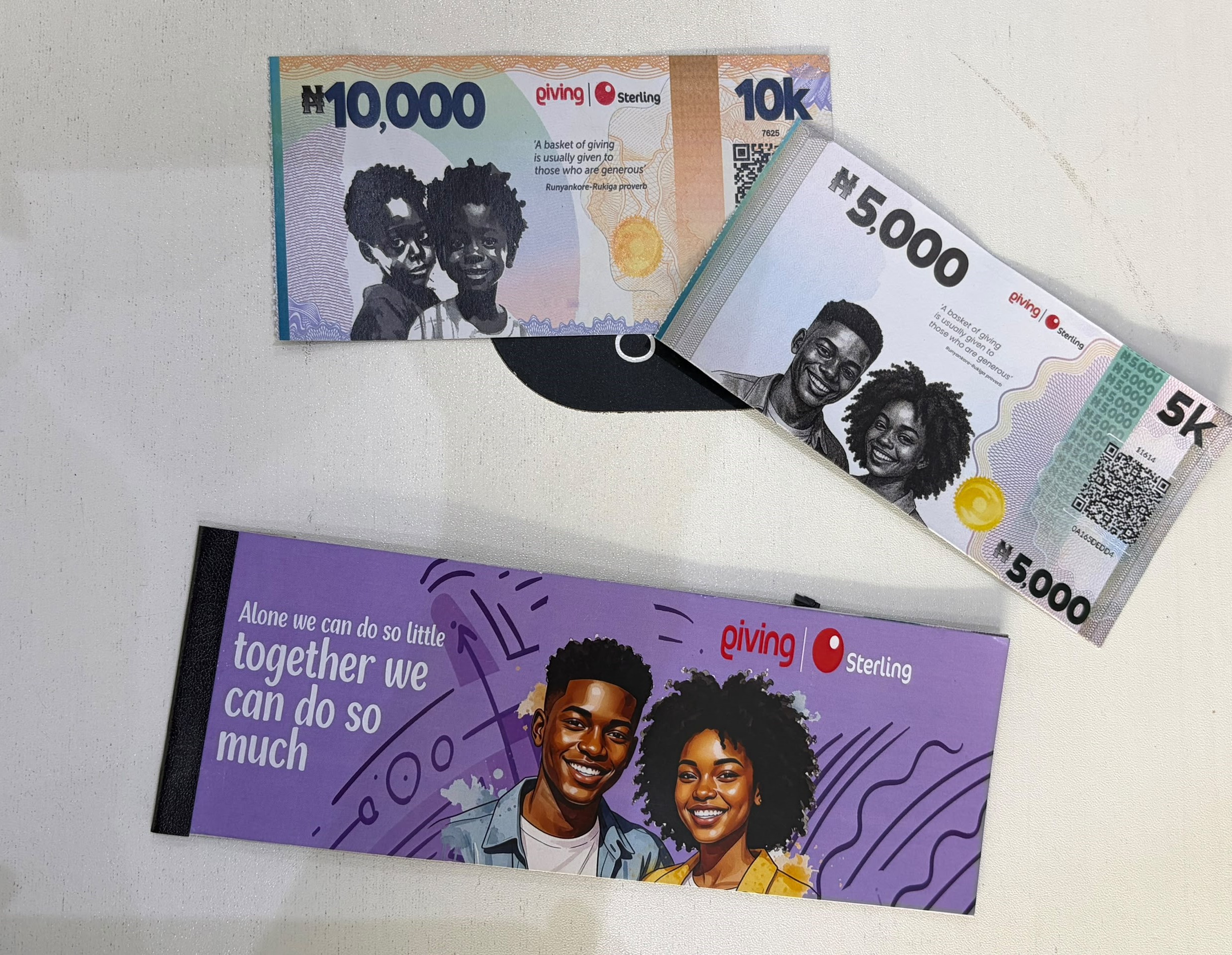
Sterling’s solution takes inspiration from the traditional chequebook but replaces paper cheques with QR code-enabled payment slips.
Customers can collect the booklets from Sterling Bank branches nationwide and choose the denomination of each leaflet. Booklets come in ₦5,000, ₦10,000, ₦20,000, and ₦50,000 denominations, allowing users to distribute individual slips without carrying cash.
When a recipient receives a leaflet, they scan the QR code using a smartphone, which opens a payment page in their mobile browser. They are then prompted to enter their bank account details before the funds are transferred. The payment page currently works only on mobile browsers, a product decision the bank says was made intentionally.
Transfers into Sterling Bank accounts are processed without additional charges, while transfers to accounts at other banks attract a fee in line with Nigeria’s existing interbank transfer structure.
Each leaflet carries a unique identifier, allowing the bank to track whether it has been redeemed and by whom. If a booklet is lost or stolen before the funds are claimed, the holder can report it to Sterling Bank, which can deactivate the affected slips to prevent unauthorised redemption.
Functionally, the experience is similar to making a bank transfer, but with one important difference: the giver does not need to know the recipient’s account details or be present when the money is claimed. Instead, recipients redeem the funds whenever it is convenient for them.
Read more: NIBSS to unify QR codes for payment in Nigeria with NQR
Solving the friction of giving
Much of QSpend’s appeal lies in the convenience it offers. Cash remains the dominant payment method for many everyday transactions in Nigeria, while bank transfers have become the country’s fastest-growing digital payment option. Yet both methods become less efficient when one person needs to distribute money to many recipients.
Cash requires planning. Givers need to withdraw and carry enough money, ensure they have the right denominations, and manage the risk of running out before they’re done.
Bank transfers, on the other hand, eliminate the need for cash but introduce a different kind of friction. Each payment requires opening a banking app, entering or selecting an account number, confirming the recipient’s details and authorising the transaction. Even products that support bulk transfers typically require users to manually input and verify each beneficiary. Success also depends on the receiving bank and payment infrastructure processing each transfer without delays.
QSpend is designed to abstract away much of that complexity. Instead of collecting bank details from every recipient or carrying large amounts of cash, the giver simply distributes QR-enabled payment slips. Recipients decide when they want to redeem the funds, while the giver avoids the repetitive process of initiating and confirming multiple transfers. In effect, the product separates the act of giving from the act of receiving, allowing each side to complete its part independently.
From bank redemption to QR payments
Development of QSpend began in 2023, and the product has gone through several iterations before reaching its current form.
Early versions required recipients to visit a Sterling Bank branch to redeem the funds. That approach was later replaced with a QR code-based system, although redemptions were initially limited to Sterling Bank accounts. The bank has since expanded the product, allowing recipients to redeem funds into any bank account in Nigeria.
Unlike many digital payment products, QSpend does not rely on a pre-funded wallet. Instead, customers’ accounts are debited when they request a booklet, with the funds reserved in advance for future redemption. That design allows recipients to claim the money whenever it is convenient without depending on the giver to initiate a transfer at that moment.
At the same time, Sterling Bank encourages customers to treat the booklets much like physical cash. Because each leaflet represents a pre-funded monetary value, recipients are advised to redeem them as soon as possible to minimise the risk of loss or theft. If a booklet is lost before redemption, the holder can report it to the bank, which can hotlist the affected slips.
Finding the right customer
Although QSpend was initially conceived for high-net-worth individuals, Sterling Bank has since broadened its target market. The bank is now positioning the product for upwardly mobile, digitally savvy customers who regularly give money to family members, staff, service providers or charitable causes and would benefit from a simpler way to manage repeated distributions.
The product also accommodates recipients with varying levels of digital access. While smartphone users can redeem funds by scanning the QR code, those without smartphones can still claim their money at a Sterling Bank branch or through a Sterling agent.
The product has recorded modest early adoption since launch. According to Sterling Bank, QSpend has processed more than ₦100 million in transactions, while nearly 2,000 booklets have been issued.
More than a payments product
The success of products like QSpend will ultimately depend on whether they can change user behaviour rather than simply digitise an existing process. Nigeria’s payments ecosystem has matured considerably over the past decade, but much of that innovation has focused on making one-to-one transactions faster. The act of giving — particularly in social, religious and community settings — has received comparatively little attention.
QSpend represents an attempt to fill that gap. The bank says its goal is not to replace bank transfers or eliminate cash altogether. Instead, it sits somewhere between the two, borrowing the immediacy and familiarity of cash while layering on the flexibility of digital payments.
African borders are becoming more invisible than ever. Businesses and individuals are increasingly connecting, building, and trading across the continent. On August 21, the people driving this future will gather in Lagos for candid conversations about the realities of building a borderless Africa. Get your ticket now and be in the room. Click here

Last updated: August 18, 2026