
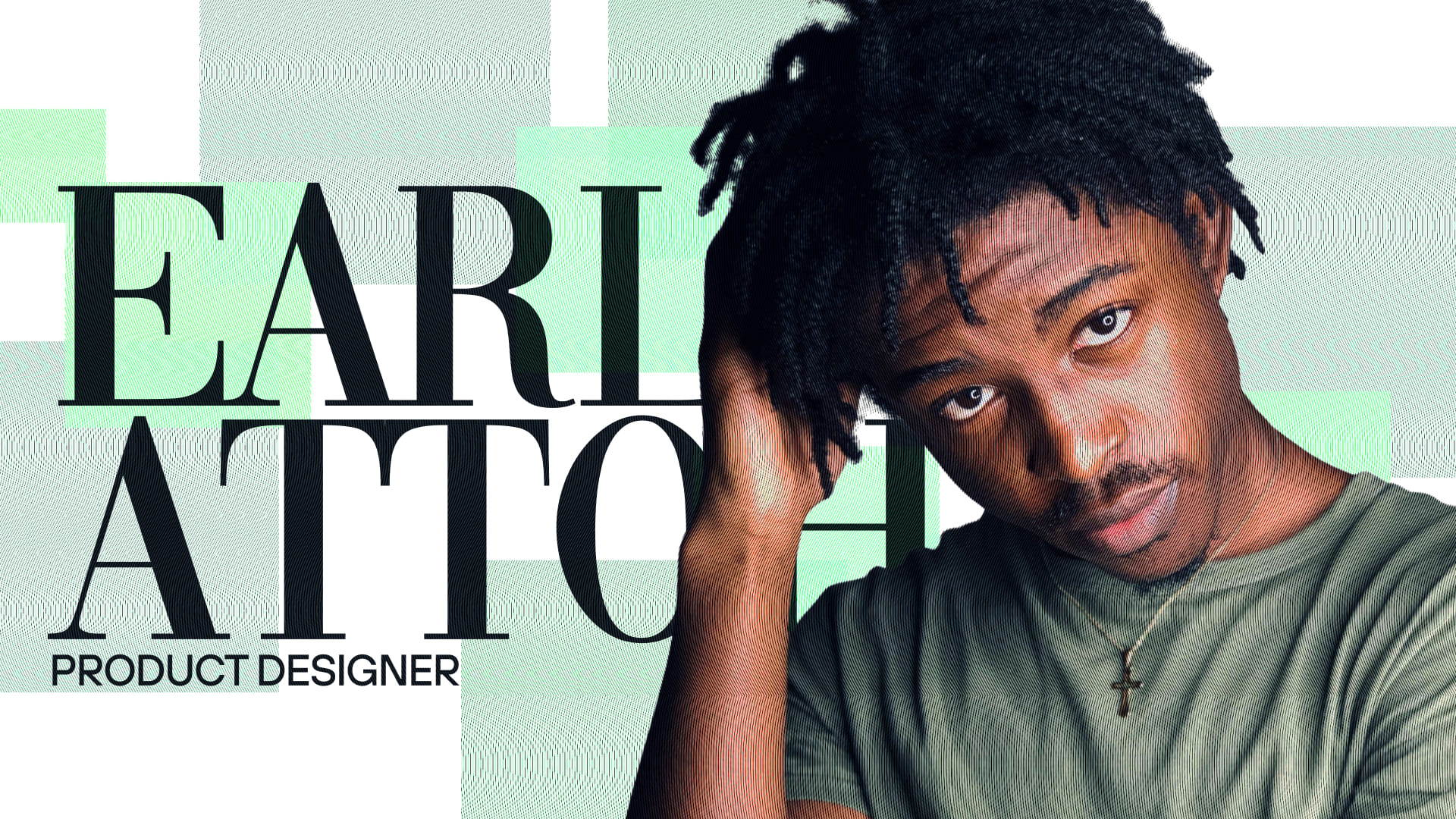
Early Attoh does not look like someone who nearly became an investment banker. He is relaxed, unhurried, and happy to trace a thought to wherever it wants to go. But the career he built across Nigeria, then London, and now into the opaque world of alternative asset management has been anything but accidental. It is the work of someone who figured out early on that design was not just a craft but also a way to make a meaningful impact.
He grew up in a home where media technology was part of his day-to-day life. His father worked in the industry, and Early spent a short stint as a child TV host. That early access to radio equipment, cameras, and production tools meant that when the family got its first computer, it did not feel intimidating. It felt like the next machine to understand.
By secondary school, that curiosity had a practical application. Early was part of a music group, writing songs and trying to stand out. He taught himself FL Studio to produce their tracks and picked up graphic design so the group could look the part. “We had to design posters and flyers and logos,” he says. “That differentiated us and made us even cooler.” He was fifteen, already solving problems with tools he had taught himself to use.
At Covenant University, he studied Management Information Systems, a course that split his time between computer science labs and accounting lectures. “It was interesting for my brain,” he says. “I was used to having two interests meld together,” and that split suited him.
The internship that changed everything
By 2014, Early was preparing for a career in investment banking. He spent his weekends at Unilag in prep classes, targeting internships at Goldman Sachs and Bank of America Merrill Lynch. The recruitment windows ran from August through November, and during that era, the entire process depended on being physically present in the same room as the right people.
Then in July 2014, Nigeria confirmed its first Ebola case. By August, when the recruitment window opened, in-person contact had become complicated in ways nobody had accounted for. “People were meeting in person. Remote meetings weren’t really a thing then,” Early says. The path narrowed just as he was reaching for it.
That shift landed him at Softcom, a small B2B tech firm in Ogudu, Lagos, for his mandatory internship. He arrived expecting to write code or do business work. Instead, Yemi Agbetunsin, the company’s CTO, handed him a MacBook and a copy of Sketch. The software was emerging as the industry standard for interface design, and Early was tasked with figuring out UX. He committed without hesitation. His first salary was ₦25,000, and he spent half of it on a dollar-denominated course to learn Xcode and Swift.
What clicked for him at Softcom was not just the software. It was the idea of a prototype as a sales tool. By linking screens in InVision, he could simulate a finished product before a single line of code had been written. Clients in education and financial services could see and interact with the vision. “We could show this to a client, and they could buy into it. That could drive the conversation, drive the business. I’d never seen anything like that before.” A well-built prototype was the fastest path to a yes.
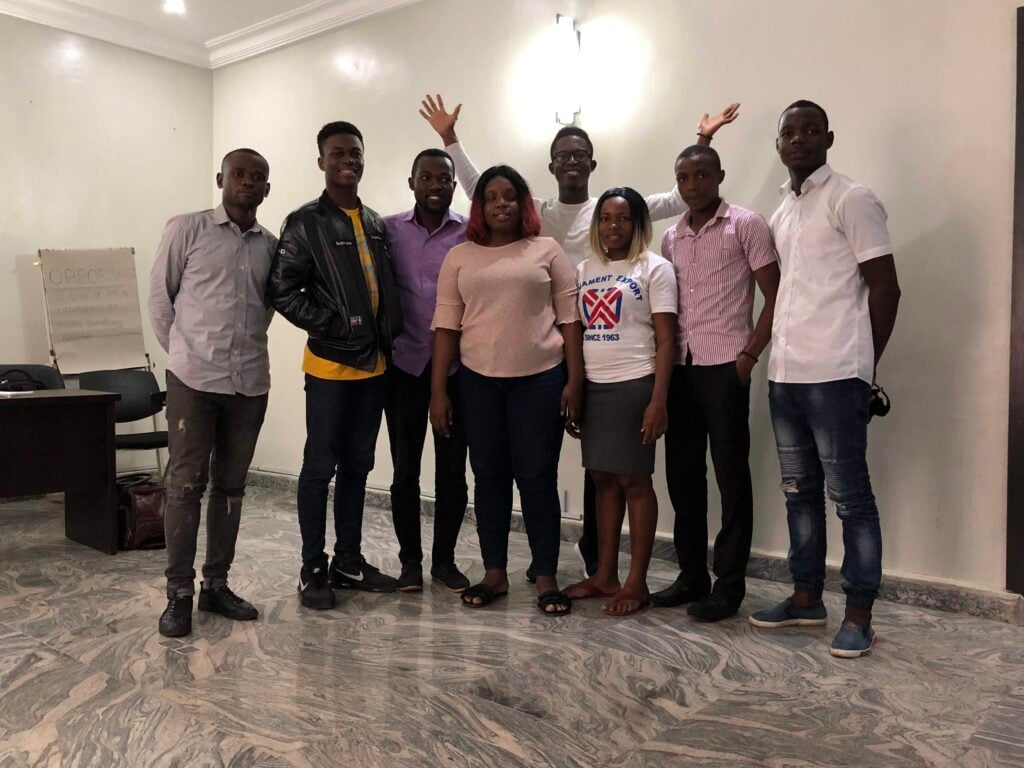
By the time Attoh returned to Covenant University for his final year, the school had long operated under a unique set of constraints: a ban on mobile phones that had created a web-first economy by necessity. Students were capped at roughly 15 gigabytes of data per month, accessed through university Wi-Fi. Data was rationed and often borrowed. In that environment, the browser was the only reliable gateway to the outside world, and Early found himself among friends who treated it as a laboratory. Douglas Kendyson built Mobile Waiter, a web app that let students order food from the campus cafeteria and have it delivered to their rooms. Another friend built Shop in CU, essentially an e-commerce platform for a student population that mostly ran on cash.
Early’s contribution across both was consistent. He handled the branding and UI, making products built in dormitories look and feel like real services. They could not use WhatsApp to drive adoption, so they relied on physical posters, word of mouth, and announcements at chapel. They were doing things that would, a few years later, come to define entire categories of the Nigerian startup ecosystem. They just happened to be doing it on fifteen gigabytes a month.
Shortly after graduation, Early lost the laptop that held years of music production, including recordings with artists like Nonso Amadi. “I needed to re-focus that pain into something else,” he says. The music chapter, the one that had run alongside everything else since boarding school, closed. What remained was design. That same campus group would later regroup and start Selar.co, a platform for creators to sell digital products online. Early handled design and branding, as he had done in school. Douglas stayed with it the longest and built it into what it is today.
The community and the craft
After graduation, Early spent several months working with Yemi Agbetunsin, who had since left Softcom and was running a boutique agency in Ikeja. He built portfolio pieces, worked through real client briefs, and developed the kind of confidence that only comes from doing the actual work.
It was during this period that he found Usable, a Twitter-based community of designers that was beginning to define a discipline that barely had a language in Nigeria yet. His first attempt to attend a meetup failed. He got lost in the streets of Yaba and arrived at CcHub just as the session was ending. He made it back the next time.
“I was finally in the same room as the people building the foundations for companies like Paystack and Flutterwave,” he says. “At the time, they were just peers trying to figure it out.”
Early describes his mindset at the time as that of a “bottomless whale.” His browser was stacked with tabs on design theory, cognitive psychology, and interaction logic. He could not consume enough. The more he found, the more there was to find. (He has ADHD, which probably explains the velocity more than ambition does.) He was looking for anyone in Lagos doing what he could see being done elsewhere. At the meetup he actually attended, Kene, who was leading the UX team at CcHub and organising Usable, saw Early’s portfolio and offered him a job on the spot. “It felt surreal. I couldn’t believe I was getting a job offer at my first meetup.” He took it.
At CcHub, Early worked across startups being incubated by the fund, including early-stage LifeBank and GoMyWay. He was part of a fully cross-functional team for the first time, working alongside UX researchers, front-end engineers, and product managers. He met Lade Tawak, the first UX researcher he had ever worked alongside directly, who became one of his closest friends. He began to understand what design looked like inside a real product organisation.
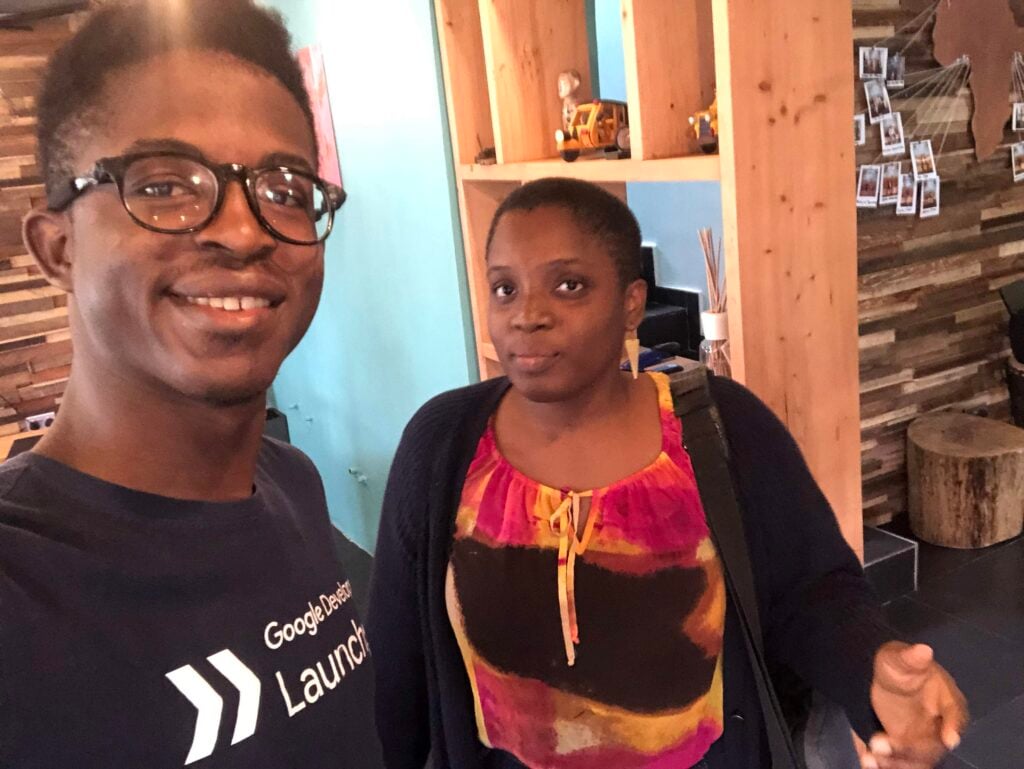
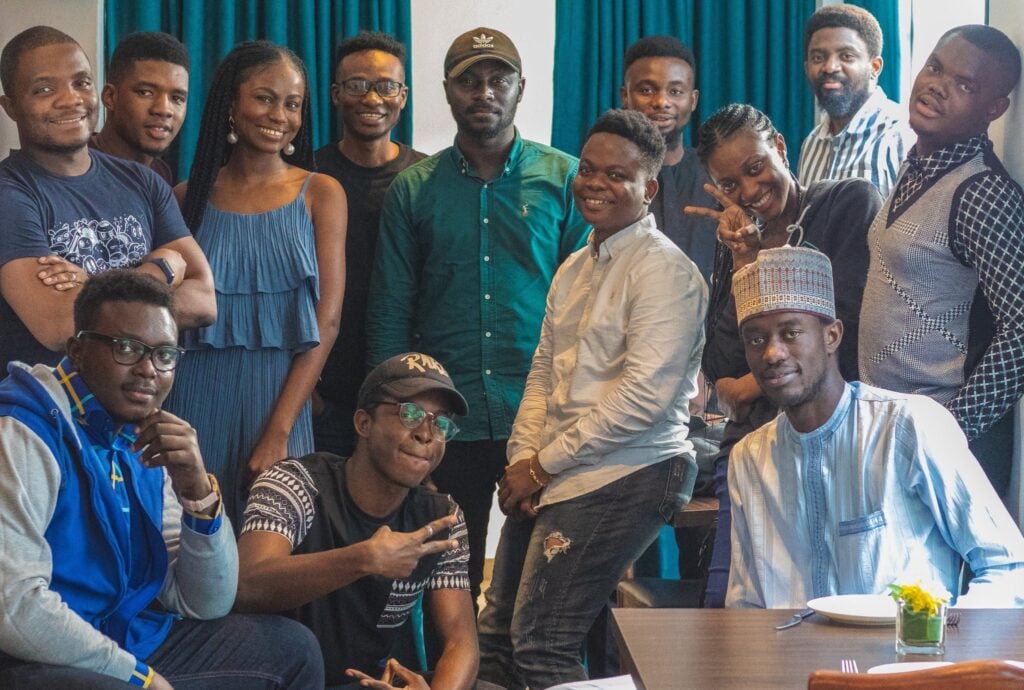
Teaching had always been part of how Early operated, long before it had a formal name. At CcHub and through the wider ecosystem, he facilitated UX masterclasses through Google Developer Groups, led design sprints for Google for Startups, and mentored founders through Google Launchpad. He organised workshops and hackathons through Facebook’s NG_HUB, helping introduce more people to design and to the idea that it was a serious profession, not just a skill. Alongside Kene, Lade, and Gabriel, he helped build Usable into the premier design meetup in Nigeria. He wrote the monthly newsletter, organised events at Paystack and Cowrywise, and brought in product designers from the companies beginning to define the Lagos tech scene. What he loved most about Usable was not sharing his own experience, but creating a space where people could learn from each other and collectively raise the standard of the craft.
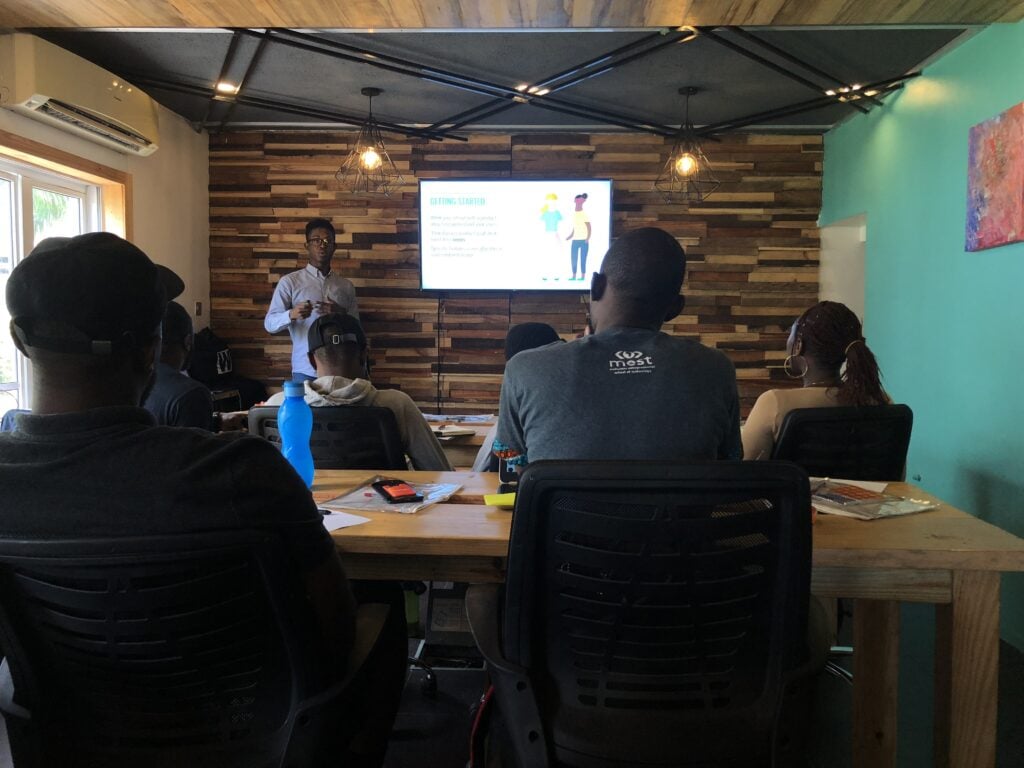
By his second year working professionally, he had been trained to facilitate Google’s UX Design Sprint workshops. The methodology shifted how he understood the discipline. Design stopped being about how things looked and became about how decisions got made. It was also the first time he saw design as something with a real career ladder. “Junior, senior, lead, director. A path.” Eventually, he left CcHub in 2019.
Nigerian fintech and the years that built him
Early joined Sterling Bank as one of the earliest designers on the team building GoMoney, Sterling’s digital banking product. The brief was not just to design but to help build out how the design team operated, its rituals, its research practice, and its relationship with product and engineering. “We were brought on to think differently from how traditional banks built products. To bring a fresh perspective.”
At the time, the only digital banks in Nigeria moving with any real intention were Alat and Kuda. GoMoney was early in a space that had not yet proven itself. Then the lockdowns of 2020 arrived. The surge in demand for digital banking that followed was significant, and by the time Early left, the product had grown from close to zero users to roughly half a million. He also worked on GoBusiness, a B2B product for merchants, and Sterling Pro, the bank’s corporate banking platform.
He moved next to RenMoney. The company was profitable but narrow, known almost entirely as a lender. The initial engagement was a six-month contract to shift their loan acquisition from a physical salesforce model to a fully digital funnel. That work led to a full-time role as design lead, with a more ambitious mandate: rebuild RenMoney as a proper digital bank, adding savings and current account products alongside the existing lending core. “It wasn’t pure zero-to-one,” he says. “We had existing customers and a profitable product. We were reskinning and reshaping at the same time as building new things.” One of the outputs was a physical card that worked as both a debit card and a loan card. If you had an active loan, you could spend against it through the same card. Early was also exploring Buy Now Pay Later before it had become standard across the industry. “For a company that most people only knew for loans, it was interesting work to be doing.”
Attoh had been watching peers relocate to London, the US, and across Europe. He started opening doors. Spotify reached out about a senior product design role on its Holistic Experience team, and through the second half of 2020, he cleared round after round: a chat with a Senior Design Director, a session with the hiring manager on the Partner Platform team, a growth conversation with another lead. By late September, he was in the final round, talking to the team’s Senior Design Manager. He passed it.
Then it went quiet. His emails to the recruiter started bouncing, and when he finally reached someone else at the company, he learned the recruiter had left with no handoff. It took until mid-November, nearly two months after that final interview, for anyone to tell him anything: Spotify was no longer moving forward with the role. The full picture only came out when he pushed for it again: somewhere in the process, his application had been crossed with a junior, new-grad-level role, and the mix-up was never sorted out in time. The Stockholm move went with it.
“If that had happened, I’d probably be in Stockholm,” he says. He was disappointed, but the near-miss confirmed something. “If I got that close to Spotify, it means there’s an opportunity for me globally. It means I should take that seriously.”
London, and designing at scale
Deliveroo reached out, and after speaking with Stuart, the VP of Design, Early accepted an offer to move to London at the end of 2021. He joined the restaurant platform team. The work was unlike anything he had done in terms of reach. He was designing tools used by large chains and single-location restaurants at the same time, Nando’s and McDonald’s, alongside neighbourhood spots like Dishoom. He went into kitchens, watched how orders moved, and saw where the tablet on the pass created friction or removed it. “I was designing stuff for tablets in their kitchens. I was immersing myself in their workflow and coming back to the office with actual problems to solve.” He also contributed to the consumer app, working with the principal designer on features for the delivery experience. It was the first time he had worked on a product used by people across multiple countries simultaneously.
Dojo was a different kind of challenge. The company was known for its card payment terminals, the kind that power tap-to-pay in coffee shops, bars, and restaurants across the UK. It had acquired a company called Workup, a virtual queuing app that had gone viral during the lockdowns, and was trying to turn it into a full restaurant discovery and booking product. Early joined to lead the consumer side. He did deep research into the psychology of dining out, the occasions that drove it, the friction of splitting a bill, why people returned to a restaurant or did not. The feature he was most invested in built directly on what made Dojo unusual. Because payments were already embedded in the platform, Early designed a flow that let a user discover a restaurant, book a table, and settle the bill entirely within the same app, end to end, without switching. “No one else in the market was doing that. We were connecting the whole experience.”
In October 2023, his father passed away. Early returned to Lagos, spent time with his family, and took the kind of break he had not taken in years. When he came back to London, he did not return to Dojo.
Where the work is now
A founder reached out through a mutual friend, and that is how Early came to Vega, where he now works as lead product designer. Vega is building an operating system for alternative asset management, software that lets private equity firms, fund managers and others in that world run their operations from one platform. “Imagine what Slack did for workplace communication,” he says. “Everything centralised, but connected to everything else. Tools talking to each other, workflows running across systems, everything visible in one place.” The work is technical, heavily regulated and almost entirely invisible to anyone outside the industry. It suits him.
Outside of work, Early started DJing properly in late 2023 and played his first public set in Camden in 2024. Music never left; it just changed form. He mentors through ADP List and the Kimoyo Fellowship, and takes calls from designers, product managers, founders and operators who reach out. He is also, finally, serious about building his own products. “It’s just an itch I’m always going to have,” he says. “It’s time I scratch it.”
The Covenant University cohort that built Selar, Eyowo, and the rest did it by founding companies. Early’s path was different. He built the design discipline itself, the practice, the community, the craft, and then took it further, geographically and technically, than anyone else from that group. From a campus with a phone ban and fifteen gigabytes of data to a flat in London, designing for private equity firms and restaurant chains across multiple countries.
People in this article

Last updated: August 7, 2026