

Whether you’re a designer, developer, or content writer, getting paid as a freelancer in Nigeria can still feel like navigating a maze. Between high transfer fees, delayed payments, and limited access to global platforms, most freelancers have had to find creative ways to receive their earnings. The good news is that things are changing.
In 2026, more reliable payment apps will cater directly to Nigerian freelancers and remote workers, enabling them to receive funds faster, convert currencies easily, and avoid the frustrations of blocked platforms. These tools not only make payments smoother but also give freelancers more control over their finances.
This article explores the top payment apps for freelancers in Nigeria, what sets each platform apart, and key tips for managing international payments efficiently.
What Has Changed in Africa’s Payment Landscape
Three things moved this year, and all of them affect which app you should be on. We’ve seen several fintechs like Gigbanc wind down operations in July 2026 after failing to raise fresh funding. With a 31 July deadline to withdraw, anyone still holding a balance there needs to check it. Chimoney closed earlier in the year for the same reason, though its infrastructure survived through CapitalSage’s acquisition.
Stablecoin payouts went mainstream. Receiving USDT or USDC and converting to naira in-app is now a standard feature rather than a workaround, which matters when stablecoin use keeps climbing among people protecting earnings from currency slides.
Direct marketplace integrations have arrived. Some platforms now connect straight to Upwork rather than routing through an intermediary, cutting settlement from several days to under an hour. If most of your income comes through one marketplace, this single feature outweighs small fee differences.
Key Considerations When Choosing a Payment App
Before jumping into the list, here are the most important factors to consider when selecting a payment app in 2025.
1. Fees and exchange rates
Some platforms charge per transaction, while others include conversion margins that can reduce your total payout. Always compare rates to know how much of your earnings you’ll actually keep.
2. Speed of transfers
Time is money, especially when clients pay across different time zones. Choose platforms that process transfers quickly, ideally within hours and not days.
3. Ease of use and integration
Look for intuitive, mobile-friendly platforms that integrate easily with freelance sites like Upwork, Fiverr, or Shopify.
4. Security and compliance
Ensure the app offers two-factor authentication (2FA) and complies with Nigeria’s financial regulations to protect your funds.
5. Withdrawal options
Reliable withdrawal methods are crucial. Favour apps that offer virtual dollar cards, domiciliary accounts, or direct transfers to your Nigerian bank.
6. Customer support
Responsive support can make or break your experience, especially when dealing with payment delays or account verification issues.
Top 6 International Payment Apps for freelancers in Nigeria
Freelancers in Nigeria now have access to several trusted payment platforms that make it simple to receive both international and local payments directly on their phones. Below is a list of the best apps freelancers can use to withdraw money.
| App | Currencies | Virtual account | Card | Licensing | Best for |
|---|---|---|---|---|---|
| Payoneer | USD, EUR, GBP and more | Yes, in multiple countries | Yes | US money transmitter, EU e-money institution | Upwork and Fiverr earners who want the default |
| Wise | 40+ currencies | Yes, multi-currency | Yes | Licensed across US, UK and EU | Direct clients who want mid-market rates |
| Raenest | USD, EUR, GBP, NGN | Yes | Yes | CBN IMTO, Canadian MSB | Upwork freelancers wanting fastest settlement |
| Grey | USD, GBP, EUR, NGN | Yes | Yes | Licensed operator, YC-backed | Freelancers with UK and European clients |
| Cleva | USD, NGN | Yes, US account | Yes | Licensed operator, YC W24 | Dollar-only earners wanting low fees |
| CadRemit | CAD, USD, EUR, NGN | Yes, free USD and EUR | No | CBN IMTO, FINTRAC MSB, Bank of Canada PSP | USD, CAD and EUR withdrawal from freelance sites and businesses |
1. Payoneer
Payoneer is the favourite payment method among most Nigerian freelancers. It has been the go-to option for Nigerian freelancers for years. It’s integrated with top platforms like Upwork, Fiverr, and Amazon, allowing users to receive payments in USD, GBP, and EUR.
Why it works:
Payoneer provides users with virtual bank accounts abroad, enabling them to receive international payments as if they had a local account. You can then withdraw directly into your Nigerian bank or use a Payoneer card for payments.
Pros:
- Trusted by global freelance platforms
- Supports multiple currencies
- Transparent exchange rates
Cons:
- Annual card maintenance fee
- Withdrawal fees may apply.
Best for Freelancers on platforms like Upwork and Fiverr who require a secure and reliable payment method.
2. Wise
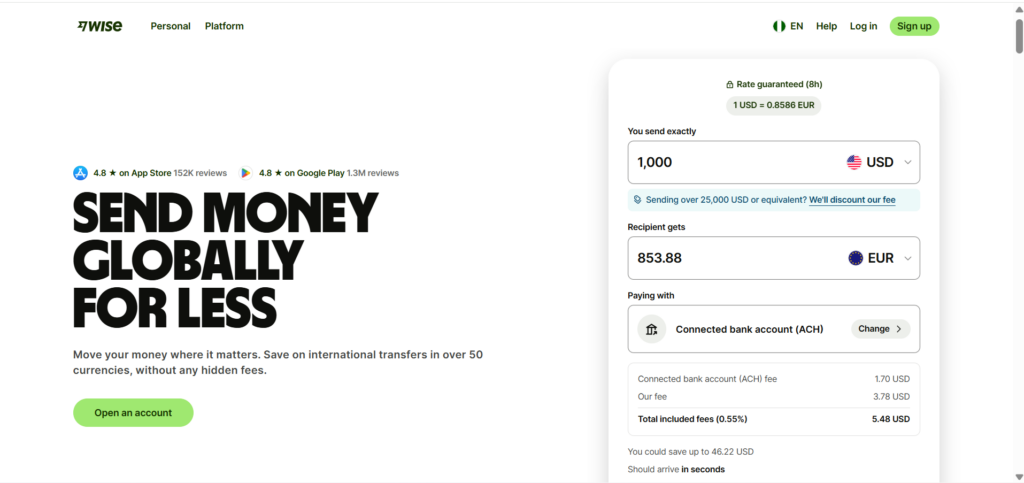
Wise is a global money transfer service popular among freelancers who value low fees and transparent exchange rates. It enables Nigerian freelancers to receive international funds into multi-currency accounts.
Why it works:
Wise is known for using real mid-market exchange rates, meaning no hidden markups, and its transfers typically arrive within hours.
Pros:
- Transparent, real-time FX rates
- Low and predictable transfer fees
- Supports over 50 currencies
Cons:
- Not yet integrated directly with Nigerian banks
- Requires verification for larger transfers
Best for: Freelancers with international clients who want a simple, affordable way to receive global payments.
3. Raenest
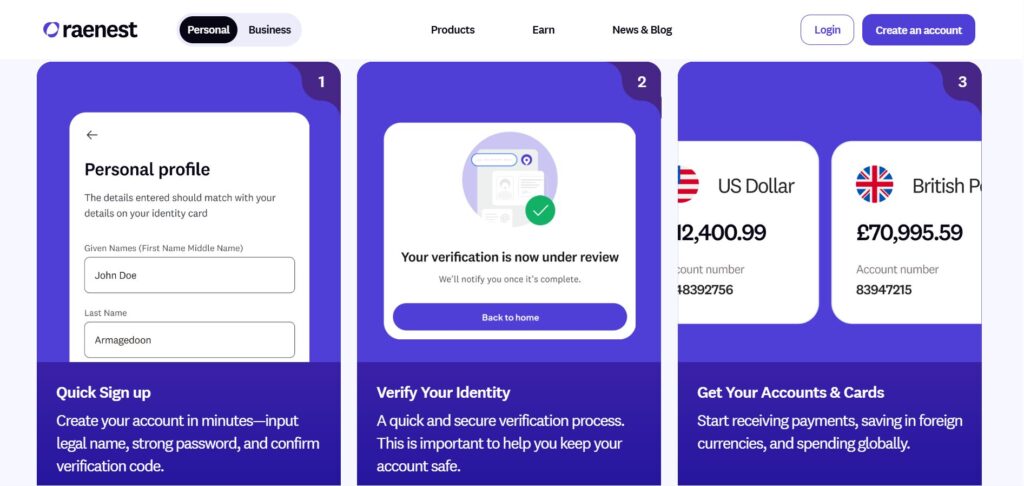
Raenest, formerly known as Geegpay, is one of the fastest-growing platforms designed specifically for African freelancers and remote workers. It offers virtual USD, GBP and EUR accounts, a virtual dollar card, and easy currency conversion tools. It expanded into the United States in late 2025 after a $11 million Series A led by QED Investors.
Why it works:
Raenest enables freelancers to get paid by clients or platforms like Payoneer, Wise, and Fiverr, convert their earnings, and withdraw directly to Nigerian banks.
Pros:
- Quick setup and fast payments
- Transparent FX rates
- Virtual USD card for online spending and subscriptions
Cons:
- Still expanding global integrations
- Transfer limits may apply for new users.
Best for: Freelancers seeking an all-in-one mobile-first payment platform for quick, low-fee transactions.
Related article: Raenest expands to U.S. market in global push
4. Grey
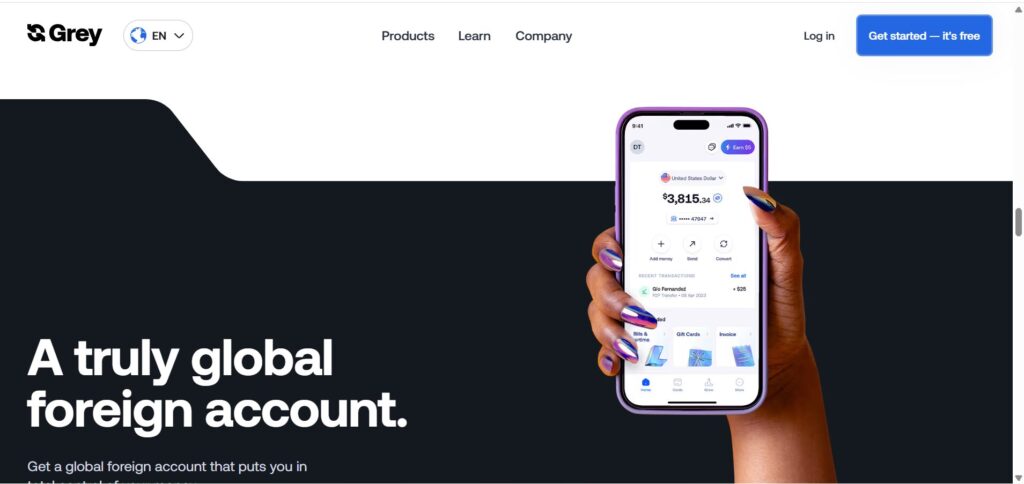
Grey (formerly Aboki Africa) allows Nigerian freelancers to open virtual foreign bank accounts in the US, UK, and EU. It’s ideal for receiving payments directly from international clients or platforms like Wise and Revolut.
Why it works:
Freelancers can receive funds in foreign currencies, convert them at competitive rates, and withdraw directly to their Nigerian accounts.
Pros:
- Free virtual accounts in multiple currencies
- Competitive exchange rates
- Fast transfers and an easy-to-use app
Cons:
- Not yet integrated with major freelance marketplaces
- Customer support can be slow at peak times.
Best for: Freelancers with direct international clients who prefer fast, flexible transfers.
5. Cleva
Cleva is a fintech platform designed for African remote workers and freelancers who earn in foreign currencies. It provides US bank accounts, allowing users to receive payments in USD, convert at fair rates, and withdraw directly into Nigerian accounts.
Why it works:
Cleva offers same-day transfers, no hidden fees, and fast verification, making it one of the easiest apps for freelancers to start with.
Pros:
- Instant US account setup
- Competitive rates and low fees
- Fast and reliable transfers
Cons:
- Currently supports only USD
- Limited integrations with freelance marketplaces
Best for: Freelancers who get paid primarily in USD and want a reliable, mobile-first experience.
See More: Nigerian fintech Cleva gets into Y Combinator W24, raises $1.5 M pre-seed
6. CadRemit
CadRemit is suitable for receiving payments directly from international clients and freelance platforms. It is best when receiving funds across multiple currencies such as USD, CAD, and EUR.
Why it works:
Freelancers can receive international payments, hold funds in supported currencies, convert when needed, and send money directly to Nigerian accounts.
Pros:
- Supports international payments in multiple currencies
- Low exchange rates
- Fast transfers and an easy-to-use app
- Convenient for freelancers who regularly move money between currencies
- Accepts payments from freelance platforms and businesses
Cons:
- Availability of certain features depends on the currency and payment route
Best for: Freelancers and remote workers who receive international payments directly from clients and want a simple way to manage, convert, and transfer their money.
Tips for Managing International Payments
Even with great apps, your fund management skills significantly impact how much you retain. Here are a few practical ways to maximise your earnings:
- Use more than one platform: Combine tools, for example, Payoneer for Upwork clients and Grey or Raenest for direct transfers.
- Watch exchange rates: Track rates daily in apps like Grey or CadRemit converter to get the best conversion value.
- Bundle withdrawals: Withdraw larger sums less often to save on transfer fees.
- Keep clean records: Maintain transaction logs for tax filings, visa applications, or grant opportunities.
- Enable 2FA: Always secure your accounts with two-factor authentication.
- Stay informed: Follow fintech updates on X (Twitter) and LinkedIn to stay ahead of policy changes.
The Way Forward For Nigerian Freelancers
Getting paid as a Nigerian freelancer no longer has to be stressful. Platforms like Raenest, Grey, Cleva, CadRemit, Payoneer, and Wise now make receiving international payments faster, safer, and more affordable.
The key is to choose the platform that best fits your workflow, whether you work with global clients, local startups, or multiple income sources. By managing your finances wisely, you’ll spend less time chasing payments and more time building your freelance career.
Whichever you pick, verify a second platform this month before you need it. Two payment providers shut down in Nigeria this year, and the freelancers who lost the least were the ones who already had somewhere else to route a client.
Frequently Asked Questions For Receiving Freelance Payment
Which payment app is best for Nigerian freelancers in 2026?
There is no single answer, because the right choice depends on where your clients are. Raenest suits Upwork earners through its direct integration, Cleva suits dollar-only freelancers wanting the simplest fees, Grey suits those with European clients, and CadRemit suits anyone receiving US Dollars, Euro and Canadian dollars.
Can I receive Upwork payments directly into a Nigerian fintech account?
Yes, on several of these platforms. Raenest has a direct Upwork integration that settles in under an hour, and other platforms support Upwork deposits through standard US account details, though settlement takes longer.
Do I need a BVN to open these accounts?
Generally yes. Nigerian platforms require a BVN and government-issued ID for KYC, and international platforms require identity verification of their own. Have documents ready before you sign up, because verification delays are the most common reason a first payment arrives late.
Which app has the lowest fees?
That depends on your transaction pattern rather than the platform. Fixed-fee structures favour larger, less frequent deposits while percentage structures favour small ones, and the conversion markup usually costs more than either. Model your own monthly volume against each platform’s current fee page rather than trusting a comparison.
Can I hold dollars instead of converting to naira?
Yes on all six. This is one of the main reasons to use these platforms rather than accepting an automatic conversion from a marketplace, since it lets you choose when to convert rather than accepting whatever rate applies on payday.
Are these platforms safe?
The licensed ones are regulated and have consumer protections, which is why licensing appears in the comparison table above. Safety of your funds is a separate question from safety of the platform, though, and two well-regarded platforms closed in Nigeria this year, so withdraw regularly rather than treating any app as a savings account.
Can I use more than one payment app at the same time?
Yes, and you should. Most working freelancers run one platform for marketplace income and another for direct clients, which reduces fees and means a verification hold or a shutdown notice never stops your income entirely.
Last updated: August 24, 2026