
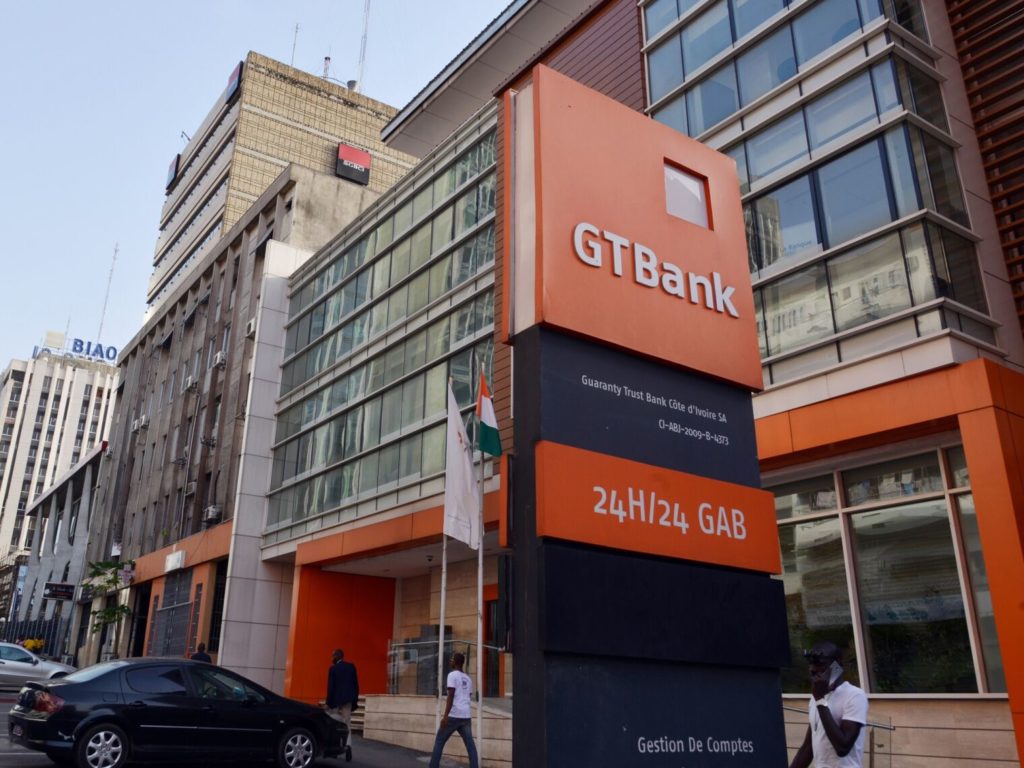
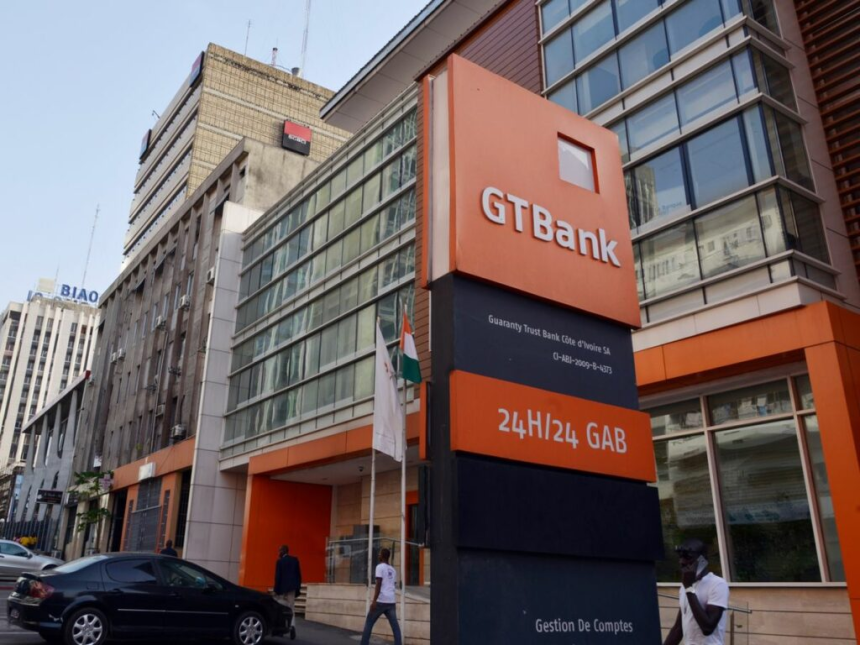
GTCO’s H1 2026 results offer a useful look at how the competition between banks and fintechs is changing. While the group reported ₦603 billion in profit before tax, the more interesting numbers sit inside HabariPay, its payments subsidiary, which made ₦7.81 billion in profit after tax in the first half of the year. This is up 94.3% from ₦4.02 billion in the same period last year.
HabariPay also generated ₦8.83 billion in operating income, up from ₦4.61 billion a year earlier. Its total assets stood at ₦1.42 trillion by June 2026, compared with ₦880.1 billion in June 2025.
Those numbers matter because HabariPay is no longer simply a bank-owned payment infrastructure trying to attract consumers. GTCO’s financial statement describes three businesses inside the company.
Its payment gateway processes transactions through virtual accounts, USSD, cards and bank transfers for tech companies, large corporates, SMEs and micro merchants. Its switching business handles account-to-account transfers and card transactions, while its value-added services cover products such as airtime and bulk SMS.
So, the fintech competition is increasingly moving beneath the apps customers interact with and into the infrastructure that allows those apps to move money.
GTCO is building beneath the fintech layer
HabariPay’s own history shows that this shift was deliberate.
In 2025, HabariPay CEO Eduofon Japhet said the company built its own switch to process low-value transactions and provide payment rails to the wider fintech and payments ecosystem. At the time, she said about 12 to 13 banks and major fintech companies were connected to the switch.
“We built a switch. We have about 12 to 13 banks connected as well as major fintech companies,” Japhet said, describing HabariPay’s role as an “enabler” for businesses building financial solutions.
That approach is becoming more relevant as Nigeria’s digital payments market grows. The CBN’s fintech policy report says almost 11 billion transactions were processed through the NIBSS Instant Payment platform in 2024, more than twice the roughly 5 billion recorded in 2022.
Read also: Inside the compliance sprint that reshaped Nigeria’s fintech sector
The scale of that market means that the infrastructure underneath payments can become just as important as the applications customers see.
Joseph Edike, a senior product manager, sees this as a change in where banks and fintechs will compete.
“HabariPay’s ₦7.8bn profit shows that competition is moving down the stack,” Edike said. “The apps and interfaces customers see are easy to copy. The infrastructure underneath them is not.”
He points to licences, switching, settlement and the deposit base as advantages banks already possess, while many fintechs still depend on banks for settlement accounts, virtual accounts and access to payment rails.
That creates an unusual dynamic. A bank can compete with a fintech at the customer-facing level while also becoming a provider of the infrastructure that other fintechs need.
“HabariPay shows what happens when a bank stops only supplying that infrastructure and competes with it directly, with the speed of a fintech. It built its own switch, runs its own gateway, and settles within the group. That combination is very hard for a standalone player to match on cost and reliability.
“With interest margins under pressure, payments are no longer a side project for banks. It is a core profit line, and more banks are starting to organise their payments businesses the way GTCO has.”
GTCO’s H1 filing provides evidence of how it is organising for that opportunity. HabariPay is wholly owned by GTCO, operates as one of its four direct subsidiaries and has shared services arrangements with the holding company covering IT, legal services, talent management, facilities and corporate communications.
The subsidiary’s financial position also shows the scale behind the operation. HabariPay held ₦1.38 trillion in investment securities at amortised cost at the end of June, alongside ₦31.9 billion in cash and bank balances.
The rails are becoming the business
The infrastructure opportunity is not unique to GTCO. Michael Adesola, acting CEO of CBN-licensed switching and processing company Belema Fintech, recently argued that Africa’s fintech growth needs to be matched by stronger payment infrastructure.
He said the next phase of fintech development would depend increasingly on the reliability of payment rails, processing platforms, switching infrastructure, APIs, identity systems and redundancy.
“Africa doesn’t have a fintech shortage. What we may have is a resilience shortage,” Adesola said.
Nkwachi Nwamaghinna, a fintech and payments engineer, similarly argued in a recent interview that payment infrastructure could become one of the biggest opportunities in Africa’s digital economy because almost every digital business now depends on reliable money movement. He noted that infrastructure becomes especially important when transactions fail, are delayed or require reversals.
That is where HabariPay’s H1 performance becomes more interesting.
The company is earning money from transaction activity rather than simply from selling a financial product. GTCO says its payment company recognises net commissions from merchant services based on the transaction value processed on behalf of merchants, alongside margins from services such as airtime vending and bulk SMS.
For businesses, a bank-backed payments platform can offer another advantage. Edike argues that corporate organisations can benefit from having collections settle into the same financial group that holds their operating accounts, while SMEs and technology companies can benefit from infrastructure capable of supporting low-value transactions.
But he also cautions that bank ownership alone does not guarantee success. The subsidiary still needs the independence to move quickly, a developer experience that can compete with fintechs, reliable systems during periods of heavy traffic and enough trust for fintechs to use infrastructure provided by a potential competitor.
That last point may become particularly important.
Nigeria’s payments infrastructure is itself undergoing another major transition. NIBSS said in August that its new National Payment Stack had processed 26.55 million transactions worth ₦1.4 trillion across 48 participating institutions during its rollout. GTBank was among the early participants alongside other major banks and Moniepoint.
The direction is clear even if the competitive outcome is not. Banks, fintechs and infrastructure providers are increasingly operating across the same layers of the payments stack.
GTCO’s H1 results show that HabariPay is already making substantial money from that shift. We should now look out for how far a bank-owned fintech can go from serving customers to powering the businesses that serve them.
Last updated: September 30, 2026