

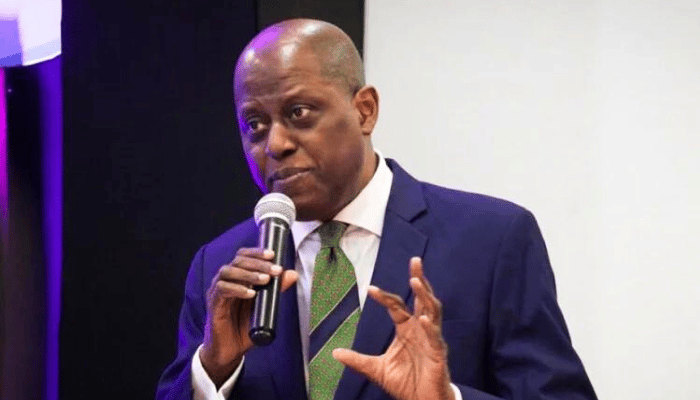
Two years of CBN policy affecting fintechs raise a bigger question: Was the regulatory push driven by Nigeria’s need to exit the FATF grey list, or was the CBN always preparing to subject fintechs to bank-style oversight once they became too large to ignore?
The timeline suggests a pivot. Olayemi Cardoso, the CBN governor, speaking months after Nigeria’s exit, suggests otherwise.
The compliance sprint and the quiet year that followed
Cardoso took over as the CBN governor in late September 2023, seven months after the Financial Action Task Force (FATF) placed Nigeria under increased monitoring for gaps in its anti-money laundering framework. Seven distinct interventions landed inside about 18 months.
December 22, 2023 reversed the ban on banks holding accounts for crypto firms. Between 2023 and April 2024, every bank and fintech account needed a verified BVN or NIN, freezing accounts that failed to comply and ending the phone number-only onboarding neobanks have built much of their growth on.
January and February 2024 excluded fintechs from direct IMTO licences and banned foreign currency remittance payouts. February 2024 revoked thousands of BDC licences. April and May 2024 brought the P2P crypto prohibition. Then a multi-month freeze on onboarding on OPay, Moniepoint, Kuda, PalmPay, and Paga happened. May 2024 required PoS agents to register as formal businesses.

Read also: Scoop: CBN releases list of 108 IMTOs with commercial approval
That sprint was never framed as reluctant compliance. Hafsat Bakari, chief executive of the Nigerian Financial Intelligence Unit (NFIU), told the Economic and Financial Crimes Commission (EFCC) leadership in March 2024 that “foreign interests alone must not drive us to do what is right.”
That framing meant the reforms were pitched from the start as serving Nigeria’s own interest. But then the record goes quiet.
No fintech-specific policy is dated anywhere in 2025. Nigeria cleared the full 19-point plan and exited the grey list on October 24, 2025, with Bakari calling it a true test of resilience, coordination, and unwavering commitment to reform.
At the same Paris plenary, the official 3-day decision-making assembly of the FATF, then finance minister Wale Edun told delegates that Nigeria’s ambition was never limited to finishing the action plan, adding that for Nigeria “the Action Plan was not the ceiling, but the floor of our aspirations.”
Remembering a quiet 2025, that statement reframes the entire sprint as a floor rather than a finish line, exactly the argument that fintech regulation expert Ayo Ogunkanmi makes about what came next.
What CBN says the 2026 rules are for
The quiet broke almost immediately. Ring-fencing rules forcing multi-product fintech groups to separate their licensed businesses ran from March through June 2026. The device-binding circular took effect on July 1. May 2026 restricted BVN-linked phone number changes to once in a lifetime. In the same month, there was a Payment Terminal Service Aggregator (PTSA) certification requirement for every PoS terminal.
June 2026 delivered both the payment data localisation mandate and the market concentration caps limiting any single platform to 25% of the consumer-issuing market before its merchant-acquiring activity gets capped at 15%. August 2026 opened a second sandbox cohort splitting VASPs from data-enabled services.
None of these policies appears in Bakari’s account of what got Nigeria delisted.
The CBN has since explained itself. At the Business Journal Fintech and Financial Inclusion Roundtable in August 2026, Cardoso, represented by payment system supervision director Rakiya Opemi Yusuf, said no institution or group of related institutions would be allowed to use market power to stifle competition or undermine consumer protection.
The director said the concentration caps exist to stop any institution from leveraging dominance in one segment to gain unfair control over another. Rakiya said the data localisation mandate strengthens data security and reduces dependence on foreign systems.
She stressed the rule applies regardless of an institution’s size or business model, though operators with greater market influence would face higher governance expectations. This is CBN naming its own rationale on the record, and it has nothing to do with the FATF.
It also lines up with Ogunkanmi’s argument when asked. He called the concentration caps “clearly an economic risk management system” and rejected the idea that any of it protects incumbents.
He called that a “typical cynical view” and located the pattern before Cardoso entirely, pointing to CBN licencing Unified Payments in 2024 to compete with NIBSS on transaction routing.
“I think these measures are more from the perspective of financial system stability, strengthening controls, and frankly to move investment towards Nigeria. The latter being the ultimate aim of the earlier AML/CFT interventions. Concentration caps are clearly an economic risk management system,” Ogunkanmi said.
He added that “the CBN always acts to make markets more competitive with the aim of protecting consumers.”
Summarily, the genuine question is not whether the 2026 rules are about competition because the CBN has settled that.
The open question is whether a rule capping market share regardless of institution type still functions as incumbent protection in practice, since the platforms currently large enough to hit that ceiling happen to be fintechs rather than banks.
On what happens next, Ogunkanmi expects compliance controls to stay fixed while licencing itself gets easier to obtain, a combination that would keep the door open while keeping growth capped once anyone walks through it.
“I see the CBN being more flexible in the type of licences granted and the ease of obtaining them.”
People in this article

Last updated: September 25, 2026