


At the Bluechip Technologies Data and AI Summit in Lagos, investors, founders, and technology leaders gathered to debate the future of artificial intelligence on the continent. They largely agreed that the time to act is now.
The third edition of the Bluechip Data and AI Summit was themed “The Future, Now: AI-Driven Transformation for Africa.” The event, held at the Eko Hotels and Suites in Lagos, brought together key voices to discuss what artificial intelligence means for Africa’s economic future and the role African companies can play.
Speakers at the third edition of the annual event included Rosanne Werner, Founder and CEO of XCelerate IQ, who delivered a riveting keynote. Also on stage were Fola Olatunji David, Founding Partner at Kickoff Africa; Victoria Ajayi, Group Managing Director and CEO of TVC Communications; Kola Aina, Founding Partner at Ventures Platform Fund; and Jonathan Woolf, Chief Revenue Officer at Intent HQ.
The future of AI-driven transformation for Africa is now
Rosanne Werner, Founder/CEO of XCelerate IQ, delivered the summit’s keynote address and highlighted the immense economic potential of artificial intelligence across the continent. “Africa’s AI market is predicted to go from 4.9 billion to 16.9 billion by 2030. It is time to act now. It is time to act intentionally,” Werner said.
Werner further explained that organisations must focus heavily on the practicality and human elements of implementing these technological changes. “You should ask, what’s the specific problem we’re trying to solve here, and is AI the most efficient at all for the job? Some AI solutions cost more than the problem in itself,” she noted.
Industry leaders in attendance agreed that AI conversations in Africa have moved well beyond simple chatbot interactions toward enterprise-wide deployments, localised language models, and strategic technology acquisitions, with the continent increasingly positioning itself as a builder of AI-driven solutions rather than merely a consumer of global technologies.
Olumide Soyombo, the Co-founder of Bluechip Technologies and the founder of Voltron Capital, says AI’s next chapter isn’t ChatGPT. “What we are seeing today is AI’s use case in cybersecurity, defence, and warfare,” he said to Condia in a press briefing during the event. “We have recently heard about Claude restricting one of its models because of how powerful it was in cybersecurity.”
He added that AI will cause a major shift in different areas of life. In biosciences, for example, AI is now speeding up genome sequencing and DNA research to develop drugs for cancers and other diseases that have evaded scientists for years.“You are going to see AI playing those key spaces in the future, not just seen as a chatbot,” he said.
What Bluechip Technologies’ acquisition of YarnGPT means for the ecosystem
The peak of the event was when the Chief Executive Officer, Kazeem Tewogbade, announced that Bluechip Technologies Limited has acquired YarnGPT, a Nigerian-built text-to-speech AI model capable of translating English and other foreign languages into Nigerian accents and at least four indigenous languages, including Hausa, Igbo, and Yoruba.
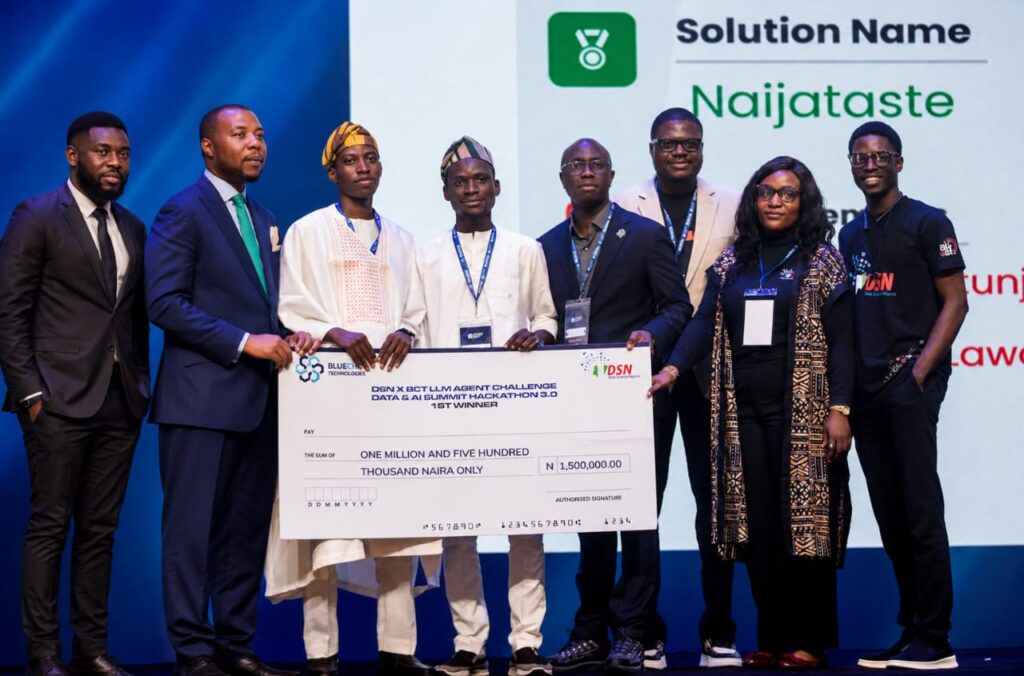
YarnGPT was created by Saheed Azeez, a University of Lagos alumnus who placed first runner-up at the Bluechip Data and AI Hackathon in 2023. The deal is a rare instance in Nigeria’s AI ecosystem of a hackathon project progressing directly to acquisition by an established technology company.
Tewogbade said the acquisition fits into Bluechip’s broader strategy of expanding its product ecosystem through both internal development and targeted acquisitions. “So, going forward, we’ll be building, and we’ll be acquiring. People that are entrepreneurs and startup owners should expose their products and services for more investments and even buyouts,” he said.
This acquisition sends a clear message to Nigeria’s tech ecosystem: homegrown AI innovation has a market at home. The acquisition of YarnGPT by Bluechip Technologies sends a clear message to Nigeria’s tech ecosystem: homegrown AI innovation has a market at home. Built by a young University of Lagos graduate who entered a hackathon, YarnGPT’s journey to acquisition tells every developer and student in the ecosystem that the path from idea to impact is shorter than it has ever been.
It also reframes what success looks like for African AI builders. Rather than chasing foreign investors or Western accelerators, founders now have a domestic model to aspire to, one where established Nigerian companies absorb and scale local innovation from within. If others follow Bluechip’s lead, it could shift the ecosystem’s centre of gravity in ways that matter for a long time.
Building a healthy AI talent pipeline
When Kazeem Tewogbade, Chief Executive Officer of Bluechip Technologies, was asked how the ecosystem can sustain a healthy pipeline of AI talent, his answer was less a corporate talking point. It was more of a frank conversation about investment, responsibility, and personal drive.
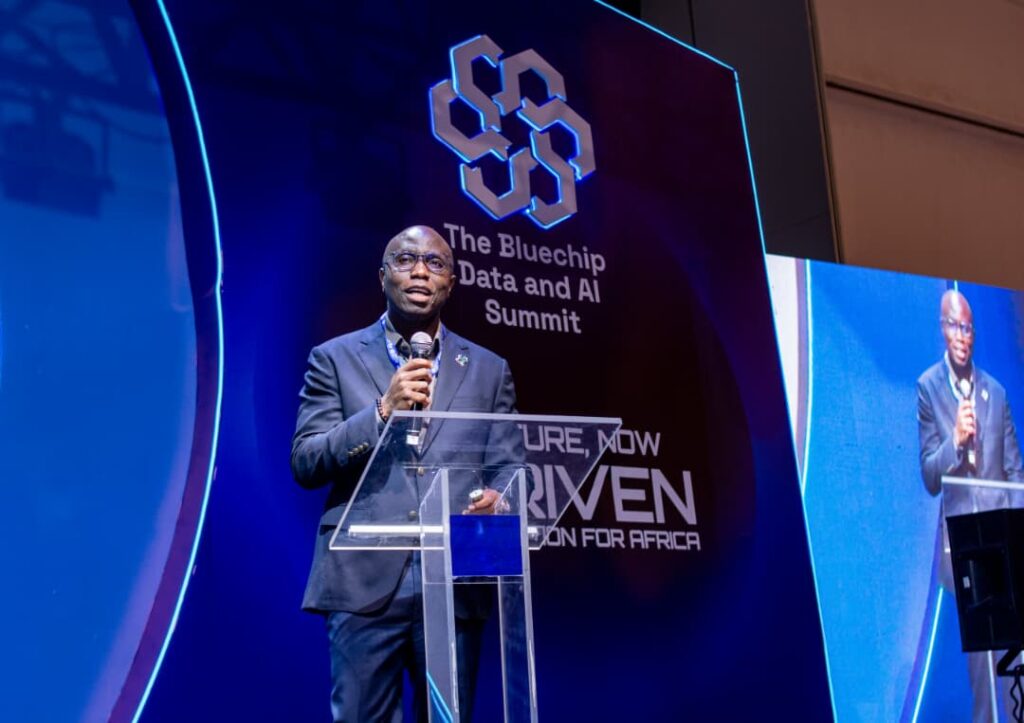
“I think we need to make the right choices about investment,” he said. “Whether it’s from the government or from the private sector.” He was quick to acknowledge where he stands. Private-sector players are motivated by profit, but, in his view, profit and impact are not opposites.
As evidence, he pointed to Jada, a talent development initiative that Bluechip Technologies helped found, which trains local AI talent for markets in Europe, the Middle East, and Asia that are hungry for engineers. “For us, it’s a commercial model,” he said. “Jada is going to places now.”
The broader solution, however, requires everyone to show up. Tewogbade attended a public school in Lagos and still visits to speak with students. He said the government and the private sector must work together to deepen youth interest in STEM, push universities to revitalise their curricula, and reduce disruptions to schooling.
Yet the sharpest part of his message was directed at individuals. “The point that has to be raised is self-help,” he said. “Some of us didn’t have this opportunity when we were starting our careers. A lot of people at that time used self-help. And nothing beats self-help.”
The tools needed to learn AI, he noted, are not locked behind expensive institutions. “The skill development you need for AI analytics or software development, the tools you need are on your internet and on your laptop. So self-development is key.”
People in this article

Last updated: June 16, 2026