
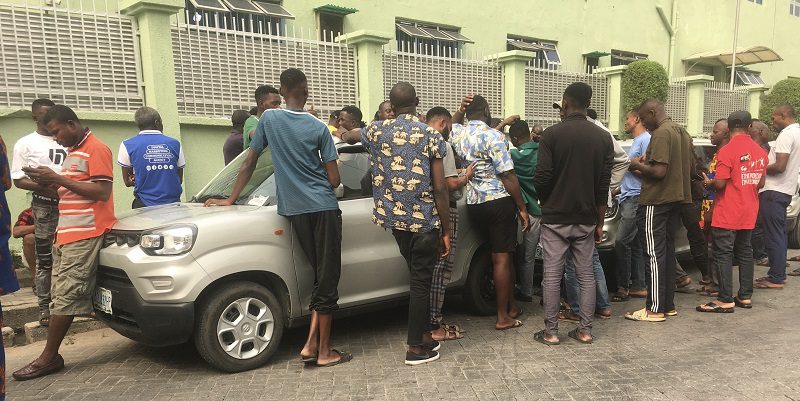
On the morning of September 2, 2026, drivers across Lagos opened the Uber app and found nothing waiting for them. No ride requests, no notifications, and no explanation beyond an email that had gone out the previous night.
“We are writing to share some difficult news,” the company told customers. “After a thorough review of our business, we have made the tough decision to wind down our operations in Nigeria.”
Twelve years after it first launched in Lagos, Uber was gone. The company framed the exit as routine business housekeeping, part of a larger restructuring that cut roughly 3,300 jobs worldwide and exited Uganda.
Uber had already left Ivory Coast in 2025 and Tanzania in January 2026, and it now keeps only four markets on the continent — Egypt, Ghana, Kenya and South Africa.
For its drivers, Uber promised a one-time goodwill payment and will keep its help centre open until September 23 for account queries. It did not disclose how much the payment would be, and it made drivers agree to keep the terms private.
For a company that spent over a decade teaching an entire country a new way to move, the goodbye arrived without much fanfare.
The Uber standard nobody could match
Uber launched in Lagos on July 23, 2014, the fourth African city to get the service, with musician Ice Prince cast as the ceremonial first rider.
Within a year, Uber had embedded itself into the city’s tech scene deeply enough to co-host a hackathon at Andela, with judges who would go on to define the industry.
The judges of that hackathon included Jason Njoku of iROKO and Tayo Oviosu of Paga. By 2016, the company had expanded to Abuja and claimed it had created over 1,000 economic opportunities in the country.
Collins, a driver who has worked with Uber for nine years, still credits the platform with reshaping how Nigerians move and shop. “By bringing in this technology and exposing the whole system to their own method, they really helped reshape the transportation industry,” he said. “We didn’t know that we could just sit in our houses and make requests. We also didn’t know that we could do deliveries of certain items.”
Before Uber, hailing a ride in Lagos meant standing at a roadside and negotiating with a stranger. After Uber, it meant tapping a screen and watching a car approach in real time.
Comrade Wasiu Ogunjobi, known on the road as Westman Lagos Base, points to a quieter feature of that standard, the verification that came with every trip.
“Uber is a standard app,” he said. “They can’t operate the way other apps operate.” He described how Uber required both drivers and riders to register verified details before they could use the platform, a system he says newer entrants never matched. “No matter what happens, they will trace you,” he said, “but Bolt is not like that.”
Uber also capped shifts at 12 hours and logged drivers out to force rest, a welfare rule that both drivers remember, even if neither misses the pressure to earn everything they needed within that window.
A war with no winners
That standard came at a cost Uber eventually could not sustain on its own terms. Bolt entered the Nigerian market in 2016 and forced Uber into what Collins calls a rough-and-tumble fight.
Uber had refused to onboard vehicles older than 2010. As the price war deepened, that line collapsed, and Collins says Uber began accepting cars as old as 1999 just to keep drivers on the road.
Fares fell just as fast. “If a fare of 10,000 naira was slashed to 3,000 or 4,000,” Collins said, “who do you think will get to do this thing? It is the drivers.” He put the arrangement plainly. “We are partners now. We are the ones bringing our vehicles. We are the ones maintaining our vehicles. There was no support from anywhere.”
InDrive pushed the same dynamic further by letting riders set their own fares through a bidding system that Collins says riders learned to exploit, sometimes cutting a 15,000 naira trip t0 3,000. He argues the arrangement inverted the entire relationship. “You now look like you are the one begging for money,” he said, “rather than it being the other way around.”
Some of the strain came from financing arrangements drivers had little control over. Collins described a partnership between Uber and Moove, a vehicle leasing company that supplied cars and drivers under the Uber brand in exchange for a cut of the platform’s investment.
What both drivers agree on is that Moove-partnered drivers had the least freedom of anyone in the system. “They were locked up,” Collins said. “They had no choice.” He described vehicles left idle for weeks over unresolved maintenance disputes, cars that sat waiting for engine oil while someone further up the chain decided who got the contract to supply it.
Government intervention added its own weight. Collins recalled a period when the Lagos government introduced a booking fee, and inspection requirements multiplied on top of the checks drivers already paid for through the app companies and the standard vehicle inspection office.
Meanwhile, drivers tried to organise. A union effort began, and Collins says it was compromised almost immediately, leaving drivers to negotiate individually with a company that could isolate any single complaint. “The power in this industry belongs to the drivers,” he said. “It’s not in the app company’s hand. It’s not even in the rider’s hand.” His own answer was to boycott quietly rather than protest publicly, a position he holds even now, having watched Bolt raise its fares and commissions once it had captured enough of the market to no longer need the driver goodwill it once relied on.
Comrade Wasiu’s numbers tell the same story from a different angle. He described a friend who recently spent nearly 300,000 naira and three days repairing a car. Fuel prices have climbed roughly 580% since the current administration took office, and every naira of that increase eats into a fare structure that competitors kept driving down.
Uber’s own 2023 estimate claimed the platform added 6.1 billion naira in extra annual income for Nigerian drivers compared with traditional taxis. Whatever truth sits in that number, it clearly stopped being enough.
The public reaction since September 2 has split along familiar lines. Some Nigerians blame Uber directly. “Uber isn’t shutting down because of Nigeria’s economy,” wrote one commentator online, arguing the company simply stopped innovating fast enough to compete. Others turned the blame back on drivers themselves, with one widely shared post arguing the platform could never survive at scale once drivers routinely took matched rides offline to dodge commission. A smaller group saw opportunity rather than loss, framing the gap Uber left behind as room for a homegrown alternative to finally take hold.
Wasiu is betting on exactly that. He described an app built and owned by drivers themselves, priced to match what he calls the real economy rather than a boardroom in another country, with profits shared among the drivers who built it instead of extracted as commission.
“A lot of drivers that are using Bolt and InDrive, if they see what is going on in that driver app, they will leave the app and come to their own app,” he said. For now, the idea remains exactly that, an idea, one more entry in a long list of promises Nigerian drivers have heard before.
There is one detail that complicates Uber’s official story. Collins says the company had just introduced a korope service in Lagos months before the shutdown, the Uber Mini, new vehicles branded and caged and parked on the roadside waiting for riders. That makes the company’s stated reason for leaving awkward – a search for markets with more room to invest.
That search, at least, is visible elsewhere. On September 3, one day after Uber’s Nigerian app went dark, the company launched supervised autonomous rides in London in partnership with Wayve, putting fewer than 20 driverless Ford Mustang Mach E vehicles on the road under a trained safety operator.
Nothing in the public record connects the two decisions directly, and the Nigerian exit traces to competition and cost rather than automation. Still, the timing carries its own weight. In the same week that Uber walked away from the drivers who built its business in its oldest African market, citing costs it could no longer justify, it opened its newest market by investing in a version of the business that needs no driver at all.
Uber spent 12 years teaching Lagos to expect a car within minutes, a receipt without cash, a delivery without a trip to the market. That behaviour is not leaving with the app. Bolt and InDrive inherit it, whatever their drivers make of the bargain, and whichever driver-owned app eventually launches will have to compete with a standard that Uber itself set and then could not afford to keep.
People in this article

Last updated: September 4, 2026