

The global spectacle, the FIFA World Cup, returns this month after a four-year wait. This year’s edition is already looking like a historic one, with too many moving parts and irregularities not seen in the competition for a very long time.
First, the Competition is being held in uncharted territory, the USA, Canada, and Mexico. The USA, being the centre stage of this year’s competition, has made headlines because the country is largely not a footballing nation.
A few weeks to the World Cup kick-off, and there are already complaints of poor training facilities with major football teams training in high school grounds. Professional players are also complaining about the turf in some stadiums, as they are multipurpose venues used for other sporting activities.
Then there are the Visa issues. Some footballing nations are struggling with their paperwork, with countries like Iran having to fly in on match day, play, and then leave the country after their match. Top-rated match official Omar Abdulkadir Artan from Somalia was denied entry into the United States at the Miami International Airport. The U.S Customs and Border Protection said he was Inadmissible due to vetting concerns.
Security, the elephant in the room, which has always been the primary concern for most football lovers, is already a major concern. Nine people were injured in a shooting in Kansas City, Missouri, near England’s World Cup Base Camp.
Finally, the business side of the 2026 World Cup is also suffering. The match tickets for the games are some of the highest the competition has seen. In major cities like Los Angeles and Dallas, the average price of the cheapest group-stage ticket is $1,000. A ticket to the final of the competition reportedly cost $6,730
All these issues are already painting an uncomfortable picture before the official kick-off of the world’s biggest sporting event. Football fans worldwide are questioning FIFA’s decision, which is expected to complete its vetting and homework before assigning hosting rights.
The Positives
Despite the negatives, the 2026 FIFA World Cup is not without some positives. First, the United States on a normal day, is a difficult country to access. Despite strict visa restrictions, many people will visit the country for the first time because of the World Cup.
Secondly, the United States remains the world’s largest economy, and the World Cup will introduce football to millions of people in the country. This is a good business move for FIFA, as, despite the move of Football star Lionel Messi to the US, the US football market still remains an untapped gold mine.
Additionally, North America hosting the World Cup this time positions football as a truly global event, transcending borders and time zones.
The New World Cup Ball and the Amazing Tech Behind It
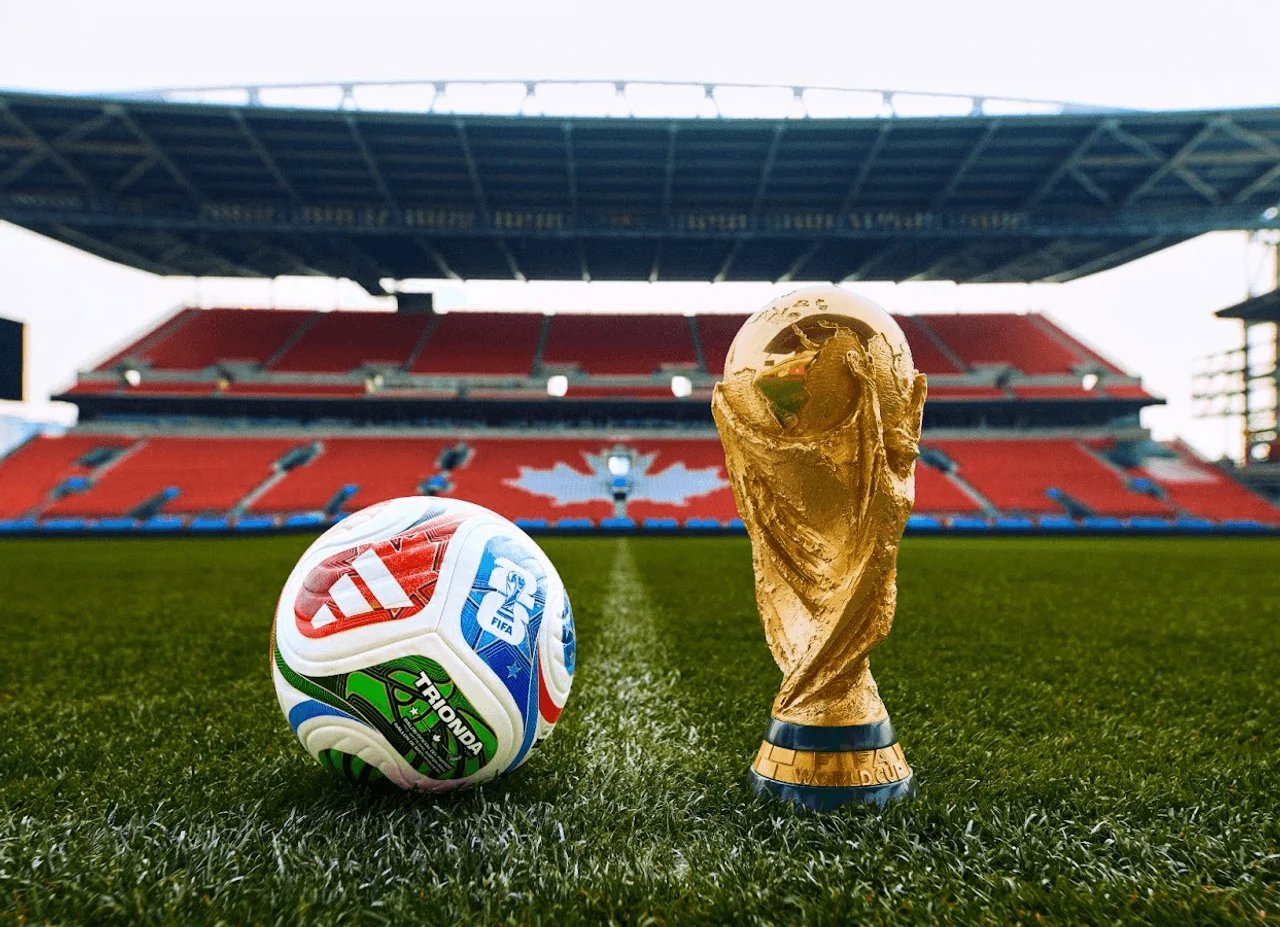
The United States is a world leader in Science and Technology. The World Cup coming to its shores presented an opportunity for some historic innovation befitting of the country’s culture. The new Adidas Trionda is the official match ball of the World Cup, and it presents some amazing, never-before-seen technology in sports
The Adidas Trionda integrates cutting-edge internal electronics with advanced aerodynamics to transform officiating and gameplay. Core technology includes
Connected Ball Technology
The core tech feature is a built-in 500Hz Inertial Measurement Unit (IMU) sensor chip. Positioned within the ball’s panels, this sensor tracks acceleration, spin, and 3D position, capturing data at 500 Hz.
It transmits this information in real time to the Video Assistant Referee (VAR) room, working alongside stadium tracking cameras to make semi-automated offside and handball decisions instantly. To power this chip, the ball is chargeable, requiring a 90-minute charge to last six hours on the pitch.
Four-Panel Fluid Geometry
Differing from multi-panel designs, the Trionda features just four thermally bonded polyurethane panels. This is the lowest panel count in World Cup history. This creates an incredibly round, smooth surface that reduces unpredictable aerodynamic wobbles.
Enhanced Aero & Grip
The ball incorporates intentionally deep seams to distribute drag evenly and optimize in-flight stability. Additionally, the outer shell features embossed and debossed micro-textures on its surface icons, significantly enhancing grip for players when striking or dribbling in wet and humid conditions.
The design of the ball is themed around the three host countries: the United States, Canada, and Mexico. The trionda joins other iconic World Cup balls, such as the Jabulani used in South Africa 2010, and the Al Rihla used in Qatar in 2022.
Last updated: June 10, 2026