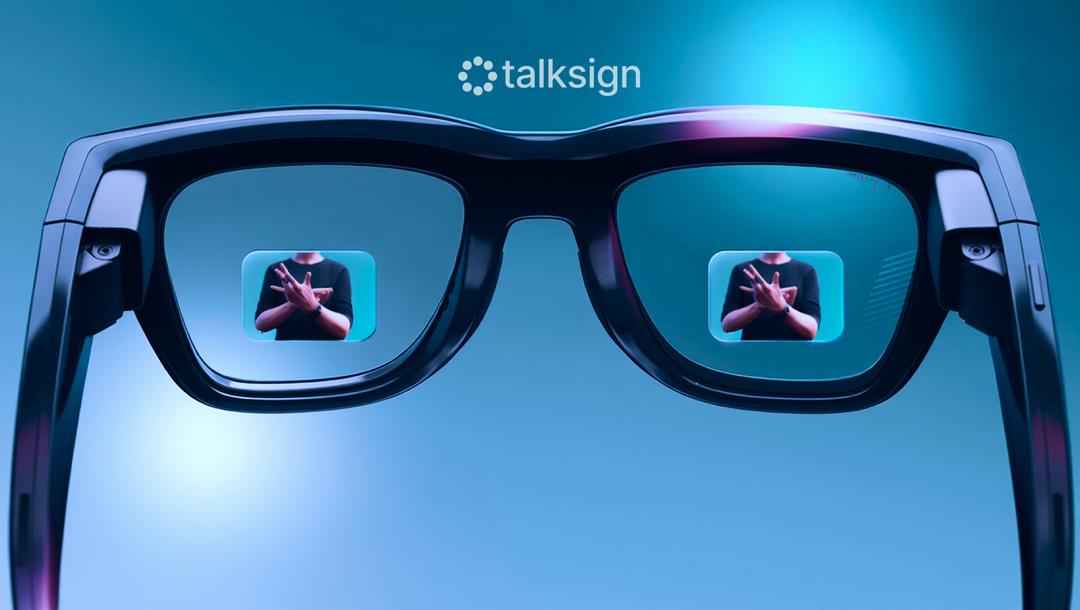
Talksign, a Nigerian and UK-based AI startup, has launched a marketplace where Deaf communities, researchers, and companies can contribute, annotate, license, and access sign language datasets. A bid to fix what the company calls the “missing infrastructure layer” that has stalled progress across the field.
According to the World Health Organisation, over 5% of the world’s population requires rehabilitation for disabling hearing loss. Yet that population depends on about 200 to 300 documented sign languages, and almost none of them are represented in machine learning at any meaningful scale.
The core problem is data asymmetry. Speech-recognition models have had two decades of scraped, transcribed web audio to train on; sign language corpora, by contrast, tend to be small, recorded in single studios with a handful of signers, and rarely licensable. That means models built on them fail on regional variation, Deaf-native signing rhythm, and the facial grammar that carries negation and emphasis in sign languages.
Read also: South African AI startup Verascient raises $1.2 million in an oversubscribed pre-seed round
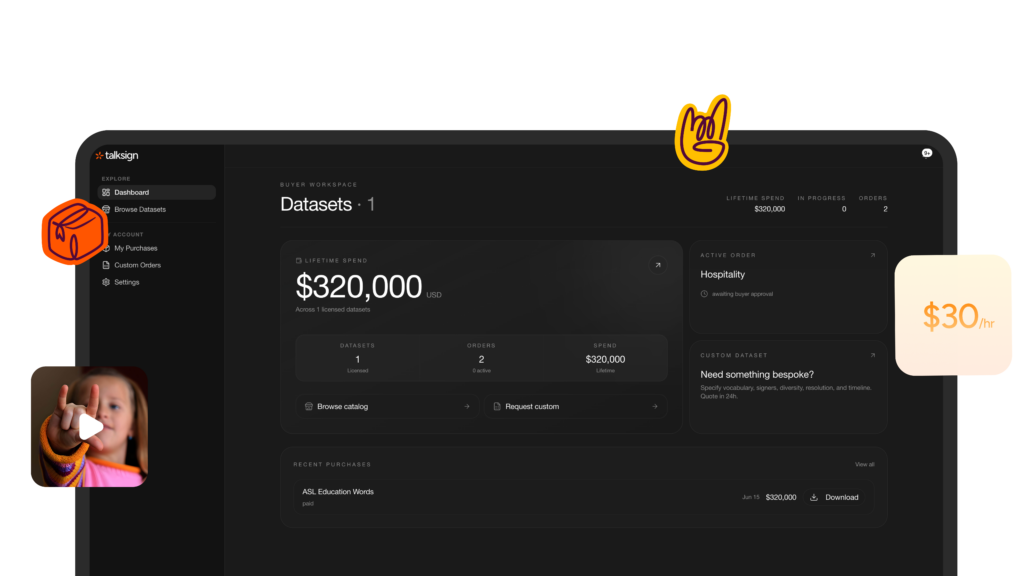
Founded in November 2025 by Edidiong Ekong and AI engineer Kazi Mahathir Rahman. The marketplace platform runs on four functions: contribution, where signers and Deaf organisations submit recorded data for payment; annotation, where fluent signers are paid to convert raw video into gloss-labelled training data; licensing, which gives buyers machine-readable terms and provenance records; and access, letting researchers and startups acquire datasets across languages and dialects in one place rather than negotiating separately with individual institutions.
Every listed dataset can be checked through an open verification portal which ties each dataset to its source and consent terms.
Talksign says the marketplace grew out of constraints it hit building its own products. The company has developed Palm 1.0, a speech-to-sign model, and Echo 1.0, a sign-to-speech model. Talksign reports Palm reaches 84.2% semantic accuracy at roughly 29 milliseconds of latency, and Echo achieves a 0.927 structural similarity score at 30 frames per second.
Those models followed Talksign-1, the company’s bidirectional ASL translation tool unveiled in February 2026, which converts American Sign Language into speech and text in under 100 milliseconds and recognises a vocabulary of 250 ASL signs.
Last updated: August 25, 2026