

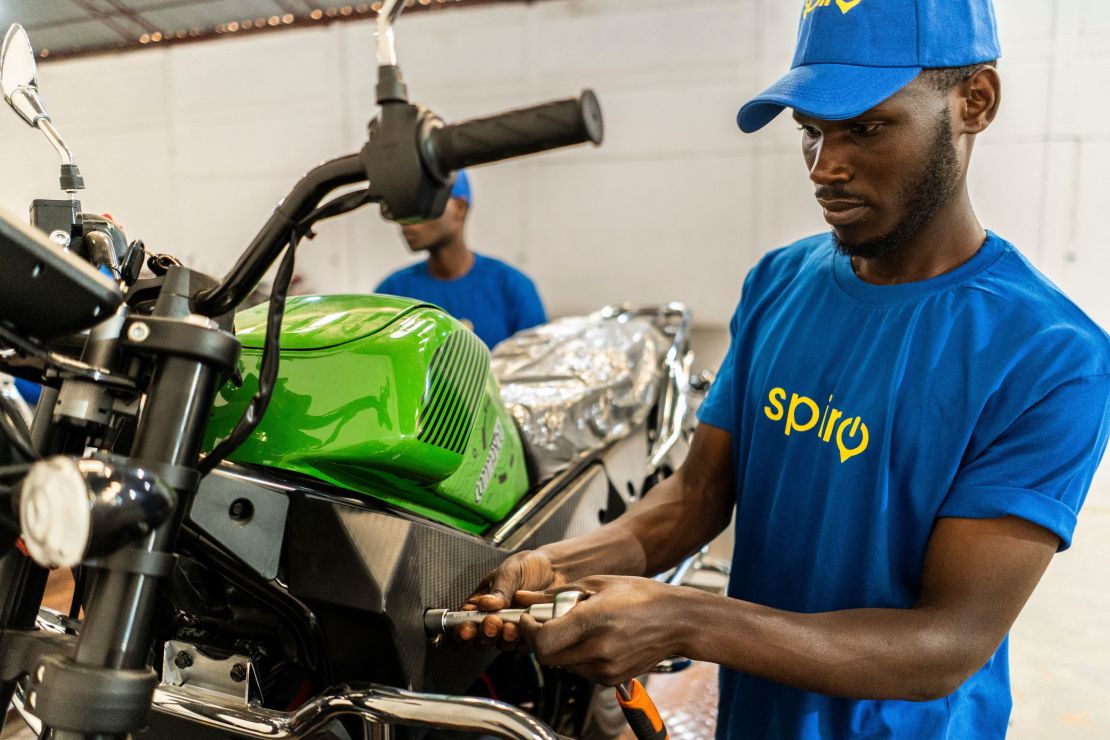
Spiro, an African electric vehicle (EV) and battery-swapping company, revealed it now has 95,000 electric motorcycles across Africa and is launching operations in Cameroon, as well as a partnership with pan-African consulting firm Entrepreneurial Solutions Partners (ESP) to get more women into the e-mobility economy.
The Cameroon entry brings Spiro to seven operational markets — adding to Benin, Kenya, Nigeria, Rwanda, Togo, and Uganda alongside a pilot programme in Tanzania.
The ESP partnership, formalised through a Memorandum of Understanding, will launch a Women in E-Mobility initiative starting in Rwanda. The programme will give women access to electric motorcycles, financing, and training, and plug them into mobility and logistics platforms. ESP, which has offices in Kigali, Abidjan, Nairobi, and Dakar, will handle programme design and implementation; Spiro contributes its battery-swapping infrastructure and financing capabilities.
The 95,000-motorcycle figure represents a meaningful jump from the 80,000 Spiro reported as recently as February 2026, when it raised $50 million through a debt round led by Afreximbank to fund further expansion.
Alongside the motorcycle count, Spiro says it has deployed over 2,500 battery-swapping stations and completed more than 30 million battery swaps, representing over One billion kilometres of low-carbon travel.
In Kenya, Spiro captured a 60% share of new electric motorcycle sales in 2025, with over 15,000 units sold out of 25,277 electric motorcycles registered in the country that year.
The company’s model — separating battery ownership from vehicle purchase through lease-to-own financing and pay-per-swap billing is designed to lower entry costs for commercial riders whose margins are squeezed by fuel price volatility. Spiro’s Nigerian operations remain comparatively small, with the company still figuring out how to position itself against a domestic fuel market shifted by the Dangote refinery.
Spiro assembles motorcycles in Uganda, Kenya, and Rwanda, and has stated an ambition to increase local sourcing from around 30% to 70% within two years.
Last updated: May 15, 2026