
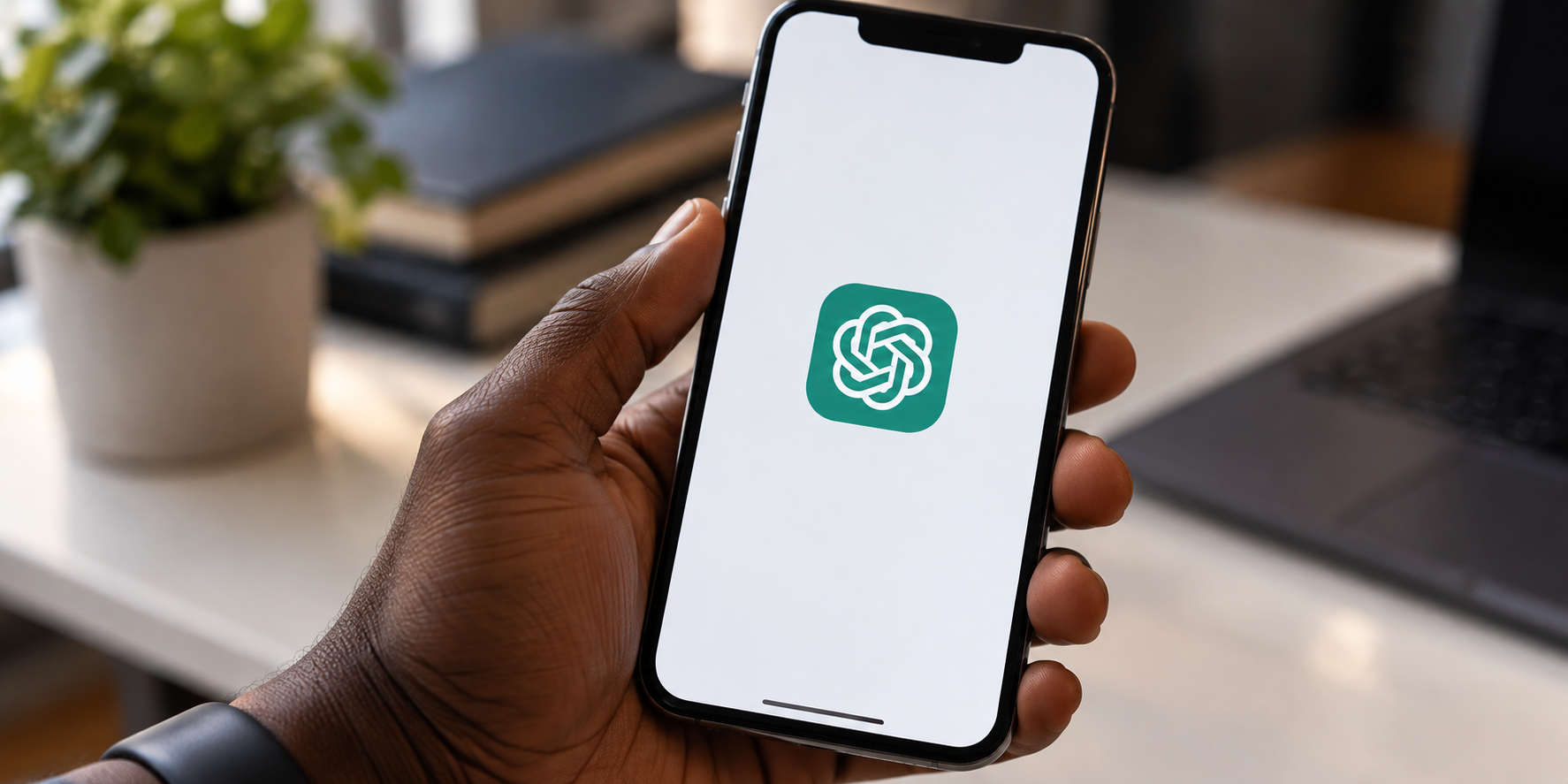
ChatGPT is one of the most used generative AI tools in the world today. People use it daily for work, school, business, research, and more. But many users do not know how to use ChatGPT Free well. Fewer still know what they can do with it without paying.
ChatGPT does more than text chats. Users can search for information, study files, work with data, create images, use voice to text, write content, learn new skills, and use existing GPTs.
This article explains how to access ChatGPT for free. It also covers what users can do with it, how businesses can use it, what changes on a paid plan, and what a “free” AI tool can really cost.
What OpenAI is building with ChatGPT
OpenAI’s best-known product is ChatGPT. It is a generative AI tool that answers questions from stored knowledge, searches the web, and handles more complex tasks through agents.
OpenAI’s bigger goal is Artificial General Intelligence, or AGI. The company wants to build AI that can understand a task, reason through it, use tools, and help complete the work. That goal is why ChatGPT has moved beyond simple question-and-answer chats.
Sam Altman, the CEO of OpenAI, has described this direction in his blog. He says the future of AI is highly personalized and easy for everyone to use. That shift, he says, will give people far more intellectual capacity than they can access on their own. In his words, the industry is building a kind of “brain for the world.”
Altman has argued that the 2030s could bring a world where intelligence and energy become far more abundant. Altman says this would remove two major limits on human progress. By 2030, he says, one person may get far more done than a person could in 2020.
His 2035 vision goes further. In that post, he wrote that someone in 2035 could have access to intellectual capacity equal to everyone in 2025. He has also imagined AI helping solve problems like new medical treatments, scientific discoveries, and large-scale education. In another essay, he described a goal of making intelligence so cheap and widely available that its cost could approach the cost of electricity.
These are Altman’s forecasts and visions, not established facts. But they show the scale of what OpenAI is trying to build beyond ChatGPT as a consumer app.
Easy Ways To Access ChatGPT Free
The realistic paths to use ChatGPT free as an African are fewer than those available globally:
Referral invites from Plus users
This works anywhere in Africa. However, it depends on knowing someone who already pays for Plus. Existing subscribers can generate limited invite links that give temporary Plus-level access. If you have the contact, this is the fastest route.
Through a school or workplace
Some schools, universities, and companies provide AI tools to their students or workers. In that case, ChatGPT may be available through an organization’s workspace without you paying for it yourself. What you get depends on what the school or institution pays for.
This path has already opened in Africa. Mohammed VI Polytechnic University in Morocco became the first African university to deploy ChatGPT Edu through an OpenAI partnership, giving students and staff free access to the tool. If your university holds a similar license, Plus-tier features come through the institution at no cost to you. Check your school’s IT office before assuming it is out of reach.
Startup and Developer Programs
Some programs provide AI credits or access to selected users. OpenAI has partnered with Creative Destruction Lab to give more than 700 startups across 17 countries access to credits and higher rate limits. These programs are competitive and not open to everyone.
Staying on ChatGPT Free
Another option is simply to stay on Free when you do not need the extra features. Free now includes web search, file uploads, image creation, voice, and GPTs, with limits.
Paying less with a virtual dollar card
Aside from using ChatGPT for free, an African user can also pay less. But many Nigerians face the barrier of card decline.
In this case, Naira Mastercards, Verve cards, and most Nigerian bank cards get declined by Stripe because they cannot handle recurring USD charges. To bypass this, a user will need a virtual dollar card from providers like Figo, Cardsoon, or Cleva. Or as an Android or iOS phone user, Google Play or Apple Pay is the workaround. When you subscribe through the Google Play app, Google handles the billing by charging your local card, and Google pays OpenAI in dollars on its end. The card never touches Stripe directly, so the usual BIN restriction never triggers.
For virtual dollar cards, Figo charges $2 one-time for the card and $0.35 per transaction, bringing the first month to about $22.35 and each month after to $20.35. Cardsoon charges a $1 card creation fee and lets you fund the card with naira.
For Africans outside Nigeria, the exact price and payment option can depend on the country, the platform, and the current OpenAI billing system.
It is also important to be careful with websites that promise very cheap or “free” ChatGPT Plus accounts. Do not give your password to a stranger or use an account in a way that breaks OpenAI’s rules.
How To Download ChatGPT
Once you have free access, there are several simple ways to download ChatGPT free and use it:
On the web
The easiest route is the ChatGPT website. Open the official site, create an account or sign in, and start chatting. It works in any normal browser on a phone or a computer, and nothing needs to be installed.
On Android, iPhone and iPad
Android users can download the official ChatGPT app from the Google Play Store. After installing it, sign in or create an account, and the app is ready to use. Apple users can get the ChatGPT app from the App Store. After downloading it, sign in and start using the service.
On a computer
ChatGPT also has a desktop app. It can also be used through a browser. The desktop version is more useful for long documents, writing, coding, or any work that is easier on a bigger screen. To use ChatGPT on a PC, you can use the web version or download the official desktop app chatgpt.com/download to ensure it is the official ChatGPT app from OpenAI. This is because other apps may use similar names. After installation, open the app and sign in.
How to Get ChatGPT Plus for free (2026)
Not everyone has a team to split costs with, and not every student goes to a school with an OpenAI partnership. For a user who is on their own, there is one legitimate path to Plus-level access without paying: the OpenAI referral program.
Someone who already uses the Plus tier has to send you an invite link. That link comes from their account settings, and it gives you a short free trial of Plus.
OpenAI gives eligible Plus subscribers a limited number of invite codes. These codes let a new or Free user try Plus for a short period, often seven to 14 days. The subscriber does not get free access in return. The benefit goes to the person who receives the invite.
Read more: Africa’s AI policy cannot be separated from its industrial policy
Not every Plus user gets invites. OpenAI decides who receives them, how many, and which regions are included. In most cases, the invitee must be on the Free plan. If you already pay for a plan, the code will not work for you.
Some invites require a payment method before the trial starts. If you add one, the trial rolls into a paid subscription when it ends unless you cancel first.
So ask someone with Plus if they have spare invites. Without that contact, the path is closed.There is no public list of invite codes. Any site selling “Plus trial codes” is selling something OpenAI does not distribute that way.
Free users hoping to refer someone else should note one thing. Referring does not upgrade your account to Plus. OpenAI has run separate referral campaigns for Free users in some countries. Those give temporary usage boosts or doubled daily message limits, not Plus access. You stay on the Free tier.
What Free ChatGPT Package Offers?
ChatGPT is no longer just a place to type questions and get answers. On the free plan, users can access web search, file uploads, image uploads, data analysis, image creation, voice, and existing GPTs.
In addition, they can also use GPT-5.6 Luna for everyday chat, based on the current ChatGPT setup.
There is an important difference between the main chat and the other tools. According to OpenAI, everyday text chats on the free plan are unlimited, subject to its safety and abuse rules. Other tools have their own limits.
So Free does not mean every ChatGPT feature is unlimited. It means you can use the service without paying for a subscription.
Benefits of ChatGPT for individuals
1. Intelligent personal assistant
ChatGPT can act like a simple personal assistant. You can use it to plan your day, write a list, organize ideas, prepare a message, explain a task, or help you think through a problem.
For example, tell it what you need to do during the day and ask it to arrange the tasks in a simple order.
Memory can also help, where the feature is available, to remember useful details. Custom Instructions can also help shape how ChatGPT responds.
2. Learning and study
As a student, ChatGPT can make learning easier. Give it your notes and ask it to explain difficult ideas in simple words. It can also turn your notes into revision questions, quizzes, or flashcards.
For example, write this:
“Act as an economics tutor. Explain inflation to a first-year university student using three simple examples from Nigeria.”
The point is not to let AI do all your thinking. It is to use it as a tool that can help you understand what you are learning.
3. Writing and communication
Writing is another area where ChatGPT becomes useful. Emails drafts, improving a message, rewriting a report, checking for grammar, or making a long piece of writing easier to understand can be handled by it.
It also helps to tell it the kind of writing you want. For example, you can ask it to make a message simple, friendly, formal, or more direct.
Canvas can also be useful for longer writing. It gives you a workspace where you can work on a document, make changes, and improve different parts of the text.
4. Research and information
ChatGPT can also help when you are looking for information. Use web search to find current information, then ask ChatGPT to explain what you found in simple language.
This can be useful when you are studying a new subject, checking a business idea, or trying to understand a complex topic.
It is still important to check important facts, especially when the information can affect money, health, law, or business decisions.
5. Everyday problem-solving
Some problems do not need a special software tool. They just need someone to help you think clearly. ChatGPT can help break a problem into smaller parts.
It can help you plan a trip, compare ideas, prepare for a meeting, organize a project, create a checklist, or think through different ways to solve a problem.
Uses of ChatGPT for Businesses
Businesses can also use ChatGPT Free for many daily tasks.
1. Research and market intelligence
For example, a small business can use ChatGPT to study a market, understand a customer group, compare products, or find questions that customers are asking. With web search, it can also help users find current public information.
It should not replace proper research, but it can make the first part of research faster.
2. Marketing and content
The same tool can help a business create ideas for social media posts, emails, product descriptions, blog posts, and marketing plans. It can also take one long piece of content and turn it into shorter posts for LinkedIn, Instagram, or other platforms.
Here is a prompt to try:
“Turn this article into five LinkedIn posts. Keep the words simple. Make each post clear and useful. Do not change the main facts.”
3. Customer support
ChatGPT can help businesses prepare answers to common customer questions. Give it information about the products or services, and it can draft replies.
This can save time when the same questions come up again and again. Human workers should still check important customer replies before sending them.
4. Data and business analysis
ChatGPT can work with files and data. A small business can upload a spreadsheet and ask questions about sales, customers, or other business data.
Try a prompt like this:
“Study this customer feedback file. Find the five most common complaints and group them by topic. Then explain what the business should look at first.”
Free users have limits on file uploads and data tools, so heavy business use may require a paid plan.
5. Product development and vibecoding
Vibecoding has become a simple way for non-developers to start building software with AI. A founder can describe what they want to build and ask ChatGPT to create the first version of the code.
The process can look like this: Idea → Plan → Code → Test → Fix → Prototype
For example, a founder may say:
“Build a simple landing page for a business that helps African companies find market information. Use HTML, CSS, and JavaScript. Keep the design clean and mobile-friendly.”
ChatGPT can then create the first version. The founder can put the code into a coding tool or web sandbox and test it. If something does not work, the error message can be copied back into ChatGPT.
The user can then ask:
“This error is showing when I run the code. Explain what is wrong and give me the corrected code.”
This does not mean a founder suddenly becomes a professional software engineer. The code can still have problems. But it gives people a way to move from an idea to a working first version much faster.
ChatGPT Free vs paid Package
ChatGPT is free. ChatGPT Plus is not. The paid plan runs $20 a month, and a cheaper tier, ChatGPT Go, sits at about $8 in the US. Prices vary by country. Higher-tier plans cost far more and target users who need heavier access to advanced models and tools.
Price Comparison
| Market | Free | Go | Plus |
|---|---|---|---|
| Nigeria | ₦0 | ₦7,000/mo (~$4.71) | ₦31,500 + 7.5% VAT = ₦33,862.50 (~$22.43) |
| Kenya | KSh 0 | KSh 650 (~$5) | ~KSh 1500-2,600 ($20) per OpenAI global pricing |
| South Africa | R0 | R149/mo | R399.99/mo |
Note: OpenAI started 7.5% Value Added Tax (VAT) in Nigeria on November 1, 2025. That pushed Plus from ₦31,500 to ₦33,862.50.
Feature Comparison
| Feature | ChatGPT Free | ChatGPT Go | ChatGPT Plus |
|---|---|---|---|
| Everyday text chat | Available | Higher access | Higher access |
| Web search | Available with limits | More access | More access |
| File uploads | Limited | More access | More access |
| Data analysis | Limited | More access | More access |
| Image creation | Available with limits | More access | More access |
| Voice | Available with limits | More access | More access |
| Existing GPTs | Available | Available | Available |
| Create new GPTs | Not available on personal account | Not available on personal account | Not available on personal account |
| Advanced models | Limited | More access | Broader access |
| Deep Research and other advanced tools | More limited | More access | Broader access |
OpenAI changes its models and plans often, so these limits are not fixed. The Plus tier does not buy unlimited access to everything either. The company still caps some models and tools. What people pay for is more access, stronger tools, and higher limits.
The Real Cost of AI: India, USA, UK, Nigeria, South Africa, and Kenya
The tool may be free, but using it is not. It needs a phone or a computer, internet data, and electricity to power the device. A strong internet connection is also required. It also needs a user who knows what to ask and what to do with the answer. Heavy users, meanwhile, often end up wanting a paid plan.
So the price on the AI website is not the full cost of using AI. The rest of the bill shows up somewhere else.
In Nigeria, Kenya, South Africa, and across much of the continent, people can open ChatGPT Free without paying a subscription. They still pay for the phone, the data, the electricity, and everything else that keeps it running.
A user with cheap broadband, steady power, and a good computer will find AI far easier to use than someone on mobile data who has to watch every unit of electricity.
The same subscription price also feels different in each country because incomes and living costs are not the same.
Nigeria: Plus costs half the minimum wage
Nigeria’s national minimum wage is ₦70,000 a month, according to the National Bureau of Statistics. ChatGPT Plus costs ₦33,862.50. That is nearly half of a minimum-wage worker’s entire monthly income, before tax, before rent, before food.
Read more: Nigerians stick with ChatGPT as Americans move to Claude
Data adds another layer. Nigerians spent about ₦22,400 each on internet data in the first three months of 2026, at roughly ₦800 per gigabyte, according to the Nigerian Communications Commission (NCC). That cost is nearly one-fifth of the monthly income of families living near or below the poverty line. And the poorest users pay the most per unit. The only option for those who cannot pre-pay for a month is daily and weekly data plans, which cost three to five times more per megabyte than monthly bundles.
Kenya: Cheap price, costly data
Kenya’s minimum wage for a general laborer in Nairobi is KSh 18,047.40 a month, according to the Regulation of Wages Order 2026. As a result, that makes a paid AI subscription a meaningful expense for a minimum-wage worker.
But adoption is not the same as easy access. Safaricom and Airtel cut prices on large monthly bundles, but the smallest, hourly options got worse. One hourly product rose 50% in effective cost. Roughly half of Safaricom’s mobile data subscribers use less than 1GB in a month. For them, the hourly bundle is not a marginal product. It is the only product.
South Africa: Cheap for big buyers, expensive for the poor
South Africa’s national minimum wage is R30.23 an hour, effective March 1, 2026. For a typical 45-hour week, that is about R5,890 a month.
South Africa has the strongest digital base of the three. Nearly all internet users own a smartphone, and electricity access sits at about 88%.
Cheap prices for big buyers, expensive access for small ones. A 5GB monthly bundle can cost as little as R89. However, a user who cannot afford R89 upfront is stuck with daily or weekly options that cost far more per unit.
What This Means for Africa
The biggest question is not whether AI is free. It is whether people can use it often enough to get real value from it. A student may have ChatGPT Free and still struggle, because mobile data is expensive. A small business may have access to AI but not enough money for better devices or a paid plan.
A founder may know what to build but lack the skills or internet connection to build and test it. That is why access to AI is a bigger question than the subscription price.
Free AI can open the door. Having the device, the internet, the electricity, the skills, and the time to walk through it is another matter.
How Bigger Economies Are Responding to AI Use
Governments and major economies are now deciding how AI should be built and used.
The European Union passed its AI Act in 2024, setting rules for different types of AI systems and how they operate. The United Kingdom is working on its own approach to safety, testing, and regulation. China has set rules for areas like generative AI while still backing its own AI industry.
Read more: EU designates ChatGPT as search engines under new digital rules
In the United States, the picture is different. Technology leaders, researchers, and policymakers are divided over how fast AI should move, how it should be controlled, and what risks come with more powerful systems. Elon Musk and Sam Altman have both been part of that public debate over AI safety and speed.
In Africa, these decisions matter most because most AI apps and software used today are built elsewhere and imported into the continent.
That dependence shapes the price of AI tools, the data used to train them, what products reach which countries, and how African businesses build on top of AI.
So Africa is not outside the AI race. But its users and businesses are operating within a system where most of the technology, money, and computing power already sits elsewhere. That creates both an opening and a problem.
AI can help African businesses work faster, learn faster, and build new products. But the people who want to use it still need the basics that make access possible: devices, data, power, skills, and money.
Last updated: October 3, 2026