


For a company hoping to issue a dollar-backed stablecoin to Nigerians, entering the market now requires a substantial financial commitment of at least ₦15 billion in paid-up capital, a Nigerian-incorporated entity, and sufficient readily accessible foreign currency to meet local redemption requests. The minimum liquidity threshold starts at $10 million.
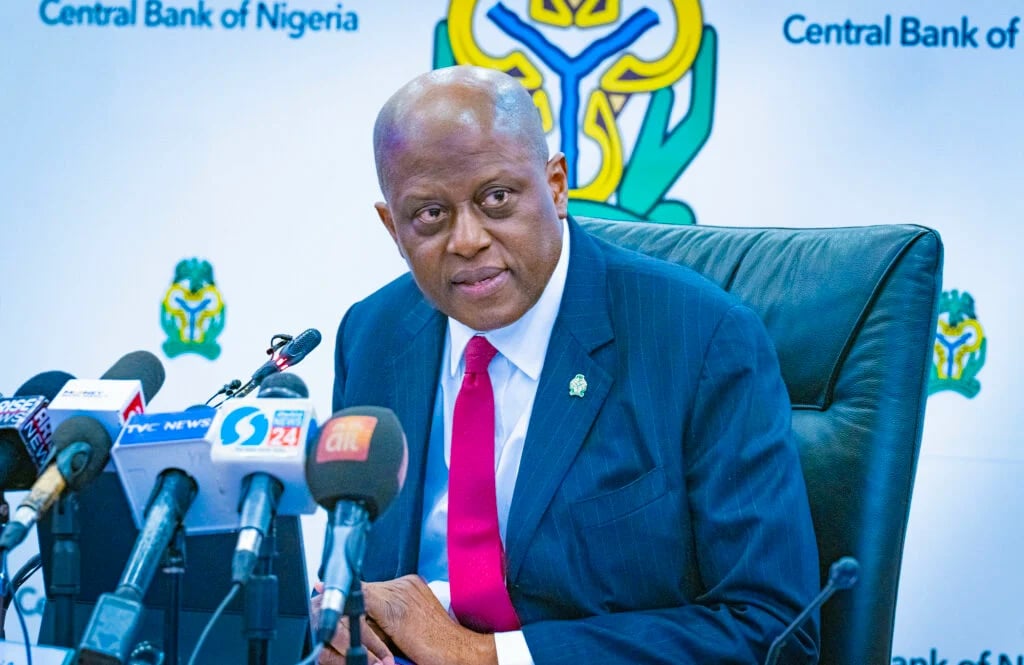
The Central Bank of Nigeria (CBN) has also given existing virtual asset service providers 180 days to apply for the appropriate licences under its new Regulations for the Operations of Non-Security Virtual Assets in Nigeria, which took effect on November 5, 2026.
The rules cover stablecoins, deposit money tokens and related virtual asset services, including exchange, custody, transfers, payment processing and settlement. They establish a licencing and supervisory framework for businesses involved in these activities within or directed at Nigeria.
The changes will affect how businesses operate, how customers buy dollar stablecoins and how money moves between the naira and digital assets – this is especially interesting for an industry that has grown around crypto exchanges, over-the-counter (OTC) dealers and peer-to-peer transactions.
The financial requirements alone could influence which companies can afford to operate in the Nigerian market.
What it will cost to bring dollar stablecoins to Nigerians
The CBN has created two categories for stablecoin issuance. Class 1 covers naira-referenced stablecoins, while Class 2 covers stablecoins tied to foreign currencies, including the US dollar.
The financial requirements differ.
A company seeking to issue a naira stablecoin must maintain at least ₦10 billion in paid-up capital. A dollar stablecoin issuer needs ₦15 billion. Both must satisfy the applicable capital deposit requirements, and the CBN makes clear that foreign ownership or an offshore parent company does not exempt an issuer from Nigerian incorporation and licencing requirements.
The ₦15 billion figure is not the only financial hurdle for dollar stablecoin issuers. They must also maintain operational liquidity in Nigeria to meet redemption requests and other local payment obligations.
Three tests determine the minimum. An issuer must maintain the highest of $10 million, 15% of its Nigeria-linked outstanding liabilities, or the amount needed to meet 30 days of stressed Nigerian redemption requests and payment obligations.
This means the $10 million requirement can rise as the amount of stablecoins held or used by Nigerians grows. The liquidity must remain accessible through arrangements approved by the CBN, generally involving Nigerian deposit money banks. It is also separate from the issuer’s capital and the reserves backing its stablecoin.
Read also: South Africa to rewrite crypto rules following objections
This means that a company could have enough dollars backing every token in circulation and still need additional funds readily available in Nigeria to meet local redemption demands.
For exchanges, wallet providers and other virtual asset service providers, the minimum paid-up capital is ₦1 billion under the new framework. This requirement also applies to providers operating through an extension of an existing financial services licence. The CBN says the capital must be separate from what an institution already maintains under another licencing framework.
The requirements could influence how international stablecoin issuers approach Nigeria. They can work with foreign sponsors and affiliates, but the Nigerian licenced entity remains responsible for compliance and must provide the CBN with supervisory access to its records, systems and reserve arrangements.
Rume Ophi, co-convener of Decentralised Nigeria and lead of programmes and communications at the Virtual Asset Service Providers Association (VASPA), expects major stablecoin issuers to establish a stronger local presence.
“They need to come and establish in Nigeria,” he said, adding that international issuers already have relationships and investments involving local companies.
He believes stronger relationships between stablecoin issuers and Nigerian banks could improve liquidity and encourage greater institutional participation in the industry.
His argument touches on an important part of the framework. Nigerian banks will play a central role in the stablecoin market, including providing approved banking and custody arrangements and acting as redemption agents for dollar stablecoin issuers.

What happens to P2P traders and everyday crypto users?
The other major change concerns the market through which many Nigerians buy and sell crypto.
For years, peer-to-peer transactions and OTC dealers have provided routes for exchanging naira for digital assets. The new rules bring platform-facilitated P2P services under a specific approval regime.
Read also: Nigeria issues tax rules for crypto and other virtual assets
Under Section 10, a platform that matches buyers and sellers, displays orders, provides escrow, facilitates payments or supports settlement must hold an applicable CBN licence or authorisation and obtain express approval to provide P2P services.
The rules also require platforms to verify customers before transactions take place. In particular, the name and Bank Verification Number (BVN) associated with the bank account used for a naira payment must match the verified customer. Platforms must identify customers trading as businesses, apply enhanced due diligence and maintain transaction monitoring systems.
Dollar stablecoin transactions face an additional foreign exchange requirement. A platform cannot facilitate conversion between naira and a foreign currency-referenced stablecoin without express CBN approval. The naira leg must be settled through, or reported to, an authorised dealer designated in that approval, and the transaction must be reported for foreign exchange monitoring.
For OTC traders who operate outside the major licenced exchanges, these requirements raise questions about how they can continue serving customers.
Ophi believes smaller traders need a clearer route into the regulatory system. Many entered the crypto market before the current licencing regime and built businesses around liquidity provision and direct customer relationships.
He argues that some have grown into substantial operations without the infrastructure or resources required to obtain a full exchange licence.
“The P2P guys that have metamorphosed from WhatsApp groups to becoming huge, or building an exchange of a mini exchange of some sort, need to come together to put a structure around it,” he said.
His proposal is to create a more accessible regulatory arrangement through which smaller OTC traders can operate under the supervision of established exchanges or another recognised structure.
The current CBN regulations, however, do not create a separate licence category for P2P operators. They require an applicable licence or authorisation and express approval for the service. A licenced provider can engage agents and other service providers but remains responsible for their activities.
Ophi believes an advocacy effort could help develop a framework that recognises the different sizes and operating models within the OTC market.
There is also a distinction between transactions facilitated by platforms and private exchanges between two individuals. The regulations exclude purely private bilateral transfers where neither party uses another person or platform to match, facilitate, safeguard or settle the transaction.
Ophi raised concerns about how decentralised exchanges and direct P2P arrangements will be monitored, particularly where two individuals exchange crypto and naira without a conventional intermediary. The CBN’s rules prohibit people from structuring transactions to evade oversight, although the practical supervision of activity outside identifiable platforms will remain an important question.
The transition period gives existing operators some time to adjust. They must register with the CBN within 30 days of commencement, begin supervisory reporting within 60 days and submit complete licence applications within 180 calendar days. During this period, they may continue at their existing scale, subject to the Bank’s interim conditions.
For Ophi, the new framework also arrives at a time when stronger identity checks and transaction monitoring have become increasingly important following security incidents across the crypto industry.
Read also: Bitcoin to Naira: Transactions Surge as Nigerian Freelancers Embrace Crypto Payments
He supports the introduction of BVN verification and believes the rules could help prevent illicit funds from moving through the financial system.
He also expects major stablecoin issuers to meet the new requirements, although he remains open to advocating for additional time where implementation proves difficult.
Nigeria’s new framework will, therefore, require a considerable adjustment from businesses already serving the market. Its eventual impact will depend partly on how the CBN implements the licensing requirements, how existing operators respond and whether international issuers establish the local relationships needed to operate.
Historical timeline of crypto regulations
Nigeria’s latest crypto rules are the product of a regulatory shift that began in February 2021 when the CBN directed banks and other financial institutions to stop operating accounts for crypto exchanges and businesses that dealt in cryptocurrencies.
The directive reinforced an earlier restriction from 2017 and effectively cut many crypto businesses off from the formal banking system. It did not prohibit individuals from owning or trading crypto, but it made access to banking services considerably harder for businesses in the sector.
The Securities and Exchange Commission (SEC) took a different route in May 2022, when it introduced rules covering the issuance, offering platforms and custody of digital assets. The framework created registration requirements for businesses operating in parts of the digital asset market, including exchanges, custodians and virtual asset service providers. That same year, the Money Laundering (Prevention and Prohibition) Act recognised virtual asset service providers as financial institutions for the purposes of the law, adding another layer of compliance obligations.
The CBN changed its position in December 2023. It issued guidelines that allowed banks provide designated accounts and banking services to SEC-licenced virtual asset service providers, subject to conditions. Banks still could not hold, trade or transact in virtual currencies on their own accounts, but the change reopened a regulated route into the banking system for crypto businesses. The CBN explicitly linked the shift to the need to regulate VASPs and to the frameworks already introduced by the SEC and the Money Laundering Act.
The SEC subsequently expanded its framework through the Accelerated Regulatory Incubation Programme and amendments to its digital asset rules, which took effect in June 2025. These developments gave digital asset businesses a clearer route to regulatory engagement and formal registration.
The CBN’s November 2026 regulations take the next step within its own jurisdiction. They establish a dedicated framework for non-security virtual assets, including stablecoins, and set out separate requirements for issuance, reserves, redemption, payment activity and the businesses that provide related services.
Last updated: November 6, 2026