

In October 2025, I wanted to venture into content creation, focusing on product reviews, consumer behaviour and product research. I needed a camera but had little money. After earning some money from a small gig, I went on Temu and ordered one for ₦58,000 ($39.71). It took about two weeks to arrive, but when it did, I discovered that it was faulty and performed far below my expectations. The positive customer reviews I had relied on did not reflect the product I received.
I requested a return but was told I had to cover the shipping arrangements and costs. Temu eventually issued me a partial refund of just ₦13,000 ($8.90), leaving me with a loss of ₦45,000 ($30.81) and a camera I never got to use. What looked like a bargain had become an expensive mistake, an experience I have come to call “My Temu Camera Experience.”
That is the risk with buying products online without properly checking what is being sold. Temu offers access to thousands of low-priced products, but a low price does not guarantee good quality, and a product photo is not proof of what will arrive at your door.
Read also: Six Nigerian shoppers share their Temu experience
Temu’s growth shows how popular the platform has become. In February 2026, Nigeria’s Data Protection Commission said preliminary findings indicated that Temu processed the personal information of about 12.7 million Nigerians. Sensor Tower also reported strong growth in Temu downloads across Africa in 2025, with Nigeria recording an 84-fold increase. These figures show the platform’s reach, but they do not tell us whether customers are satisfied with what they receive.
So, before adding another product to your cart, here are ten things worth understanding about shopping on Temu.
Understanding how Temu works
Temu is an online marketplace launched in 2022 and owned by PDD Holdings, the parent company of Chinese e-commerce platform Pinduoduo. It connects shoppers with merchants selling products across categories such as electronics, clothing, home appliances, beauty products, toys and accessories.
The company does not manufacture any of the products displayed on its platform. All the listings come from independent sellers and manufacturers, a large number of whom are based in China and other parts of the Asian continent. A product listed under a category on Temu may differ in quality, materials, packaging and performance from another item sold under the same category.
Temu attributes its low prices partly to a business model that connects manufacturers and sellers directly with consumers, reducing some of the costs associated with traditional retail middlemen. But low prices can also reflect cheaper materials like my Temu camera experience.
This is what happens when you shop across a marketplace of different sellers, instead of buying everything from one manufacturer.
Don’t judge a product by its price
A product listed for ₦5,000 ($3.7) may tempt you to think of it as a better deal than the one selling for ₦12,000 ($8.9) elsewhere.
But before buying, you should consider the following:
Is the cheaper product made with the same materials? Does it have the same specifications? Is it the same size? Does the price include delivery and other charges? A cheaper item that breaks after a few uses can cost more in the long run.
How about the amazing discounts you come across with on the app? Temu frequently displays reduced prices, countdowns and limited-time offers to make shoppers feel they need to buy immediately. However, a large percentage discount can be some marketing gimmicks, meaning the original price may not be genuine.
Researchers investigated by comparing the displayed recommended retail prices of 20 Temu products with prices elsewhere. For 15 products, they could not find another retailer selling them at or above the displayed recommended retail price. However, Temu said its reference prices were set by manufacturers and complied with applicable laws.
The lesson is that you should always compare the actual selling price across other stores, rather than allowing a crossed-out price or discount badge to make the decision for you.
Check the product details before buying
Sometimes, a product image can look convincing to the shopper while leaving out the details that determine whether it will work for you.
Ensure to check the dimensions, materials, weight, colour, compatibility and technical specifications. If you are buying a solar power station, for example, look beyond the advertised wattage. Check its battery capacity, output rating, charging options and the appliances it can realistically support.
For clothing, check the measurements rather than relying on labels such as small, medium or large. For phone accessories, confirm that the product supports your particular device. For furniture and storage items, check the actual dimensions before assuming they will fit your space. Buyer photographs are especially useful here.
A few minutes spent reading the listing can prevent the disappointment of receiving something that looks right in a photograph but is unsuitable in practice.
Learn how to read customer reviews
Shoppers always mistake a four- or five-star rating for the whole story. A product may have a high score but still attract complaints about durability, size, missing parts or performance.
Always read the written reviews, particularly those that include photographs or videos from buyers. These can help you compare the actual product with the seller’s promotional images.
Pay attention to recent reviews and repeated complaints. One buyer reporting a damaged item may be an isolated experience. Several buyers describing the same problem suggest a pattern worth taking seriously.
Also check how many people have written reviews about that particular product. A high rating based on very few reviews offers less evidence than a similar rating supported by hundreds of detailed customer experiences.
The aim is not to find a product with perfect reviews. It is to understand what previous buyers received, what worked, what did not and then make a decision.
Know which products to be careful about
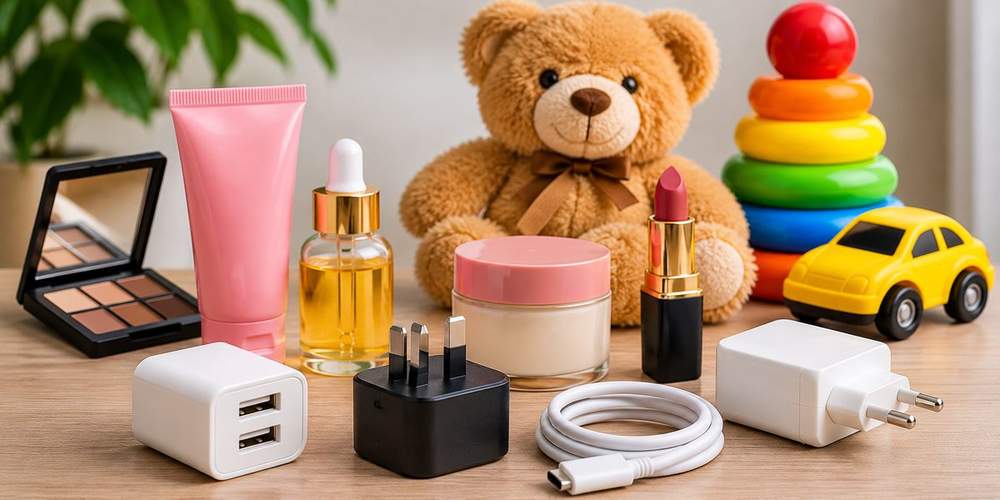
It is true not every product carries the same level of risk. But, a decorative item that disappoints is inconvenient; a faulty charger or unsafe children’s toy can create a much bigger problem than you can imagine.
Be very cautious with baby products, children’s toys, cosmetics and skincare. These products can involve choking, chemical, electrical or other safety risks. For items that come into contact with the body or are used by children, an unknown seller and an incomplete product description should be reasons to pause.
In 2025, a European consumer group investigation involving 108 products consisting of USB chargers and baby toys from Temu and Shein found that 96.3% of the tested USB chargers and baby toys failed to meet relevant EU safety requirements. The sample covered products from both platforms, not Temu alone. The findings included concerns about dangerous toy components and chemical substances.
Read also: Shein and Temu face ban campaign in South Africa as unions warn of job losses
Before then, in August 2024, Denmark’s consumer organisation Forbrugerrådet Tænk tested 14 toys and baby products sold on Temu. Twelve failed to meet the relevant safety requirements, with problems including detachable parts that could cause choking, unsafe pacifier chains and baby carriers that could allow babies to fall out.
Also in August 2024, the same Danish consumer organisation tested six electrical products sold on Temu. All six failed compliance checks, with problems including incorrectly labelled electrical products and power supplies that could cause electric shock.
This is not a claim that every product on Temu is unsafe. It is that some purchases require more scrutiny than others, particularly when a product can affect your health or physical safety.
Watch out for misleading product listings
Sometimes the problem is not the product itself but the way it is presented.
A photograph can make a small item appear much larger. A listing can show accessories that are not included in the actual purchase. A product can resemble a popular brand without being an authentic version. In other cases, important details about materials, dimensions or functionality are missing.
Read the product title and description together. Check what is included in the package, and look for wording that distinguishes the main product from accessories or decorative items.
Be suspicious of luxury products offered at prices that seem too good to be true, particularly when the seller provides little information about the brand or product origin.
If the listing does not clearly explain what you are paying for, do not assume the missing information will work in your favour.
Understand Temu’s payment and shopping safety
A genuine Temu listing does not mean every message, promotion or website using the Temu name is genuine. Scammers can imitate online stores to collect payment details, passwords and personal information.
Use Temu’s official website or app, and avoid links from unfamiliar emails, text messages and social media accounts promising free gifts or unusually large discounts. Fake delivery notifications and customer-support messages can also be used to direct shoppers to fraudulent websites.
Keep payments and conversations within Temu. The company warns that it cannot verify or assist with transactions completed outside its platform. No seller from Temu will ask for your card details, password or verification codes through messages or email.
Use a strong, unique password and check your bank or card statements after making purchases. Also review the app’s privacy permissions and think carefully about the personal information you share.
There is a reason to take privacy seriously in Nigeria. In February 2026, the Nigeria Data Protection Commission opened an investigation into Temu’s data-processing practices, raising concerns about transparency, data minimisation and cross-border transfers.
Temu, however, said that protecting user privacy was a priority and that it would cooperate with the regulator. The investigation is a regulatory process and not proof that the company has been found guilty of violating the law.
Understand delivery, returns and refunds

Ordering a product is only part of the shopping experience. You also need to understand how it will reach you and what happens if something goes wrong.
For shoppers in Nigeria and other parts of Africa, delivery involves international shipping, customs processing and local delivery arrangements. Always check the estimated delivery window displayed for your order, provide an accurate address and phone number, and follow tracking updates through your Temu account.
If an item does not arrive, arrives damaged or differs significantly from its description, Temu’s Purchase Protection Programme says eligible orders may qualify for a refund. Its support information also states that most items can be returned within 90 days, although exceptions and conditions apply.
That does not mean every product can be returned under the same conditions. Items such as worn or washed clothing, products with removed tags or hygiene seals, incomplete sets and goods marked non-returnable are excluded. Free gifts and customised items have restrictions.
Before buying any product, always check Temu Return and Refund Policy. Read the conditions for your particular order instead of assuming that every purchase comes with a free and straightforward return.
If a product arrives damaged or is not as described, keep the packaging, take clear photographs and submit the issue through your order page. beware of arrangements outside the platform simply because a seller promises to resolve the problem.
What to do before adding a product to your cart
Before completing a purchase, take a moment to check the details that matter.
- Read the description: Confirm the product’s features, materials and what is included.
- Check the measurements: Make sure the size, dimensions and specifications meet your needs.
- Study customer reviews: Look for recent feedback, buyer photographs and repeated complaints.
- Compare prices: Check what similar products cost elsewhere and question unusually large discounts.
- Check the seller and listing: Be cautious when important product information is missing.
- Review the return conditions: Confirm whether the item is eligible and what the process involves.
- Calculate the full cost: Consider delivery, currency conversion and any additional charges that may apply.
- Think about the purchase: Are you buying because you need the product, or because a countdown or discount is making you feel pressured?
A product should earn its place in your cart. A low price is not enough.
Buy what you need, not just what looks cheap
My Temu camera experience reminds us that sometimes, we don’t buy something simply because it is cheap. We buy it because it is what we can afford at that particular time. But affordability should not mean settling for a product that fails to meet our expectations.
This is why the smartest way to approach shopping on Temu is not to assume everything is bad or believe every bargain is worth taking. Check the product, question the price, read what other buyers say and understand the return conditions before making a purchase.
The best deal is not the cheapest product you can find. It is the product that does what you paid for it to do.
Last updated: November 3, 2026