


It was a few minutes past 1 pm when Oluwatobiloba Animashaun joined our call. She had just resigned from her role as a product manager at Flutterwave, one of Africa’s leading fintechs, but admitted she still misses the job.
“Subconsciously, I still go on my phone and check if I have been tagged on Slack,” she shares.
That habit is a small window into eight years spent inside a company that grew up alongside her.
Animashaun joined Flutterwave in 2018 as a customer service intern. She had just gotten her bachelor’s in history and international relations from the Lagos State University and was undergoing the National Youth Service Scheme — a one-year programme designed to promote national unity after the country’s civil war.
Flutterwave was barely two years old at the time and going through a leadership transition. But by the time she left, she had moved from customer support to product management, where she played a major role in developing the now-discontinued Barter app and the Flutterwave mobile app.
The pull toward product management, she notes, came down to passion and a desire to be in the room where decisions get made.
From a complaint to a career
The seed to join Flutterwave was planted in a conversation with a friend. Over 400,000 Nigerian graduates are mobilised for the NYSC scheme each year, and about 60% of them are posted to schools across the country.
Animashaun was among those posted to a school. While venting to her friend, Frances Isu, about how much she disliked the posting, Isu made a comment that shifted her perspective.
“If you don’t like it, move,” Isu said.
Later, she sent her a list of startups that were hiring — Flutterwave stood out. Animashaun had seen a BBC clip of a Flutterwave co-founder explaining the company’s virtual card product, built at a moment when everyone wanted a Netflix or Spotify subscription but could not get a card to pay for it.
“I was like, what’s this cool company doing this thing? I definitely want to work here,” she recalled.
She went to the company’s old Providence Street office and dropped off her CV, but the receptionist told her she would still need to send an email. A few days later, she got called for an interview.
The night before the interview, she looked up terms like “ticketing” on the internet just to have something to say.
Her interviewer, Bode Abifarin, then the chief operating officer, noticed how tense she was and eased the conversation by talking about a movie they had both recently seen. Animashaun referenced that conversation in her goodbye post on LinkedIn.
Animashaun had already lived the problem Flutterwave was solving. Her parents lived abroad, and sending her money meant finding someone in Nigeria with a local bank account to receive it and hand over cash.
“I knew that the payment process was broken, especially in cross-border payments,” she said. “But there was no grand plan to enter tech.”
What pulled her in instead was proximity. Her brother and her friends were already building in Nigeria’s tech scene, and she wanted in, even without knowing exactly how. She had planned to become a diplomat and work at the United Nations, in line with her degree in international relations.
On Independence Day 2018, she got the call telling her she was accepted and resumed two days later.
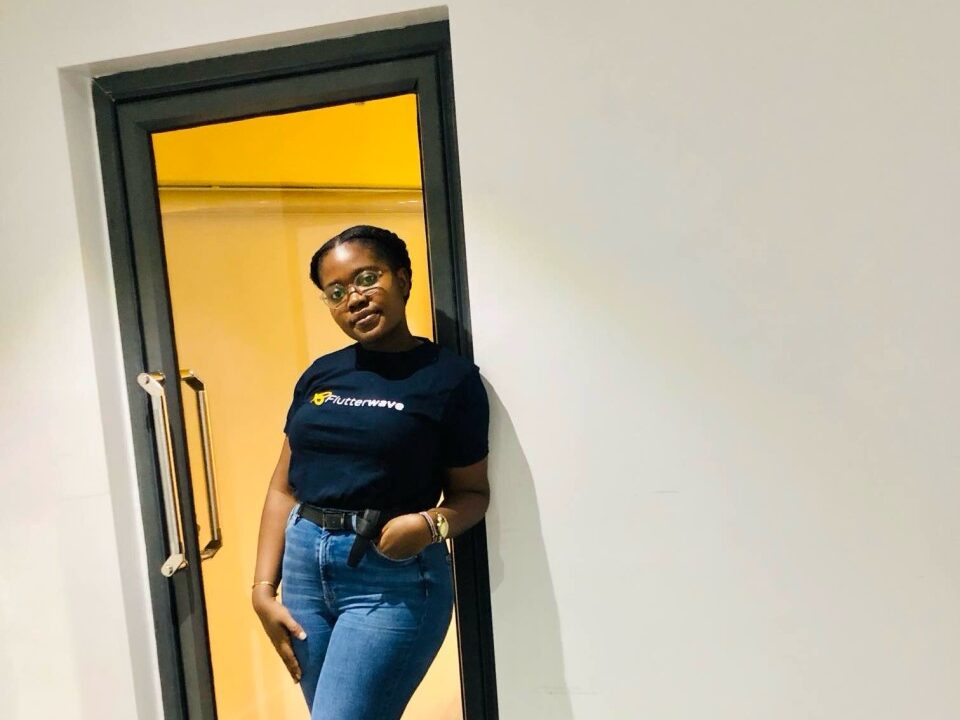
2,830 days at Flutterwave
Animashaun joined Flutterwave at a time when non-technical, highly teachable hires were in high demand across African startups. Customer service was her entry point, and she worked her way from intern to a leadership role on the team before deciding she wanted more influence over the product itself. But the jump wasn’t seamless.
“Knowing the concept is different from hands-on experience,” she says. “I remember sending a very long WhatsApp message to my product lead asking for two days to get myself together.”
Her first real product experience was Barter, and it delivered her first hard lesson too. Her team shipped a two-factor authentication update using only Google Authenticator, intending to add more options later.
It went live without full stakeholder sign-off, and the calls started rolling in almost immediately. The startup’s leadership was not pleased with the rollout, and the feature had to be pulled back.
“The expectation was that we get it right the first time,” she says. The episode taught her to always do a live demo and get explicit stakeholder approval before shipping, and to lean on subject-matter experts rather than guess.
Later on, she would work on Flutterwave’s V4 APIs, built after developers complained that the existing documentation was too hard to integrate. The team’s goal was to cut integration time from roughly two months to two weeks and build error codes that stayed consistent no matter how a transaction’s status changed.
It was unlike anything she had worked on before. “For APIs, you are writing what the code architecture would look like. “You are not working with a Figma file or a design. You are working with what the system specifications would look like.”
She had to learn about engineering vocabulary, contracts, orchestration, and authentication to follow what the engineers were doing, even without writing the code herself.
Years have passed, and that young startup is now a leading fintech unicorn with nearly a thousand employees.
The impact its products have had makes her feel fulfilled. Spending eight years at Flutterwave was because the fintech aligned perfectly with her goals and provided her with an opportunity to learn something new every day.
“Passion, growth, and learning are three important things to me. There was always something to look forward to,” she said. “I mean, who doesn’t want to work at a unicorn?”
The sheer scale of her work has sometimes surprised her. At one industry event, she tried to convince some people to download the Barter app, only to realise they already had it open on their phones.
Another time, she noticed Flutterwave listed as a checkout option on Mano, the app she uses for groceries, and kept using it because of that.
“It was a great feeling to be part of the team that built that,” she said.
Her future bet
Eight years at Flutterwave proved deeply rewarding for Animashaun, but her drive to create meaningful impact has never waned. While she was still at the company, she ran a mentorship programme for upcoming product managers, and that work continues.
She plans to dig deep into product management, but outside fintech. Her focus right now is spreading impact on other industries with a keen focus on women. “I want more women and people to know that there is no space they can’t thrive in,” she shared.
Eight years in one industry taught her how much she still has to learn elsewhere, and that’s the part she’s chasing next.
African borders are becoming more invisible than ever. Businesses and individuals are increasingly connecting, building, and trading across the continent. On August 21, the people driving this future will gather in Lagos for candid conversations about the realities of building a borderless Africa. Get your ticket now and be in the room. Click here

Last updated: August 12, 2026