

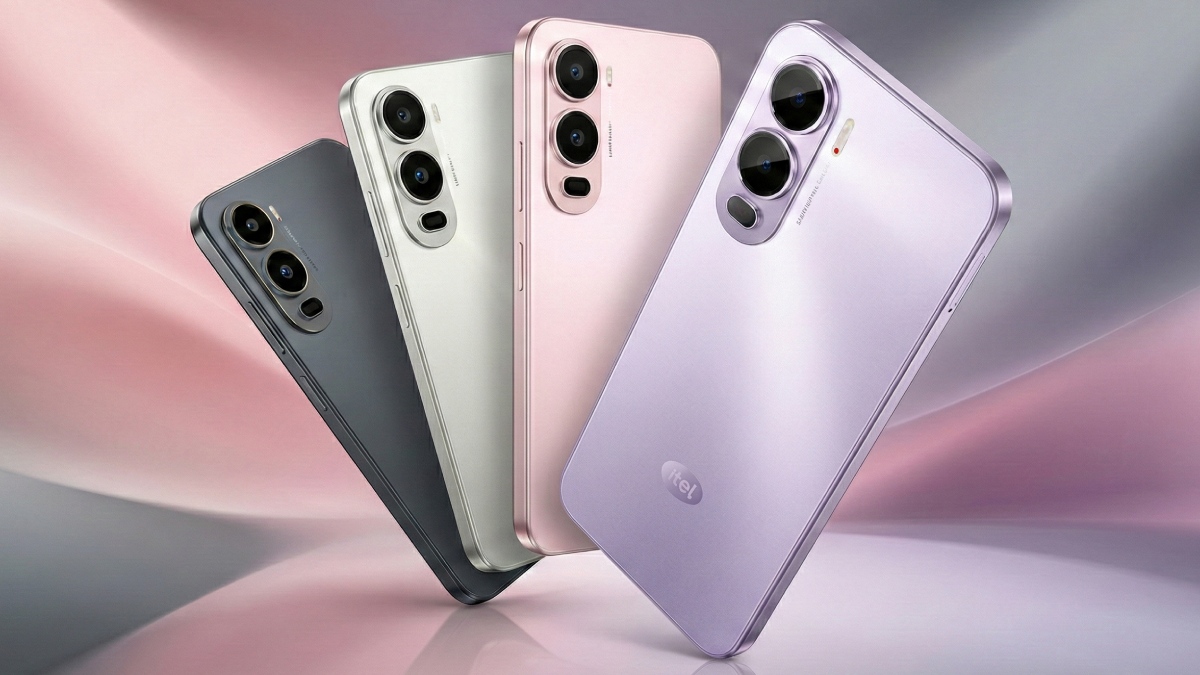
The City 100 launched in March 2025. Less than a year later, itel is back with the City 200: a slimmer profile, a larger camera, and a faster screen, all for about ₦30,000 more. If you already own the City 100, the question is whether this is a legitimate upgrade or just a lateral move in a new skin. And if you are entering the ₦150,000 market fresh, you still need to know if that extra spend translates to better performance.
The reality is a mix of stagnation and surprise. While some core specs haven’t moved at all, there is one specific feature here that no other budget device is currently offering. To find out if the City 200 is worth the upgrade, keep reading.
Read also: itel City 100: Sleek, light, and built for everyday use
Specifications: itel City 200
- Release Date: February 2026
- Display: 6.78-inch LCD + IPS display, 120Hz
- Durability: IP65 dust-tight and water-resistant, MIL-STD-810H
- Storage: Up to 6GB RAM, up to 256GB (expandable)
- Camera: 50MP + AI rear camera, 8MP + Auto Zoom selfie camera
- Battery & Charging: 5,200mAh, 18W fast charging, reverse wired
- Software: Android 15, itel OS 15
- Processor: Unisoc T7250
- Connectivity: 4G LTE, Wi-Fi ac, Bluetooth 5.0, NFC, USB-C
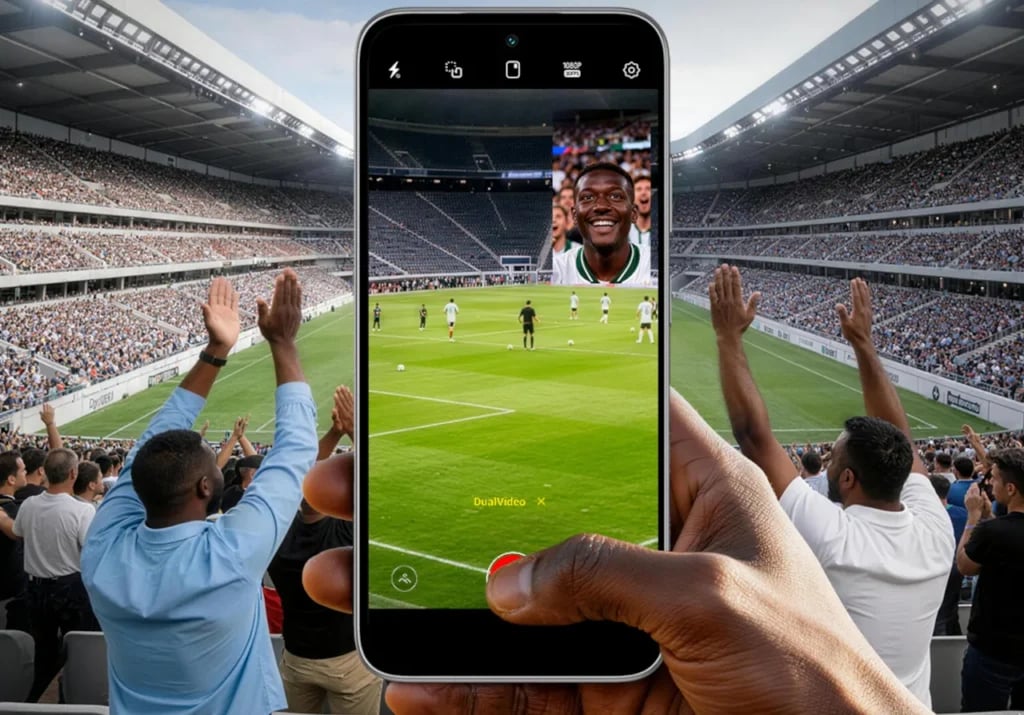
- Special Features: UltraLink Free Call (2km), Sola AI Assistant, DTS Audio, Dual Video Recording
- Price: ₦150,480 ($108)
- Colours: Bass Black, Echo Silver, Vibe Purple, Melody Pink
What’s new on the itel City 200 smartphone?
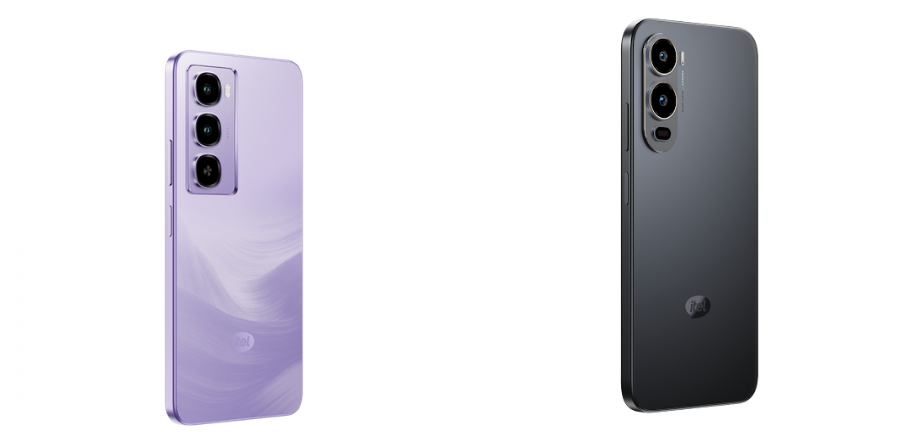
The most visible jump is the camera, which moves from the 13MP sensor on the City 100 to a 50MP main lens. In daylight, the upgrade is immediately apparent in the sharpness and depth of the shots. The AI scene detection and improved HDR handle the typical budget phone struggle with blown-out backgrounds, making it easier to pull decent shots near windows or in harsh sunlight.
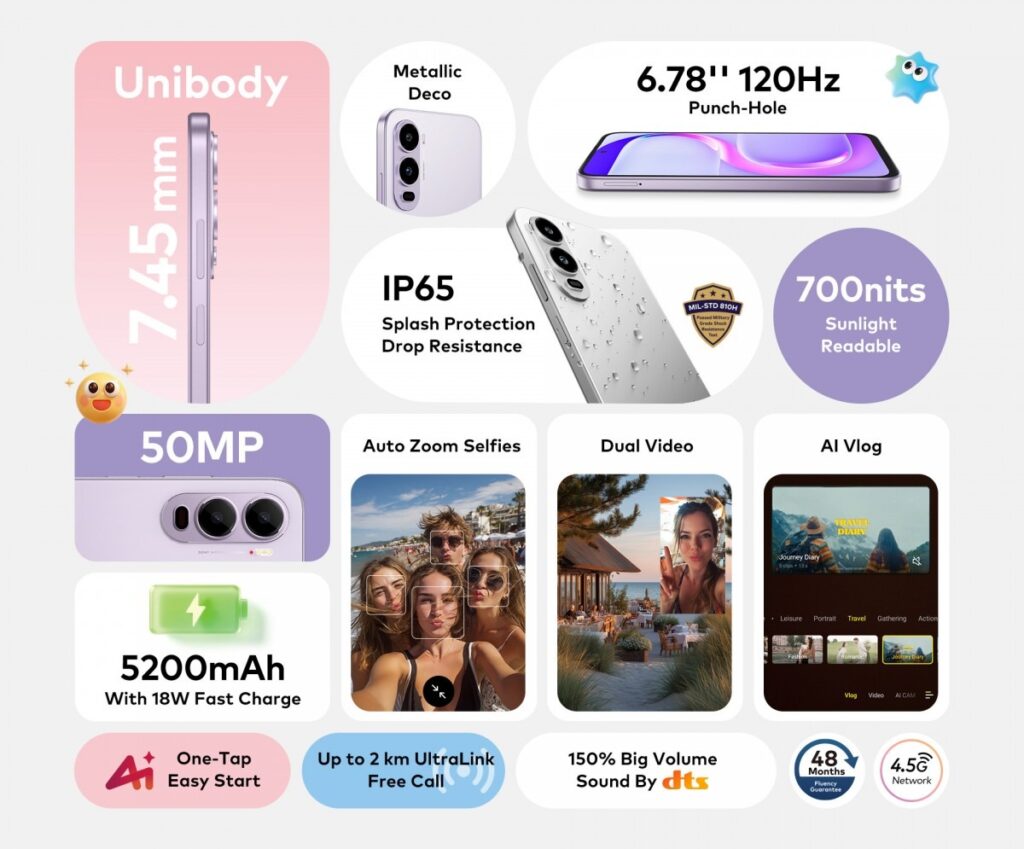
The display also sees a significant bump from 90Hz to 120Hz. It is the kind of change you feel through your thumb before you consciously notice it: scrolling through social feeds simply feels more responsive. itel also pushed the screen size to 6.78 inches and finally ditched the dated waterdrop notch for a cleaner punch-hole cutout, giving the device a more modern, edge-to-edge look.
Beyond the glass, the inclusion of NFC is a rare win for this price bracket. It is a connectivity feature that is easy to overlook on a spec sheet but changes the daily experience by enabling tap-to-pay and instant file sharing.
However, the standout addition is the UltraLink Free Call feature. By leveraging Bluetooth, the City 200 allows for voice calls, memos, and text notes between compatible itel devices without needing airtime, data, or a cellular signal. While the 2km range is an open field estimate that will drop in the city, the utility is clear. For users in areas with poor network coverage or during service outages, it is a localised communication tool that offers genuine value where traditional networks fail.
What’s good about this upgrade?
If you’re looking at the City 100’s successor, three specific upgrades drive the most meaningful change in the City 200’s chassis. By jumping to an IP65 rating and adding MIL-STD-810H certification, itel has moved the device beyond standard budget build quality. This is now a fully dust-tight frame designed to survive the vibration, humidity, and drops common to life in transit or on a job site. It’s a practical pivot toward durability that matters more than a slight spec bump.
The power and audio experience remains reliable, if not revolutionary. You still get the 5,200mAh battery that defined the City 100, capable of a comfortable day and a half of use, paired with 18W charging that hits a full charge in under two hours. The inclusion of DTS audio tuning keeps the speakers from sounding thin, while the 3.5mm jack and reverse wired charging provide the kind of utility that many flagship brands have prematurely abandoned.
On the software side, itel continues to lean into its partnership with DeepSeek. The Sola AI assistant returns, offering the same translation and image-to-text capabilities introduced on the previous model. While it still requires a steady data connection to function, having a built-in assistant for writing and search tasks adds a layer of modern intelligence to a device that is, otherwise, a very grounded piece of hardware.
What to consider before getting the itel City 200
The most significant caveat is that the engine hasn’t changed. By sticking with the Unisoc T7250, the City 200 handles the essentials—WhatsApp, YouTube, and light browsing—with ease, but it hits a ceiling under heavy multitasking. Because it utilises F2FS storage rather than the faster UFS standard many hoped for in 2026, you won’t feel a snap in performance during an upgrade. If you are looking for a boost in processing power, you won’t find it here.
The visual experience also reflects the price point. Spreading an HD+ resolution across a large 6.78-inch screen means the pixel density is low; text and images lack the crispness found on Full HD panels. This is a visible trade-off that persists in daily use, paired with some curious software omissions. Early users have noted the lack of an auto-brightness sensor and a missing split-screen function, both of which feel like avoidable oversights for a modern smartphone.
Finally, there are the long-term considerations. The selfie camera remains a modest 8MP, and the lack of 5G might be a dealbreaker for those planning to keep the phone for more than three years. While 4G remains the standard across Nigeria, Kenya, and Ghana today, the City 200 is very much a device for the present rather than a future-proof investment.
How much is it in Nigeria?
The itel City 200 enters the Nigerian market at ₦150,000 for the 6GB RAM and 128GB storage variant, with a slightly cheaper 4GB model available for those on a tighter budget. For context, this is a ₦30,000 jump from the City 100’s launch price. That premium is effectively the entry fee for a significantly better camera system and a more fluid display refresh rate.
While official prices are set, expect slight variations across Jumia and authorised physical retailers.
Should you buy it?
Yes. If you are buying fresh in the ₦150,000 range, the City 200 is a top-tier contender because the durability and 120Hz screen are rare wins at this price. However, if you already own the City 100, the answer is No—unless your primary goal is a better camera. Since the processor hasn’t changed, the phone won’t actually feel faster in daily use, making the ₦30,000 jump hard to justify for a lateral performance move.
How did we test this?
We know you want the real deal before spending your money on a new phone. While we’d love to get our hands on every device that hits the market, most of our reviews are based on solid research: checking spec sheets, user feedback, expert opinions, and real-world performance data across the brands we cover.
Our goal is to help you make smarter phone decisions without the marketing nonsense. When we do get hands-on time, we’ll call that out clearly.
Got a phone you think we should review? Join the conversation on our socials.
Last updated: April 23, 2026