



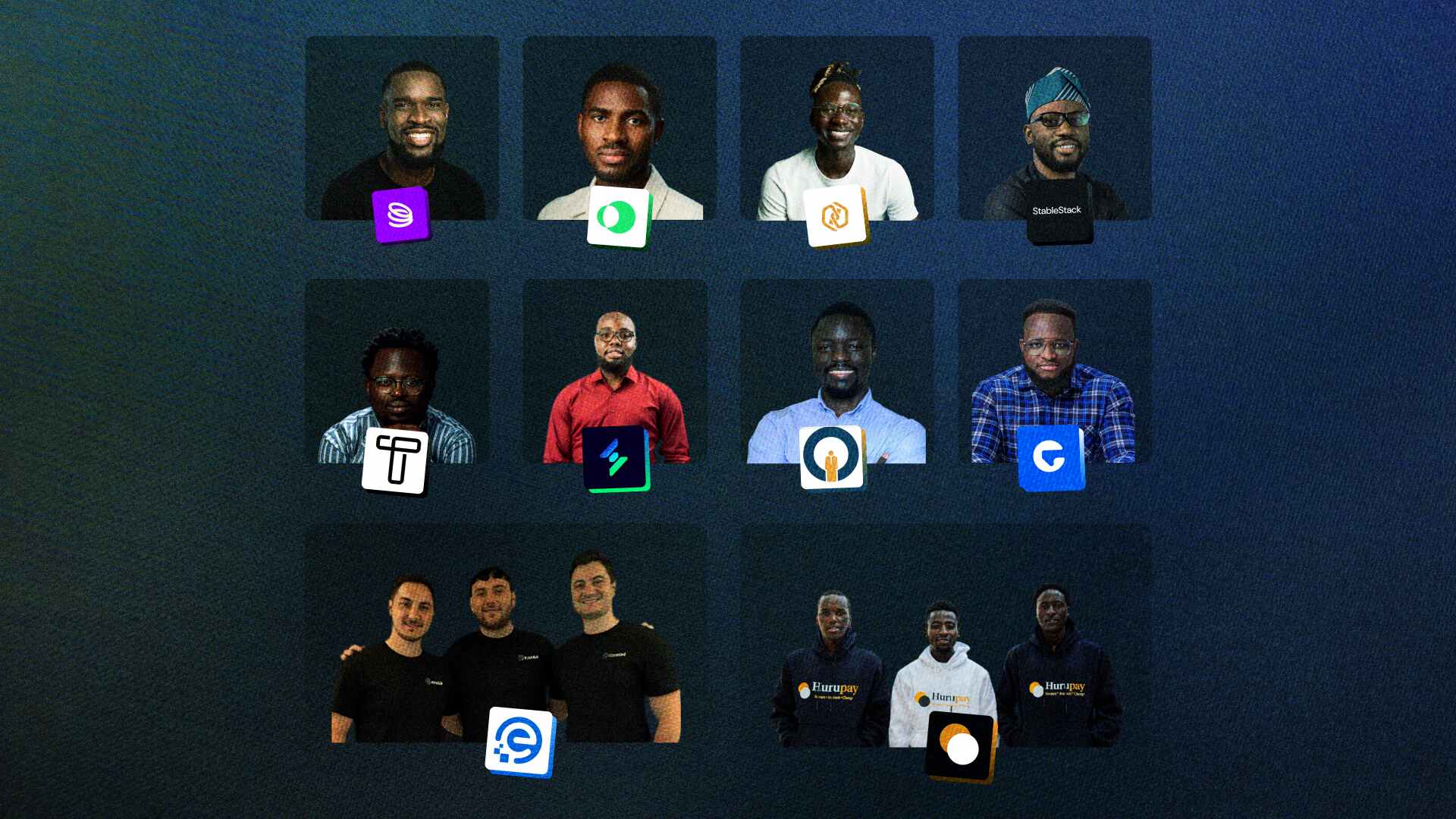
Africa’s cross-border payment problem is well documented: high fees, slow settlement and fragmented infrastructure. What’s less obvious is which of the hundreds of new payment service providers racing to fix it will survive long enough to matter.
Most won’t. Payments is a regulated, capital-intensive, low-margin business that punishes startups without strong unit economics or clear distribution. Yet a few young companies are showing signs they might endure—through regulatory licenses, real transaction volume, or technical partnerships with banks and telecoms that already move money at scale.
The 10 startups featured here aren’t the biggest names in African fintech. They’re the emerging operators quietly building the rails, stablecoin platforms, and digital wallets that could redefine how money moves across the continent over the next five years.
1. Oneremit, Hammed Adewumi Afenifere
Oneremit helps African businesses move money across borders with speed and clarity, offering reliable settlement for trade and supplier payments. In 2025, it processed close to $100 million in international transactions and expanded from Anglophone into Francophone Africa, deepening its reach among enterprise clients.
Led by Hammed Adewumi Afenifere, the company has built a regulated foundation with licenses in Canada and the U.S., and plans for the U.K. next. Africa’s next wave of fintech is shifting from consumer apps to compliance-driven payment infrastructure, and Oneremit is at the forefront of that.
2. Sharperly, Chibuike Uzoukwu
Chibuike Uzoukwu founded Sharperly in 2025 after repeatedly failing to send money from Australia to Nigeria—transfers were delayed, accounts were frozen, and rates were unpredictable. Sharperly turns that frustration into product design: a licensed remittance app that lets users send, save, and spend across currencies with transparent fees and real-time rate bidding.
The company holds both Australian and Nigerian remittance licences and has processed over $50,000 in transfers from early adopters. Bootstrapped and growing through community referrals, Sharperly reflects a grounded model of fintech growth, one betting on the $2 billion Australia–Nigeria remittance corridor and the trust deficit that traditional money transfers haven’t fixed.
3. Onboard, Yele Bademosi
Yele Bademosi’s Onboard is Nestcoin’s second act—a digital money app born from lessons in Africa’s volatile crypto market. Where his earlier venture, Bundle, blurred social payments and trading, Onboard takes a quieter, more pragmatic path. It lets users hold USD, send or receive stablecoins, and withdraw to local accounts, combining the ease of a fintech wallet with the reach of Web3 rails.
The product’s current version, Onboard 3.0, launched in July 2025, gained 10,000+ users in two months, a sign of real demand among freelancers and remote workers juggling global and local currencies. Backed by Nestcoin’s pre-seed and follow-on funding, Onboard is positioning itself as infrastructure for the “global African,” not a speculative crypto app—an attempt to rebuild trust in digital finance, one transaction at a time.
4. Ezeebit, Daniel, David and Jonthan Katz
Ezeebit lets African merchants accept stablecoins and crypto while settling in local currency the next day, cutting fees and delays from traditional card rails. Since launching in 2023, it has processed over 30,000 transactions for brands like iStore and Le Creuset, and recently closed a $2.05 million seed round to expand across Africa.
The Cape Town‑based startup was founded by brothers Daniel, Jonathan, and David Katz. It’s part of the new wave of African payment tech founders building infrastructure that makes digital assets practical for daily commerce.
5. HoneyCoin, David Nandwa
HoneyCoin is a stablecoin-powered payments platform that slashes cross-border settlement times from days to hours while cutting fees for businesses across 15 African markets. Already processing tens of millions in monthly transactions and serving hundreds of thousands of users, the Nairobi-based startup raised $4.9M in seed funding in 2025.
Led by David Nandwa, HoneyCoin tackles a real pain point: slow, costly payments, positioning itself as a core piece of Africa’s emerging payment infrastructure.
6. Kanzu Finance, Peter Kakoma
Kanzu Finance builds digital banking tools for Uganda’s community lenders: Savings and Credit Cooperative Organisations (SACCOs), Village Savings and Loan Associations (VSLAs), and microfinance groups that still rely on paper records and spreadsheets. Its core platform, Kanzu Banking, lets these cooperatives track savings, loans, and members in real time, replacing slow manual systems with cloud-based automation.
Founded by software engineer Peter Kakoma, the startup has been expanding steadily since 2018 and was a Top 10 finalist in the 2025 MEST Africa Challenge. Kanzu’s traction with grassroots institutions points to a simple truth often overlooked in Africa’s fintech race: most people still save and borrow through community structures, not banks, and digitising those systems is where the next layer of financial inclusion will come from.
7. Timon, Tomi Ayorinde
Timon is building travel payments for Africans who need cards that actually work abroad. The startup issues multi-currency physical and virtual cards that can be funded with naira or stablecoins and used internationally without the usual FX failures. Founded by YC alum and former CrowdForce CEO Tomi Ayorinde, Timon grew out of a personal frustration: his card once failed during a trip to Germany.
Backed at pre-seed by Kaleo Ventures, Microtraction, and Openseed, the company launched in 2025 with fast card delivery, partnerships for cross-border funding, and a simple pitch: make global spending predictable for Africans. Its staying power lies in addressing a repeat, high-value problem with clean execution and a founder who has already built and exited a fintech once before.
8. GoWagr, Oluwaleke Fakorede
GoWagr is turning Africa’s social betting culture into a structured digital product. Built in Nigeria, the peer-to-peer prediction app lets users stake on real-world events—from sports to elections—and settle instantly through in-app wallets. Since launching publicly in 2023, it’s grown to over 400,000 users, driven by its mix of entertainment and light-payments utility.
The model works because it channels an existing offline behaviour into a safer, wallet-based system rather than speculative crypto trading. Co-founded by former Andela and Binance engineer Oluwaleke Fakorede, GoWagr sits at the intersection of gaming, fintech, and community payments, a space with high engagement and real spending momentum across Africa.
9. Stablestack, Mark Afolabi
StableStack builds the rails that let African fintechs move money as easily as messages—using stablecoins under the hood. Its API connects local wallets, banks, and global payment networks so cross-border transfers settle in minutes instead of days.
Founded in 2025 by Nigerian entrepreneur Mark Afolabi, the startup sits at pre-seed stage but already partners with Circle and other infrastructure players to route USDC-based payouts. The bet is simple: stablecoin rails can make Africa’s fragmented payments system faster and cheaper without forcing users to touch crypto.
10. Hurupay, Philip Mburu, Allan Okoth, James Mugambi
Hurupay helps African freelancers and small businesses get paid in USD using stablecoins, letting them settle funds to local banks, mobile wallets, or crypto accounts instantly. In its first seven months, the platform processed over $10 million in transactions across 40+ countries, showing strong early adoption.
By simplifying cross-border payments and reducing forex friction, Hurupay addresses a real gap in the continent’s digital economy. The platform was founded in 2023 by Philip Mburu, Allan Okoth, and James Mugambi, tapping into growing demand for reliable, dollar-denominated payment rails in Africa.
| Emerging Tech Startup + Founder | HQ | What They Build | Pain Point | Stage |
|---|---|---|---|---|
| Oneremit, Hammed Adenifere | Canada | Cross-border payments fintech focusing on fast, low-cost remittances and routing solutions for businesses | Slow, costly forex and cross-border transactions across Africa | Early / Pre-seed |
| Sharperly, Chibuike Uzoukwu | AU/NG | Cross-border fintech for diaspora money movement | High remittance cost & FX complexity | Early / Bootstrapped |
| Onboard, Yele Bademosi | Nigeria / UK | Startup platform (Web3/crypto ecosystem support) | Limited access to economic opportunities via crypto | Early / evolving (toolkit + ecosystem) |
| Ezeebit, Daniel, David & Jonathan Katz | South Africa | Stablecoin payment infrastructure for merchants | Traditional settlement costs and delays | Seed ($2.5M raise) |
| Honey Coin, David Makuku Nandwa | Kenya | Stablecoin-powered payment rails and financial infrastructure | Slow, expensive cross-border payments; fragmented rails | Seed (~$4.9M raised) |
| Kanzu Finance, Peter Kakoma | Uganda | Cloud‑based core banking platform for SACCOs, VSLAs, investment clubs, and MFIs. | Manual record‑keeping is error‑prone, slow, and stressful for small financial institutions | Growth stage, privately held |
| Timon, Tomi Ayorinde | United States. | Immigration tech + services (visa support platform) | Complexity of employment-based visas for Africans | Pre-seed / early revenue |
| GoWagr, Oluwaleke Fakorede | United States | A prediction market app where users trade on outcomes of events (sports, politics, culture). | Africans lack accessible, trustworthy platforms to express opinions and monetise predictions. | Early stage / Seed |
| Stablestack, Mark Afolabi | United States | API‑first platform for stablecoin payments, liquidity routing, and orchestration for businesses | Provides compliant liquidity and transparent conversion for emerging markets | Early stage / Beta (pre‑seed) |
| Hurupay, Philip Mburu, Allan Okoth & James Mugambi | United States | Stablecoin-backed virtual USD/EUR/GBP accounts for freelancers & businesses | Limited access to global banking & currency volatility | Pre-seed / early growth |
Get passive updates on African tech & startups
View and choose the stories to interact with on our WhatsApp Channel
ExploreLast updated: January 12, 2026


