

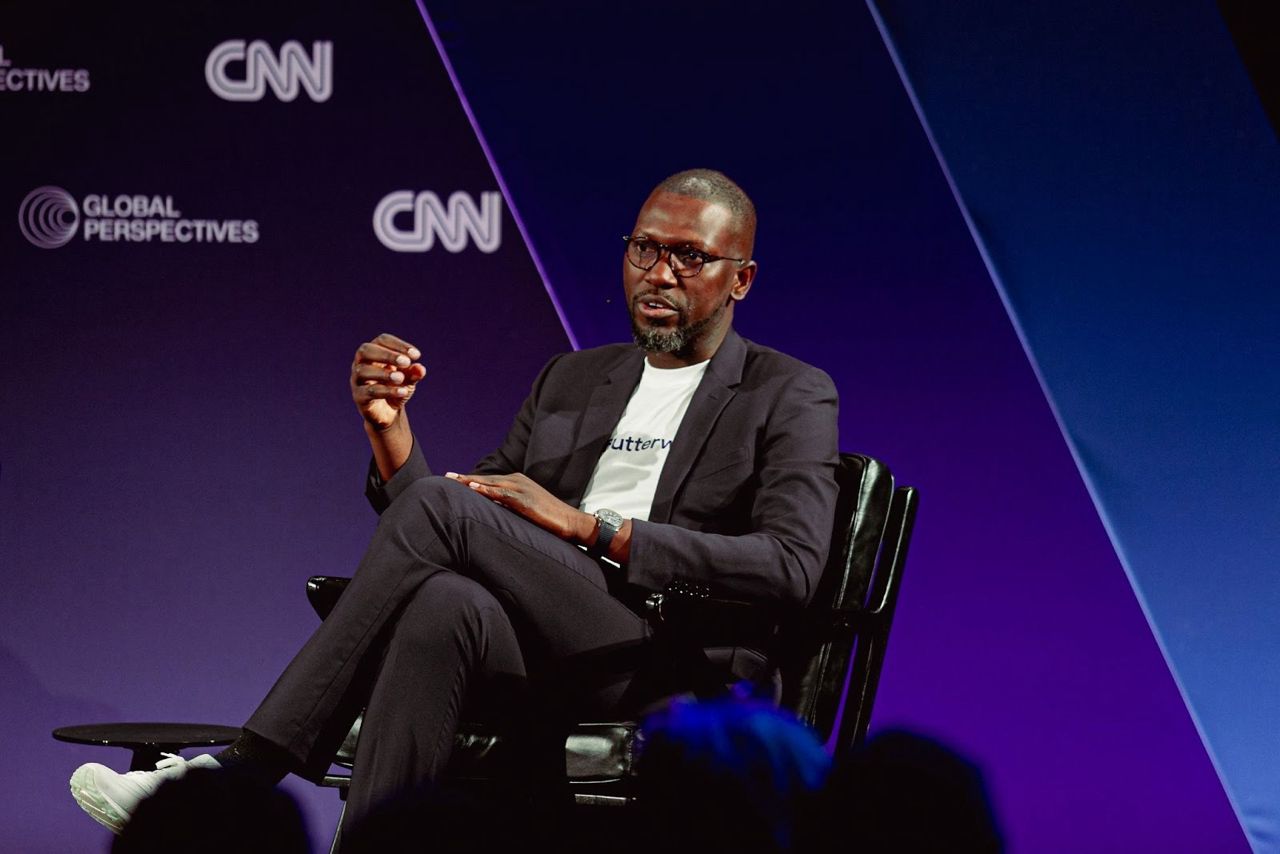
Flutterwave and Ripple partnership can be the infrastructure that gives stablecoins scale and legitimacy in Africa rather than the spark that started it.
Bolu watches the naira slip against the dollar while her Chinese supplier waits on WhatsApp for payment. Emeka sends £200 home from Peckham on Tuesday, but by Wednesday, the fees and exchange rate leave his mother with far less than she needs for her upkeep. Craig finishes a design job for a Toronto client on Thursday, yet the bank’s conversion and deductions mean Monday’s alert barely matches his invoice.
If you have lived in Lagos, Accra, Nairobi, or anywhere in this part of the world long enough, you already know this feeling. This is not a financial crisis. It is just a typical day. It is the quiet, grinding cost of trying to move money in and out of a system that was genuinely not designed for the way we live, work, and do business here.
The infrastructure exists. The banks are open. The apps are on our phones. But something always gets lost in the middle, whether it is the exchange rate, the transfer fee, the two-day wait, or the random deduction that nobody can properly explain.
Earlier this week, an announcement from one of Africa’s unicorns suggests the tide might finally be turning. Flutterwave raised an undisclosed Series E round from Ripple, a $50 billion blockchain infrastructure company, as the key backer. Stablecoin adoption across Africa sits at the centre of the partnership. As part of the strategic investment, Ripple’s RLUSD, its USD-denominated stablecoin, will be embedded directly into Flutterwave’s payment rails and Send App’s remittance corridors.
There was the normal excitement that comes with fundraisers on the continent. But for anyone who has ever watched an alert arrive and wondered where the rest of the money went, it is worth understanding what is actually being built and who it is really being built for.
Africa found cryptocurrency’s real use case in stablecoins
Open any financial news site in the Western world, and the stablecoin story reads: market caps rising, institutions piling in, regulators debating in Washington and Brussels. The conversation is about stablecoins as a financial instrument for holding, trading, and building products. It is a conversation among people who already have dollars and want smarter ways to move them.
In Lagos, Accra, and Nairobi, that conversation sounds completely different. Nobody is debating stablecoins as an asset class. The freelance designer holding USDT on her phone is not speculating. She is protecting what she earned. The small business owner sending USDC to her supplier is not a crypto enthusiast. She just got tired of waiting a week for a wire transfer to clear. They are people who found a tool that worked and started using it.
The numbers behind this behaviour are striking. Sending money to Sub-Saharan Africa costs an average of 8.37% of the total transaction value as of mid 2024, according to the World Bank, compared to 5.53% in South Asia. For context, the United Nations Sustainable Development Goals set a target of reducing remittance costs to below 3%. Africa is not close. Intra-African corridors are the most expensive, with South Africa to Mozambique at 14.2% and South Africa to Malawi at 13.8%. Every time money moves across a border on this continent, a significant piece of it disappears before it arrives.
Against that backdrop, the stablecoin adoption numbers start to make complete sense. Nigeria stands out as the continent’s largest stablecoin market, with nearly $22 billion in transactions between July 2023 and June 2024, followed by South Africa and other rapidly growing markets such as Kenya and Ghana.
In Sub-Saharan Africa, stablecoins now make up roughly 43% of all crypto transaction volume. What stands out is that 85% of these trades were under $1 million, proving that everyday people were the real drivers of this growth. This is not institutional money looking for yield. This is Bolu, Emeka, and Craig, and millions of people exactly like them, making a quiet, rational decision about how to protect what they earn.
The IMF said stablecoins allow people with internet access to receive remittances and pay internationally in minutes, at lower cost than banks. West Africans already knew this without waiting for an IMF blog post.
Blockchains do not close on weekends or holidays, so money arrives in any time zone. For a mother waiting on school fees, the difference between a two-day wait and a two-minute transfer is not technical. It is the difference between a crisis and a normal day.
The cost comparison is equally direct. Sending $200 to Sub-Saharan Africa costs between 8.4% and 8.78% of the transaction value on traditional rails, well above the global average of 6.4% to 6.49%. Sending stablecoins incurs much lower fees, typically only a few cents per dollar sent.
How Flutterwave and Ripple’s deal put stablecoins’ adoption on wheels
Nobody in Lagos held a meeting to decide that stablecoins would become financial infrastructure. It just happened. A freelancer got tired of waiting five days for a wire transfer and asked a client to send USDC instead. A merchant importing fabrics from China discovered that settling in USDT was faster and cheaper than watching the naira move between payment and delivery.
A family in the diaspora found that sending USDT peer-to-peer and converting locally beat every remittance service they had tried. None of these people was making a statement about crypto. They were solving a problem in front of them with whatever worked. These are not the numbers of a speculative market. They are the number of people who found something that worked and built their financial lives around it.
What makes the Flutterwave Series E and Ripple’s entry into that round significant is precisely this. It is not the beginning of stablecoin adoption in Africa. Dollar-pegged tokens like USDT and USDC have already become the dollars Africans can actually access, powering trade, remittances, and payrolls in ways the formal banking system no longer can.
Ripple’s RLUSD stablecoin will plug into Flutterwave’s payment rails and Send App remittance corridors. One API will connect Flutterwave’s African network to Ripple Payments. Ripple has already processed over $70B across 90+ markets. The stablecoin and global network will run on Flutterwave’s existing infrastructure in 34 African countries.
Ripple did not arrive to introduce Africa to stablecoins. Africa was already there. The cheque is confirmation, not discovery.
Africa’s unique opportunity to define global finance
Africans did not make the continent the world’s most important stablecoin market by being crypto enthusiasts. The continent’s concentration of problems that stablecoins were built to solve made it the most important market. Those problems compounded for decades, with the traditional financial system failing to provide adequate answers.
Flutterwave already moves money across Africa for millions of businesses and individuals. Ripple brings the stablecoin rails that make those transfers faster, cheaper, and immune to the exchange-rate chaos that has always eroded the value of cross-border payments on the continent. Flutterwave handles the network and the relationships. Ripple handles the stability and the speed. The result is a system in which moving money across African borders finally costs what it should always have cost: almost nothing.
Flutterwave’s Founder and CEO, Olugbenga Agboola aptly captured the move in a LinkedIn post saying: “I believe Africa has a unique opportunity to help define the future of global finance, not just participate in it. The next decade of Flutterwave won’t simply be about processing payments. It will be about building the rails that power trade, entrepreneurship, and economic opportunity across Africa and between Africa and the world.”
Bolu still checks her phone before she sends a payment. Old habits do not die quickly, especially when they were built on years of watching money lose value between the moment it left one hand and the moment it reached another.
But the number on her screen holds steady now. Nothing dramatic happened. The rails just got better, and the quiet grinding cost of moving money across this continent got smaller, and the difference landed where it always should have, in the hands of the people who earned it.
Last updated: June 19, 2026