


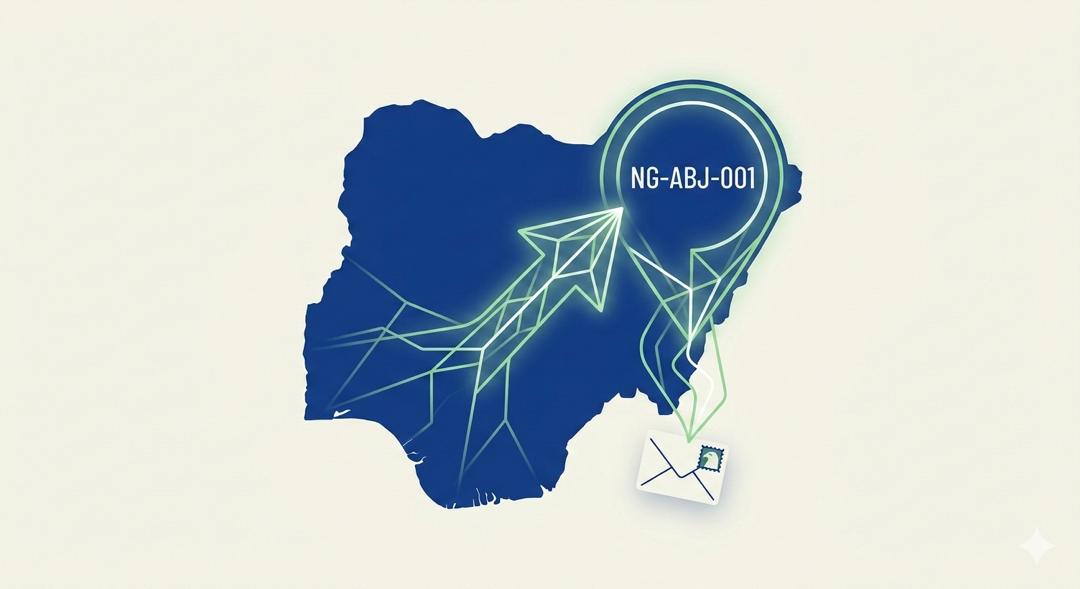
Bosun Tijani, Nigeria’s minister of communication and digital economy, just announced the approval of the Alphanumeric Digital Postcode System by the Federal Executive Council.
The system, according to the minister, was approved on Wednesday.
Think of it as a digital fingerprint for every single building in Nigeria. Instead of a long, confusing address, every home, school, and shop gets a short code made of letters and numbers (that’s the alphanumeric part), something like ‘LA-IKJ-042’ for a house in Ikeja, Lagos.
Instead of saying to a delivery agent, “Go past the yellow gate, turn left at the suya spot, and it’s the house with the black car”, you simply share your digital postcode with them, and the map takes them right to your doorstep.
Why this matters
The digital postcode is a big deal, as it can help the whole country run smoother in the following ways:
- Fast Deliveries: When you order a toy or a book online, the driver won’t have to call you ten times for directions. They just plug the code into their map and drive straight to you.
- Emergency Help: If there is a fire or someone is sick, every second counts. An ambulance or fire truck can use the digital code to find the exact door much faster than looking for landmarks.
- Better Planning: The government can use these codes to see exactly where people live. This helps them decide where to build the next big playground, hospital, or school.
- Growing the Economy: It makes it easier for small businesses in one state to sell things to people in another state because shipping becomes cheap and reliable.
Does it work when the internet goes off?
In a country where network connectivity is largely unreliable, a common question is, “What if the network is bad?” Great news! The system is built to be offline-friendly. The letters in the code tell a story. For example, the first part might stand for ‘Lagos,’ and the second for ‘Ikeja’. Even without the internet, a human can read the code and know generally where to go.
Also, delivery apps can absorb all the map data while they have Wi-Fi and save it. When the internet goes off, they use GPS satellites (which don’t need a SIM card) to show the way.
Is it safe?
Having a digital map of every home is a bit like a superpower for the government. In a country like ours, some people may worry that if the government knows exactly where everyone lives, bad leaders could use that information to bully people who disagree with them or keep too close an eye on everyone’s private life.
To keep tools like the digital postcode from being used the wrong way, Nigeria has a set of rules called the Nigeria Data Protection Act (NDPA). The government is only allowed to use your postcode for specific things, like sending your mail, fixing your roads, or sending an ambulance. They aren’t allowed to use it just to spy on you.
Also, there is a group called the Nigeria Data Protection Commission (NDPC), whose job is to make sure the government (and big companies) follow the privacy rules. Just like every other basic right, citizens have data rights: the right to know who is looking at your address and to complain if they are using it the wrong way.
Meanwhile, a digital postcode is a tool. It can help the country grow or be used for surveillance, depending on who is using it. The key is for citizens to stay informed and for the digital shield laws to stay strong so that the government remains a helper, and not a watcher.
Nigeria is joining countries like the UK, the USA, and Ireland, which have used systems like this for years. By using both letters and numbers, Nigeria can create billions of unique codes—enough for every house in every village.
Nigeria is building a digital bridge that connects citizens to businesses, emergency services, and the rest of the world more efficiently than ever before.
Get passive updates on African tech & startups
View and choose the stories to interact with on our WhatsApp Channel
ExploreLast updated: March 5, 2026


