



Africa, a continent of 54 countries, has slowly but effectively etched its name into the global technology conversation, serving as a fertile ground for emerging technologies and a thriving Africa’s payment market. The African continent, plagued by third-world challenges such as a significant unbanked population and low internet penetration, is embracing new and innovative solutions to address its unique challenges.
One such innovative solution in Africa is e-payment, leveraging blockchain and digital technology to facilitate the transfer of money from one person to another.
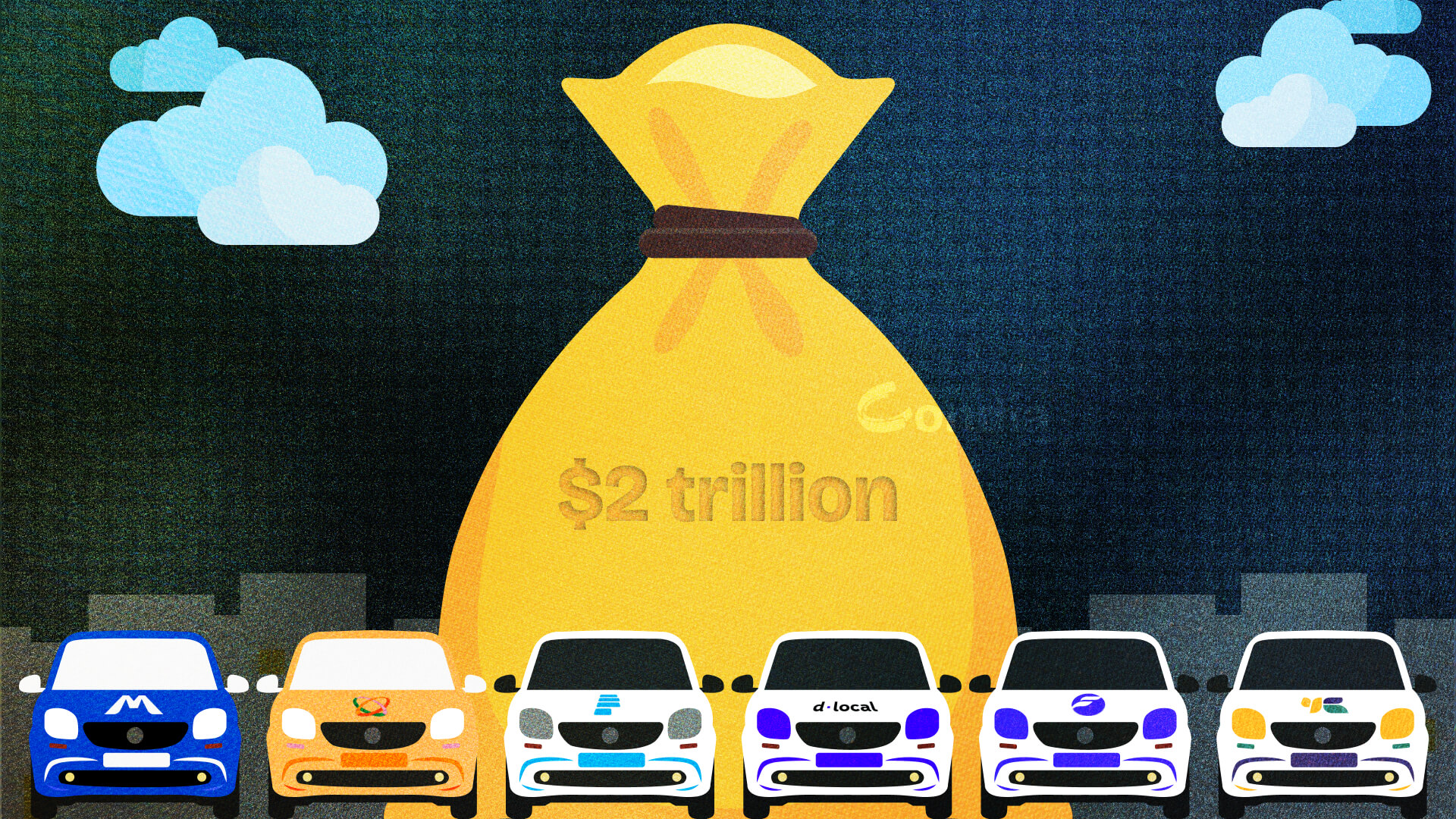
According to the State of Inclusive Instant Payment Systems (SIIPS) 2025 report, Africa processed 64 billion transactions worth nearly $2 trillion in 2024. The report published by the AfricaNenda Foundation, in partnership with the World Bank and the United Nations Economic Commission for Africa (UNECA), revealed that Africa’s payment industry is powered by 36 major payment systems operating across 31 countries.
One Continent, Many Solutions
The African continent is home to hundreds of payment startups, but at least six have crossed the Rubicon and established themselves as authority in the African payment market.
Several factors, like user experience and technological utility, company culture, and market share, justify the inclusion of these startups in the super list.
Speaking to Condia, Rutendo Nyamuda, Director of Brand Communications at Yellow Card, revealed how the company culture has helped it attract top talent across the globe, pushing it to the Apex of Africa’s payment market.
“For me, the biggest driver of Yellow Card’s success is our culture of ownership. People are trusted to take initiative, experiment, and build, and that level of autonomy genuinely brings out the best in us. You feel empowered to try things, refine them, and move with speed, which is essential when you’re working across so many different markets,” said Nyamuda.
“Another huge part of our culture is that we’re remote-first. The flexibility to live your life fully — whether you’re a parent, married, or simply someone who values independence — makes a massive difference.”
Paystack, a juggernaut in the African market, is known as a pioneer in the space. According to a longtime user, the payment startup secured its position as one of Africa’s top brands by prioritising user experience.
“It was simple. You see how much to pay, choose the payment method, and make a payment. They don’t route you through loops and countless pages as most early payment portals used to do,” Olayinka Omoniyi, a marketing and sales lead, told Condia.
Other payment startups on the list, such as M-Pesa, Flutterwave, dLocal, and Fincra, met one or more of the points in our methodology, which rank companies in descending order by Total Processed Volume (TPV). Other factors considered include the amount raised and the number of users.
Top 8 firms in Africa’s payment market
Mpesa
M-Pesa, one of the first payment platforms launched in Africa, has lived up to its pioneer status, racking up over 60 million customers over the years and currently processing $1 billion every day.
Founded in 2007 by Nick Hughes, a Vodacom employee, and Susie Lonie, the M-Pesa project morphed from a loan disbursement project to a peer-to-peer (P2P) “Send Money Home” model after observing pilot users utilising the platform to transfer funds to relatives.
Today, M-Pesa has grown into a full financial ecosystem. It currently offers general payment services, savings and loans, overdrafts and stock trading on the Nairobi Stock Exchange. The M-Pesa ecosystem is supported by 319,000 active agents in Kenya alone and a merchant network of 2.4 million merchants.
As of March last year, M-Pesa’s TPV stood at $450.8 billion, an 18.3% year-on-year increase. Vodacom Group Limited, East Africa’s telecommunications giant, owns a 34.94% stake in Safaricom, the parent company of M-Pesa.
M-Pesa remains the biggest success story in East Africa and Africa as a whole when it comes to payment systems.
Moniepoint
Moniepoint sits at the top of the list with a staggering $260 billion (N412 Trillion) in TPV and a recent $200 million in equity financing from a Series C funding round.
Founded in 2015 by Tosin Eniolorunda and Felix Ike, the company began as a backend software provider for traditional banks before pivoting in 2019 to launch its own agency banking and merchant-acquiring network.
Moniepoint has a direct footprint in Nigeria’s local economy, powering over 80% of all point-of-sale (PoS) transactions and disbursing over N1 trillion in credit to SMEs.
In a recent blog post, the payment company confirmed that it processed 14 billion transactions in 2025, a record achievement for any African payment firm.
Flutterwave
Flutterwave is another Nigerian startup at the centre of the African technology conversation. Present in over 35 African countries, Flutterwave supports over 30 currencies, enabling seamless cross-border transactions for local businesses.
Founded in 2016 by Olugbenga Agboola, Iyinoluwa Aboyeji, and Adeleke Adekoya. The payment startup has raised $475 million as of 2022, with no major rounds since.
Flutterwave’s TPV exceeded $25 billion as of 2023. Recent 2025 reports highlight a 20% year-on-year (YoY) growth in enterprise TPV.
Fintech Magazine Africa reports that the astronomical numbers achieved in 2024 were powered by expansions into Rwanda, Ghana, Uganda, Zambia, and Mozambique
Flutterwave employs 720 people and has its headquarters in San Francisco, with a physical presence in major African countries. The platform is an A-lister in the same brand bracket as Paystack.
Paystack
Following Stripe’s $200 million mega acquisition in 2020, Paystack announced itself as one of the most successful Nigerian startups in the space.
Founded in 2015 by Nigerian software engineers Shola Akinlade and Ezra Olubi, Paystack provides modern online and offline payment solutions for businesses across Africa.
The company says its platform is used by over 200,000 businesses worldwide, including in Africa. Recent reports place its TPV at 12 times its level at the time of its acquisition by Stripe.
Based on its twelvefold growth claim, Paystack’s current annualised TPV is well over $15 billion to $18 billion. This is across its five active markets. This is a rough estimate, given that the company hit N1 trillion in monthly TPV in July 2024.
Paystack employs over 500 people with physical presence in Nigeria, South Africa, Ghana, the US, the UAE, and Kenya. Analysts attribute Paystack’s success to timing, efficiency, and simplicity.
Paga
Paga, a leading payments and financial services ecosystem, was founded in 2009 by Tayo Oviosu. What started as a simple mobile money idea has evolved into a full-blown financial ecosystem.
Oviosu launched the company with a vision to eliminate the reliance on cash. He also hoped to provide universal access to financial services for millions of unbanked and underbanked Africans.
At its core, Paga operates as a multi-channel digital wallet. Users can send and receive money, pay bills, top up airtime, and shop online. The payment system boasts over 140,000 physical agents that shore up its ecosystem and extend its services to unbanked communities.
Paga did an annual TPV of $11.98 billion in 2025. This was across 169 million transactions, which justifies its inclusion on the list. The payment system is set to do even more business, given its proposed partnership with PayPal.
dLocal
Dlocal, founded in 2016 by Sebastian Kanovich, Sergio Forgel, and Andreas Bzurovski, is the next. It connects global enterprises such as Amazon, Uber, and Spotify with billions of consumers in emerging markets.
In Africa, dLocal provides localised payments, including mobile money, bank transfers, and digital wallets. It simplifies cross-border payments in South Africa, Kenya, Nigeria, and Egypt with seamless integration and regulatory compliance.
dLocal focuses on e-commerce in Africa, citing Nigeria, South Africa, and Kenya as the region’s largest e-commerce markets. The platform raised $350 million across two main rounds pre-IPO, followed by a 2021 NASDAQ IPO raising $520 million.
The latest TPV stood at $10.4 billion, according to reports. This is up by 59% YoY, with the 9-month cumulative for 2025 at $27.7 billion. The massive uptick follows expansions into Africa, Latam, and Asia.
dLocal supports over 900 localised payment methods, with each tailored to the unique demands of its market. M-Pesa Mobile Money in Kenya is one of its flagship partnerships with other localised payment methods in Latin American countries.
Africa is a major emerging market, and dLocal’s unique utility to emerging markets qualifies it for this list.
Fincra
Founded in 2019 by Ayowole Ayodele and Gideon Orovwiroro, Fincra focuses on Africa’s B2B space. It provides seamless local and international payments through a single API integration. Fincra facilitates payments leveraging bank transfers, mobile money, and virtual accounts.
The company has raised approximately $2.5 million in total funding, including a $120,000 pre-seed round in 2022. Aside from external funding, the company is heavily bootstrapped, with a strong focus on organic growth.
Since 2023, Fincra has amassed a TPV of over $10 billion, an impressive figure for a bootstrapped firm. The company is building on its robust progress to expand to new markets in South Africa and Tanzania.
Registered in Canada, the company maintains a physical office in Ikoyi, Lagos, Nigeria
Nomba
Nomba, formerly Kudi, started as a simple AI chatbot designed to simplify financial requests on social media. The founders, upon realising the massive gap in the offline payment infrastructure, pivoted to a new angle. They built a robust banking and payment tool for small and medium-sized businesses (SMBs).
Today, Nomba is equipping over 600,000 businesses with advanced POS terminals and business management software.
As far as this list goes, Nomba is a middle-weight payment company. It has an annualised Total Payment Volume (TPV) of over $6 billion in 2025. This number has ballooned to $2 billion in monthly TPV this year,
This growth is driven by its high-performance Nomba MAX terminals, which offer 99.9% transaction success rates for high-volume businesses.
Yinka Adewale and Pelumi Aboluwarin founded the company in 2016 and have shaped its vision through the years.
Editor’s Note: List updated to reflect the latest TPV data.
Get passive updates on African tech & startups
View and choose the stories to interact with on our WhatsApp Channel
ExploreLast updated: February 12, 2026


