




For decades, the fight against malaria in Africa has relied heavily on manual scouting and broad treatment. If a village is at risk, you distribute nets to every household. In Ghana, if a district is a hotspot, you spray puddles with chemicals, targeting the larvae of malaria-causing mosquitoes. But not all puddles require treatment.
SORA, a Japan-headquartered startup with operations across more than 10 African countries, recently put this inefficiency under the microscope by analyzing high-resolution aerial images. The result? Only about 30% of mapped water bodies contained mosquito larvae.
The company is now executing precision malaria-control work across multiple African countries, including Ghana, Sierra Leone, Benin, Kenya, Senegal, the DRC, and Mozambique.
By combining fixed-wing drones and AI, they are killing mosquitoes and decoding the inefficiency of the public health budget.
“We saved about 40 to 50% of working hours compared to humans going to map,” Mary Yeboah, Sora’s Ghana lead, told Condia. “Before the drones came to Ghana, humans were doing the mapping and spraying, so they took more time on the field and more people.”
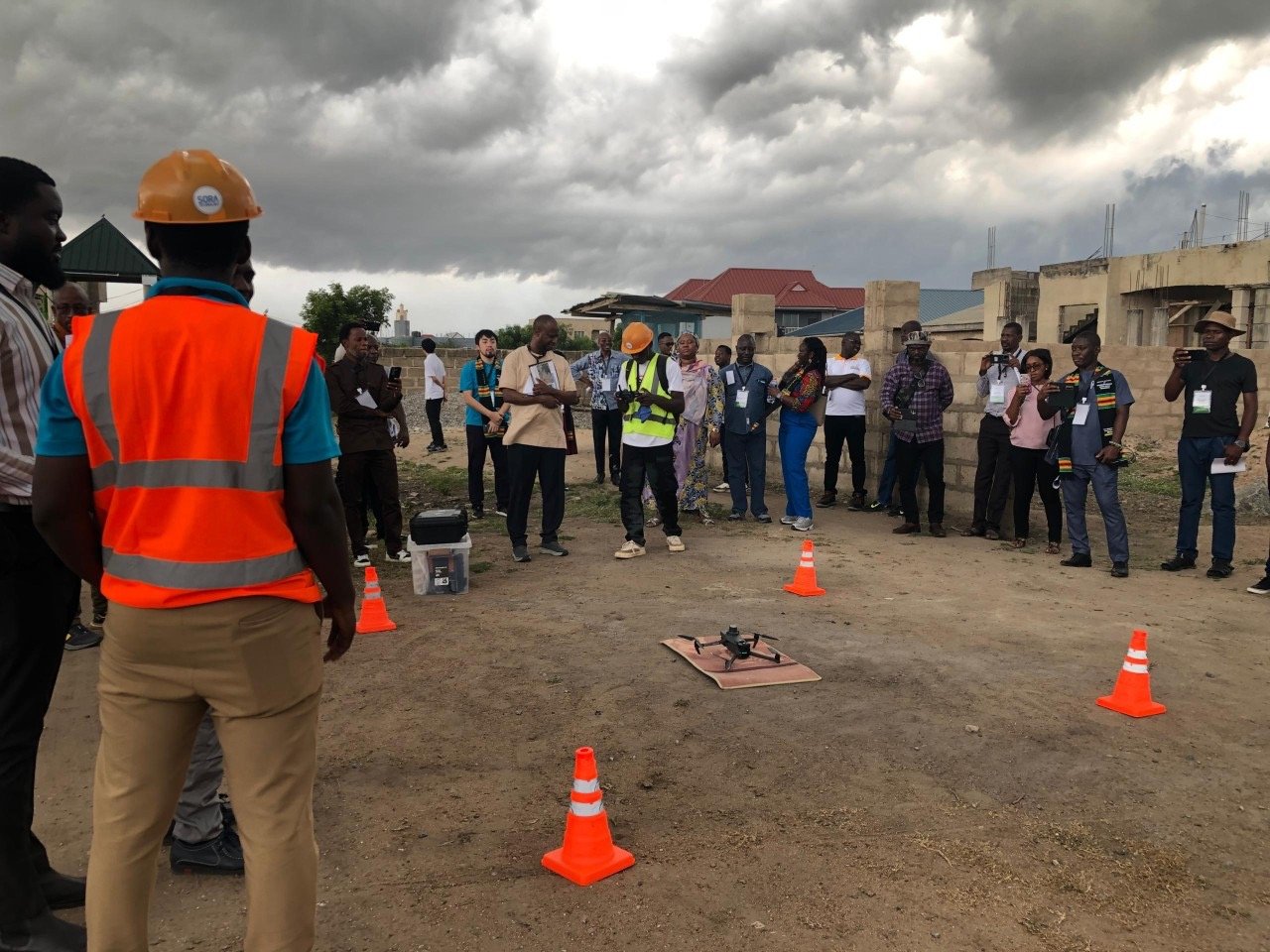
“You needed about six to seven people to do the work. You would spend almost eight hours on the field in a day. But with drone mapping, you need a maximum of two people — a drone pilot and a co-pilot — and in about five minutes, you could have covered a nine-hectare land.”
Yeboah said SORA reduces chemical larvicide usage by over 60%, cuts manual mapping time by 75%, and increases coverage area by 205%.
The efficiency stack
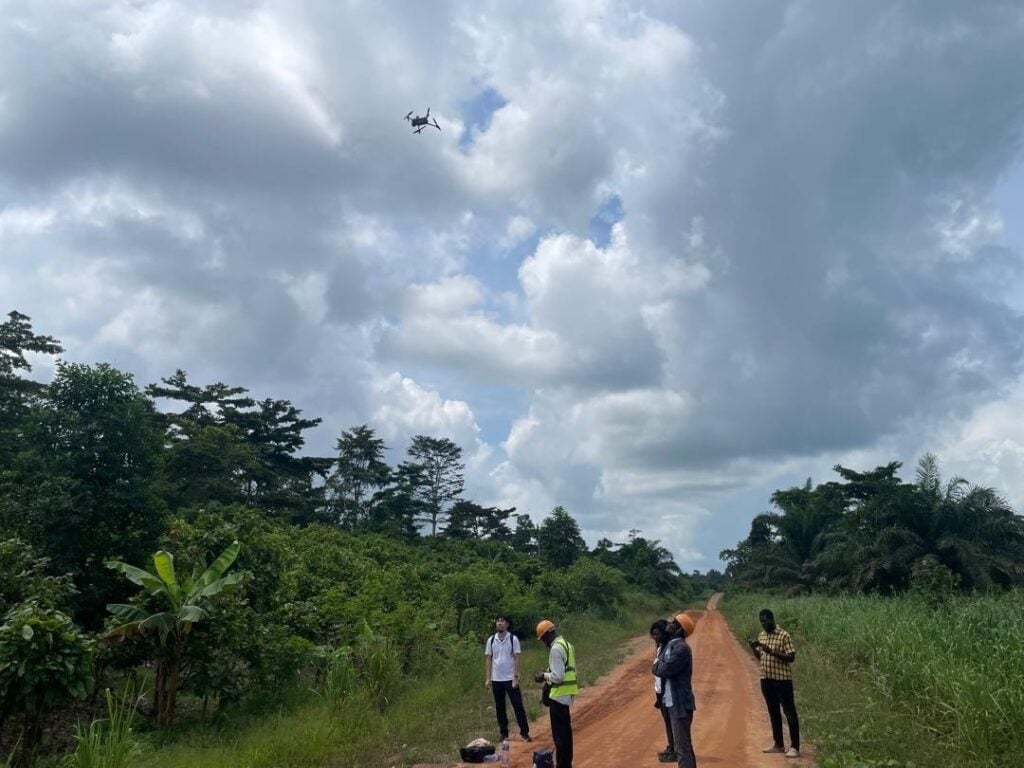
SORA’s workflow is a masterclass in precision. A drone lifts off over a community, capturing high-resolution images of the land below. Artificial intelligence software scans the footage, searching for shallow pools of stagnant water, the kind that harbors mosquitoes. GPS coordinates are pushed to a field worker’s phone. They walk to the exact spot, apply a small amount of larvicide, and move on.
Crucially, the AI isn’t firing the field worker, according to Yeboah; it’s turning them into a “10x technician”.
SORA says its Ghana operation is local, employing Ghanaian pilots, co-pilots, and data analysts. By using a navigation app guided by cloud-analyzed data, workers no longer have to wander aimlessly. It reduces physical fatigue, removes the loop of doubt, and turns manual labor into data-driven operations.
SORA’s drones are also designed to operate offline, according to Yeboah. In many rural communities in Africa, a constant internet connection is a luxury. SORA tech acknowledges this by ensuring that flight and mapping do not depend on internet connectivity.
Closing the $12 billion gap
In 2024, the WHO African Region accounted for 95% of global malaria cases and 579,000 malaria deaths; about 75% of those deaths were among children under five. Beyond the human toll, malaria’s economic burden in Africa has long been estimated in the billions of dollars annually; a widely cited historical estimate put it at about $12 billion a year. Meanwhile, progress against malaria has largely stalled since 2015, amid insecticide resistance, changing mosquito behavior, funding pressures, and health-system constraints.
SORA’s business model is an exercise in infrastructure hijacking. They aren’t asking ministries of health for new money; they are helping them utilize existing budgets more judiciously. By shifting from the government’s reactive firefighting approach to a predictive system, they are stopping outbreaks in a puddle before the first fever starts.
The path to zero
SORA has signed an MOU with Benin’s National Malaria Control Program to support mapping, risk classification, and precision larval control.
The company also operates in Sierra Leone, Kenya, Senegal, and the Democratic Republic of Congo. In Nigeria, SORA signed a December 4, 2025 MoU with Cross River State focused on precision agriculture, irrigation, and environmental monitoring. The company says its malaria work has involved partnerships or support linked to WHO, Unitaid, and JICA, and it has positioned itself within wider global-malaria financing conversations that include the Global Fund.
SORA recently raised $2.5 million in a late-seed round, bringing its total funding to approximately $7.3 million.
By focusing on the 30% that matters, SORA hopes to help the continent stop wasting the 70% that doesn’t.
Get passive updates on African tech & startups
View and choose the stories to interact with on our WhatsApp Channel
ExploreLast updated: March 20, 2026


