



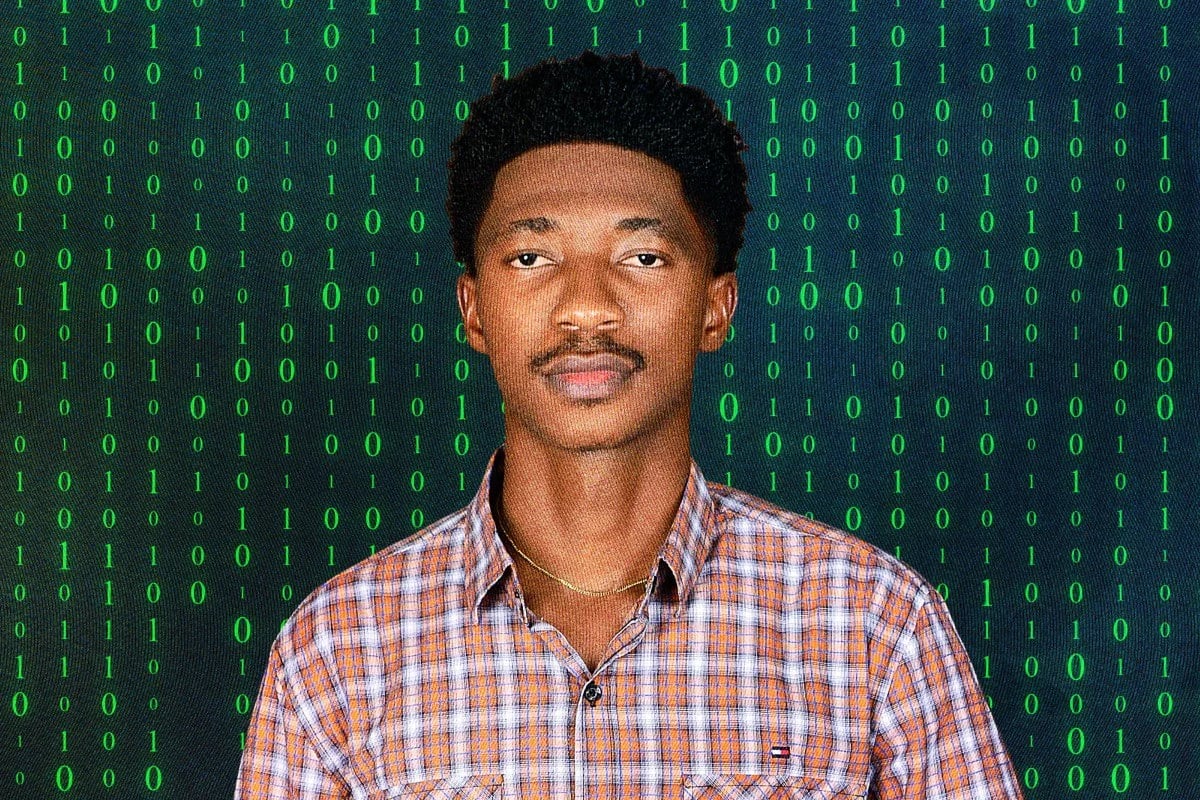
When Kelechi Azorji enrolled at Captain Elechi Amadi Polytechnic in Port Harcourt to study computer engineering, the labs barely existed. Hardware courses were taught mostly in theory. Students learned about microcontrollers, circuits and embedded systems more from lecture notes than from direct access to functioning equipment.
Azorji built his own path around that absence anyway. Using a borrowed internet connection, he downloaded Atmel Studio and began ordering microcontrollers from AliExpress. Each order meant waiting 3 to 6 weeks for components to move through NIPOST and customs before eventually reaching Port Harcourt. When the components finally arrived, he assembled whatever he could from them and kept experimenting. Before long, he had become the person other students called when they needed help with hardware projects.
By his second year, he had become an unofficial lab technician of sorts, sourcing components and helping write reports for students two years ahead of him. Without planning to, he had already specialised in embedded systems in a country where there were very few clear jobs for it.
Today, Azorji works as a Senior Full Stack Engineer at Gathered Here, an Australian end-of-life planning platform used by roughly 25,000 to 30,000 families each month. His career has since moved from the manual assembly of hardware into the management of high-scale global cloud infrastructure, a shift that required him to build the technical pipeline his formal education lacked.
When hardware was not enough
The turning point came from a project that, at first, looked purely physical.
Azorji wanted to build a car tracker. The embedded side made sense to him immediately: GPS modules, location data, device behaviour. But the deeper he got into the work, the clearer it became that the device alone was not the product. It also needed a web application to receive requests, process data and present information in a usable way. Without that layer, the tracker would produce coordinates that no one could meaningfully interact with.
That project forced a wider realisation. Hardware could not stand alone. To build a complete system, he had to move beyond the device and into software.
Using MTN’s off-peak night plan and downloaded tutorials, he taught himself enough JavaScript to build the web interface around the hardware. That moment marked the beginning of a shift that would define the rest of his career. What began as an effort to complete a hardware product quickly became an education in full-stack thinking.
At the time, one of the clearest routes into that ecosystem ran through the Andela Bootcamp, one of Nigeria’s most competitive gateways into global software engineering. Azorji applied and earned a place after passing the coding challenge, joining a small cohort selected from thousands.
To get there, he travelled to Lagos for the final stage, sleeping one night in a church so he could make the assessment the next morning. Inside the program, the structure was strict. Participants built production-style projects under constant review.
Three months in, the model changed. In September 2019, Andela pivoted away from junior training, affecting roughly 400 developers. Azorji returned to Port Harcourt with the training, but no placement. One idea from the program stayed with him: the goal was to produce engineers who could work anywhere.
Engineering inside a fragile startup ecosystem
Work didn’t appear immediately after he returned. Electricity at home in Port Harcourt was unreliable, so Azorji asked his uncle for a desk at Quikar, a logistics office with stable power and internet. He spent his days there sending applications and waiting for replies that rarely came.
The first break came through Enya, a platform started by Uche Nnedi that connected founders with engineers willing to build early products. Azorji didn’t pass the first round. He tried again and was eventually matched with FortVest360, a small investment startup. As the company’s only engineer, he built the platform from scratch. The pay was ₦160,000 a month, roughly $110 at the time. Less than what his skills arguably justified, but it meant income and a company name on his CV.
Six months later, the job was gone. The founder had redirected capital into greenhouse farming, and when the crops failed, the platform lost its funding. It was a pattern Azorji would come to recognise as structural, not exceptional. In Nigeria’s early startup economy, engineering execution rarely determines whether a company survives. Founders were managing unstable capital, shifting priorities and business models that could collapse for reasons entirely outside the product. Engineers could build the system, but the system around them could still fail.
For Azorji, that period became an education of its own. It taught him how fragile digital products can be when the infrastructure beneath them is poorly designed, underfunded or treated as an afterthought. Writing code was only one part of the job. Systems also had to be deployed properly, monitored closely, secured thoroughly and built to survive failure.
His next role came through LinkedIn. A founder building Clinify, an electronic medical records platform for Nigerian clinics, had come across his profile while searching for engineers from the same training pipeline. The pay was slightly lower than FortVest360, with equity promised if the product grew.
At Clinify, he ended up maintaining most of the system himself: interface, backend, database and cloud infrastructure. The platform handled patient records, antenatal workflows and clinical monitoring across partner clinics. That breadth mattered when the company began discussing telemedicine.
One option was to build video directly into the medical records system. Azorji pushed for something simpler and more resilient. He deployed Jitsi on a separate AWS instance, branded the interface and connected it back to the platform through generated session links. Doctors could start consultations from within patient records while the video service ran independently of the core product.
The decision reflected a pattern in how he thinks: not just about building features, but about shaping systems so they can keep working when complexity increases. As he puts it, “You can think of it like someone hiking through the Amazon forest. The founder knows where they want to go. The engineer understands the terrain.”
Designing systems that can survive the quarter
That instinct has only sharpened over time. Azorji often talks about building infrastructure that can absorb constant product change without becoming fragile. Features shift. Traffic changes. Priorities move. Deployments happen under pressure. A system that works only under ideal conditions is not enough.
He sees one mistake repeated across early-stage companies: teams move to the cloud only to recreate old infrastructure habits there, running servers continuously even when traffic patterns don’t justify it. In many cases, he argues, a usage-based option like AWS Lambda makes more sense. The cloud’s advantage isn’t just that it’s remote infrastructure. It can expand and contract with demand. Designing for that elasticity is part of using it properly.
That work eventually earned him recognition outside the companies he built for. Azorji was selected as an AWS Community Builder, a selective global programme from Amazon Web Services that recognises technical builders and emerging thought leaders who share practical cloud knowledge with the wider engineering community. It marked him out as one of a relatively small number of African engineers acknowledged by AWS for both technical depth and public contribution to the cloud ecosystem.
Today, he works remotely from Port Harcourt as a Senior Full Stack Engineer at Gathered Here, an Australian end-of-life planning platform used by roughly 25,000 to 30,000 families each month. Before a new feature is built, he diagrams the system around it: where users enter, how authentication flows and what happens when something breaks. Code comes later.
The big picture
The work Azorji is moving toward now looks less like a pivot than a return.
He started in embedded systems because that was the part of engineering he found most interesting. Web development came later, partly because his own projects needed interfaces and partly because that was where the jobs were. Over the past five years, he has been working across the full stack: backend services, frontend applications and cloud infrastructure. Recently, he has been studying how those systems can reconnect with the hardware layer he started with.
The ideas he describes are grounded in everyday problems. A house that reads your car’s GPS location and heats water before you arrive. A backup power system that studies electricity patterns in a neighbourhood and charges its reserves before outages begin. Farms where irrigation adjusts automatically based on sensor data.
The underlying pieces are ones he has been working with for years. The difference is that the cloud can now coordinate thousands of devices at once, while AI systems can interpret the data those devices produce and decide what should happen next.
Azorji’s story is also, in a wider sense, a portrait of what constraint produces. Nigeria’s software economy has shaped a generation of engineers who learned without proper labs, adapted when formal pipelines disappeared and built through unstable startups. They became hardware engineers who taught themselves web development, software engineers who absorbed infrastructure and infrastructure engineers who never stopped thinking about the physical world. That range wasn’t planned. It was the outcome of an ecosystem that repeatedly forced engineers to improvise before it was ready to support them.
In more mature tech markets, roles are often neatly separated. In places like Port Harcourt, an engineer may have to become several kinds of engineers before anyone is willing to hire them as one. That produces a particular kind of technical judgment: less attached to labels, more focused on systems and more comfortable with ambiguity.
From microcontrollers and GPS modules to AWS infrastructure and globally used software, the thread running through Azorji’s career has stayed constant: understanding how systems work together, and how software can make the world around it respond.
Get passive updates on African tech & startups
View and choose the stories to interact with on our WhatsApp Channel
ExploreLast updated: March 25, 2026


