




At Condia, we spent the year doing what we do best: digging beneath the headlines to find the stories that actually matter. As a result, we did some investigations into industry dynamics, examinations of business models under pressure, and profiled some of the people and companies building Africa’s digital future.
Some revealed uncomfortable truths about popular business models, while others made sense of where African tech was headed next.
Here are the ten stories we are most proud of from 2025.
1. African startups to watch in 2025

After a brutal 2023 that saw over a dozen startups collapse, 2024 opened with cautious optimism and a gradual return of funding. The conversation shifted decisively toward unit economics, and the global ecosystem began to course-correct.
We asked venture capitalists, founders, and tech leaders across the continent to tell us which startups they’re watching as we head into 2025. The result was a list that spans climate tech, e-commerce logistics, payment infrastructure, and health innovation.
The seven companies that made the cut include Octavia Carbon, Midddleman, Konnect Networks, Deep Echo, Aspyre Foods, Tyms, and MyFoodAngels
2. Every Nigerian fintech will become a cross-border fintech

The naira’s relentless devaluation is forcing Nigerian fintechs to make a strategic choice: expand into markets with stronger currencies or watch their dollar-denominated valuations erode year after year.
This piece traced the evolution of Nigeria’s cross-border fintech landscape across two distinct eras. The first wave, between 2020 and 2022, gave us Grey, Geegpay, and a cohort of startups that built their entire business models around multicurrency accounts and dollar card issuance. They were cross-border natives from day one.
The second era, which we’re living through now, looks different. Established fintechs that previously focused purely on the domestic market are adding cross-border capabilities as a survival mechanism. The article laid out how virtually any Nigerian fintech can become cross-border in nature by operating across multiple currencies or countries.
The implication? We’re about to see an explosion of cross-border infrastructure providers selling the shovels and picks to this new gold rush.
3. The Moove pitch that became a debt trap for Lagos drivers

Christian Ovie thought he was getting a fresh start with Moove, the mobility fintech backed by Uber and Mubadala. Instead, he discovered his “new” vehicle was recycled from a previous driver. He’s now allegedly on the hook for ₦20 million (roughly $13,740), nearly double the market rate.
This investigation revealed asset churn at the heart of Moove’s drive-to-own model. When drivers default, cars aren’t retired. They’re stripped, refurbished, and recycled for the next applicant. Daily remittance fees doubled from ₦9,400 to ₦18,700, adding three years to repayment terms. Drivers reported working 12-hour days, spending ₦25,000 to ₦28,000 on fuel alone, while the promised all-inclusive benefits (health insurance, maintenance) evaporated.
Several drivers alleged the remittance hike was designed to force defaults, allowing Moove to repossess and reissue vehicles.
4. Meet the Cars45 mafia: ex-employees turned founders

This piece profiles seven individuals who built careers at Cars45 before founding automotive and mobility companies. Etop Ikpe founded Cars45 in 2016, then launched AutoChek in 2020 with eleven ex-Cars45 employees. AutoChek has made six acquisitions, operates in nine countries, and raised over $16.5 million. Femi Oriowo co-founded Carbin Africa in 2023, exceeding a billion naira in GMV in 2024. Promise Ndem founded CarCheck after eight years at Cars45. Justus Obaoye’s journey went from Carido (acquired by Cars45) to FixIt45 to Billboxx, which raised $1.6 million.
One company created a pipeline producing a new wave of mobility entrepreneurs.
5. Ex-Moniepoint executive sues unicorn over stock options worth nearly $1M
Damilola Ajiboye, a former software engineer at Moniepoint, filed a lawsuit alleging the Nigerian fintech unicorn denied him stock options worth $889,600 in violation of terms promised during his five-year tenure.
Ajiboye joined in 2016 and was offered stock options if he stayed for five years. The promise was formalised in 2019 with 32,000 Executive Stock Options. After successfully exercising 4,200 units in 2021, he resigned in December that year. What followed was a three-year battle. He emailed about his remaining vested shares, but received no response for three months. When an email from Carta finally arrived 85 days later, he had just five days to exercise options before they expired. A company executive had assured him the window would extend to two years, but when he checked months later, his rights had expired.
Ajiboye is seeking restoration of his remaining 27,800 stock options and $31,645 in damages for what he calls “oppressive behaviour”. Moniepoint declined to comment, citing ongoing legal proceedings.
6. Nigeria no longer on the FATF list. Will the second time be the final time?
In October 2024, Nigeria was removed from the FATF’s grey list. But this wasn’t the country’s first time on a watchlist.
Nigeria spent five years on the Non-Cooperative Countries list (2001-2006), then four years under monitoring (2009-2013). This latest stint lasted two years and eight months. For international financial institutions, the stigma lingers. Returning to the grey list a decade later likely confirmed suspicions of senior compliance officers.
The immediate implication? More international banks will work with Nigerian clients, reducing costs and improving reliability. But Olagoke Salawu of Sterling Bank warned: “Delisting doesn’t mean instant de-scrutiny.” With another evaluation in 2026, every compliance professional has a national duty to ensure Nigeria never slips back.
7. How ANAVA fund of funds sparked a startup investment wave in Tunisia
While much of African tech conversation centres on Nigeria, Kenya, and South Africa, something remarkable has happened in Tunisia. The country’s pioneering fund of funds, ANAVA, has transformed its startup landscape, leading to a quadrupling of startups and funds.
ANAVA has a revised target of €100 million and reached first close at €60 million. It has committed €45 million to ten child funds. The impact is measurable: all ten launched after 2019, and their combined capital raise is exponentially more than ANAVA’s direct investment. Tunisian startups created in the last five years increased fourfold. The country has seen two major exits (InstaDeep and Expensya). Tax revenue reached $12.25 billion in 2023, up 24.4% from 2019.
The piece showed how thoughtful policy and patient capital can catalyse an entire ecosystem.
8. Inside GAC’s subtle takeover of LagRide’s ride-hailing operations
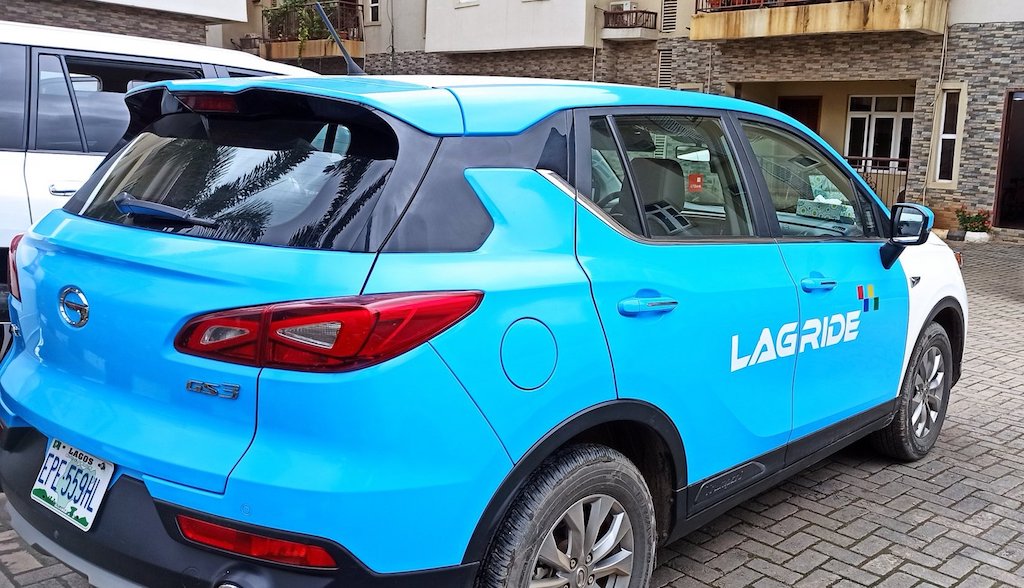
This investigation revealed how CIG Motors, representing Chinese automaker GAC, assumed operational management of LagRide, effectively ending a five-year partnership between Lagos State and Zenolynk Technology.
The transition happened abruptly in March 2025 with no official explanation. A week-long disruption occurred over intellectual property disputes. CIG launched a replacement app, but drivers found it unsuitable: low fees, poor mapping, a ₦10,000 daily earnings cap. The app was designed for corporate clients and electric vehicles, shifting away from LagRide’s mass-market focus.
Drivers who joined under the rent-to-own scheme demanded to settle balances and exit entirely, citing a lack of trust in new management. Their refusal echoes years of dissatisfaction. Despite government backing since 2020, LagRide remains Lagos’s fourth-largest ride-hailing platform.
9. How 10 tech professionals approach money conversations in their careers

Money shapes careers in ways most people don’t discuss. This two-part feature collected tactical advice from ten tech professionals about compensation.
Favour Aroghene Ndulu described how an anonymous salary survey opened her eyes to market rates, changing her negotiation strategy. Bukayo Ewuoso shared his “folder of proof” approach: documenting wins and exceeded KPIs as leverage. Sidiq Rufai received two raises in under a year by understanding his leverage. Olawande Omodaratan advocates thinking like a consultant, selling expertise rather than asking for charity. Chidinma Iwu walks away from undervalued opportunities.
The throughline? Talking about money doesn’t have to be uncomfortable when you approach it strategically and back up your asks with evidence.
10. Nigeria’s Medsaf quietly shuts down after raising over $7 million
Medsaf, once a trailblazer in digitising Nigeria’s pharmaceutical supply chain, shut down in March 2024. Launched in 2016, the startup raised over $7 million from investors, including Techstars, NGOs, and DFIs, to help hospitals and pharmacies procure safe medication through a digital platform.
At its peak, Medsaf worked with over 1,000 hospitals and clinics. But by January 2023, it had run out of money after an unsuccessful Series A attempt. CEO Vivian Nwakah cited unpaid invoices, supplier credit issues, loss of a key government contract, and Nigeria’s worsening foreign exchange crisis. Despite efforts to sell the company in late 2023, no acquisition materialised.
Reflecting on the journey, Nwakah said the company was built on a weak foundation, particularly around team building. “I built a drug company in Nigeria from scratch, going up against open drug markets, criminal syndicates, a treacherous business climate, and multimillion-dollar corporations; and I made it work, even if for a little while.” The sector continues growing, with Remedial Health, Field Intelligence, and Lifestores Healthcare now filling the gap Medsaf left behind.
These ten stories represent the kind of journalism we’re committed to at Condia: going deeper, asking harder questions, and taking the time to understand complex dynamics before explaining them. In 2026, we’ll continue digging, providing answers to questions, and telling the stories that matter most to Africa’s digital economy.
Get passive updates on African tech & startups
View and choose the stories to interact with on our WhatsApp Channel
ExploreLast updated: December 26, 2025


