

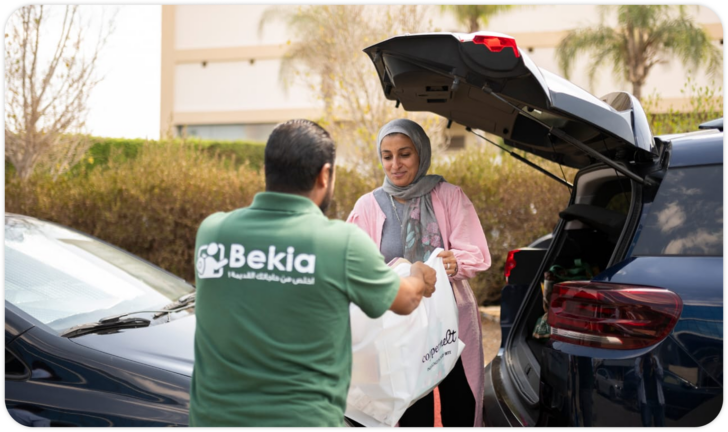
Bekia, an Egyptian recycling startup, has secured $765,000 in seed funding. The company will use part of the money to launch its first B2B software product, Bekia Next, in October 2026—its first push into monetisation through a subscription model.
The round was led by Madica, the Africa-focused investment programme affiliated with Flourish Ventures. It drew participation from returning investor Catalyst Fund, which first backed Bekia in 2023, and Dakar-based Jambaar Capital.
Read: Partech leads $13 million investment in Synapse Analytics series A funding
Founded in 2019 by Alaa Afifi, Bekia began with a consumer app that lets households book waste pickups, similar in spirit to what informal scrap collectors do in Nigeria, except formalised, with weighing, records, and digital payment. These independent collectors remain Bekia’s real competition, alongside traditional contractors who move material but cannot document it.
Catalyst Fund’s Maxime Bayen said Bekia has grown more than sevenfold since 2023. Revenue comes from enterprise contracts, household collections, and refurbished electronics, the last of which brought in its first revenue in June 2026.
Bekia said it will use the new funding to grow its engineering team, bring Bekia Next to market, and begin testing its model in a second African market. In Afifi’s view, the market has never lacked demand for recyclable material. What’s missing is the connection between households holding it and the factories that want it.
Bekia Next will turn Bekia’s collection data into verified CO₂-avoidance certificates for corporate clients, using established international carbon accounting methodology.
“What excites us about Bekia is how the team is drawing on its firsthand understanding of waste collection in Egypt to build a more interconnected, tech-driven ecosystem serving households, small businesses and large industrial waste producers,” Emmanuel Adegboye, Head of Madica said.
July Andraous, Managing Partner at Jambaar Capital, said Bekia is building “an important infrastructure layer” in Egypt’s recycling economy—one that gives informal collectors fair prices, gives households a rewarding way to recycle, and gives corporates the traceability data they increasingly need.
The raise comes as Egypt tightens regulations on the sector. The country produces about 60,000 tonnes of municipal waste a day, most of it going into open dumps rather than recycling plants. The government wants to raise the municipal recycling rate to 60% by 2027, up from about 37% in 2024. Almost all collections today run through an informal trade with no contracts, licences, or records.
Last updated: September 16, 2026