




In a move that could redefine the backbone of Africa’s largest digital economy, MTN Group is pushing to bring its infrastructure back home.
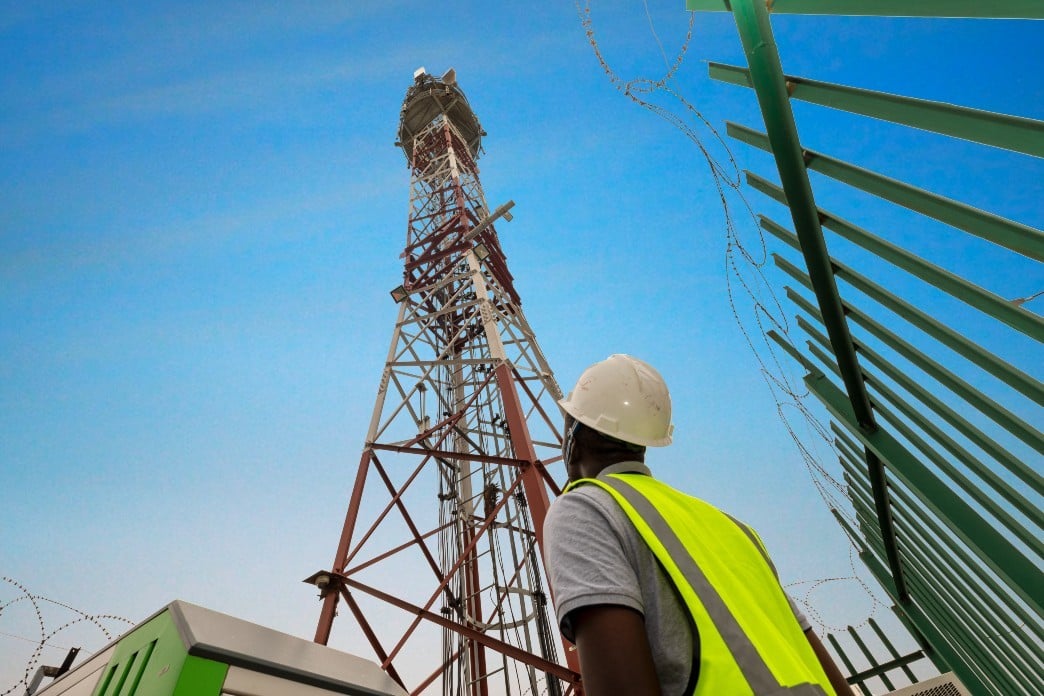
The telecommunications giant is in advanced stages to acquire the remaining 75% stake in IHS Towers, one of Africa’s largest independent owners of communications infrastructure.
By acquiring the shares it doesn’t already own for $2.2 billion, MTN is taking full control of a company with a total enterprise value of $6.2 billion. This structure allows MTN to roll over its existing equity and assume the company’s debt, rather than pay the full $6.2 billion upfront.
“This transaction gives us a unique opportunity to buy back our towers and strengthen our ability to be partners for progress to the nation states in which we operate,” said Ralph Mupita, CEO, MTN Group.
While MTN frames the move as a strategic necessity to stabilise costs, local tech leaders and federal regulators are raising a red flag.
The corporate logic
For a decade, the global telecom trend was asset-light—sell the towers, lease them back, and focus on software and services.
In September 2014, MTN Nigeria entered a landmark agreement to transfer its tower business to a joint venture with IHS Holding Limited. At the time, the deal was a record-breaker for the continent, involving the sale of 9,151 towers. This wasn’t a total exit; instead, it was a sale-and-leaseback arrangement where MTN retained an equity stake (roughly 25%) while IHS took full operational control.
This allowed MTN to shed the high costs of maintaining physical infrastructure such as power, security, and maintenance, and refocus its capital on network expansion and customer service. Similar deals had already been executed in Côte d’Ivoire, Cameroon, Zambia, and Rwanda, effectively turning IHS into the neutral landlord for MTN’s network across Africa.
But in Nigeria’s volatile economy, that strategy has hit a wall. MTN has been battered by currency fluctuations, with tower leases often pegged to the US dollar. By acquiring IHS, MTN effectively internalizes these costs, hedges against the naira’s volatility, and gains direct control over the 29,000 towers that power its network.
The red flag
In a recent statement, Dr. ‘Bosun Tijani, Nigeria’s Minister of Communications, Innovation and Digital Economy, said the ministry is undertaking a “thorough assessment” of the deal.
While acknowledging the sector’s return to profitability under the “Renewed Hope” agenda, the minister emphasized that telecommunications infrastructure is a matter of national security. The government’s objective is to ensure that market consolidation does not come at the expense of the consumer or the long-term sustainability of the sector.
Some of the most vocal concerns are, however, coming from the players who stand on that very infrastructure. Salvation Alibor, a veteran tech leader and CEO of Nigeria’s internet service provider (ISP) and satellite communications firm Syscomptech Communications, warns that the deal threatens the “digital commons.”
In an exclusive chat with Condia, Alibor compared the infrastructure to a public highway that risks becoming a private road.
“IHS is not just a vendor; it is the custodian of our ‘digital commons,'” Alibor said. “When a dominant market player controls the very ground its competitors must stand on, infrastructure neutrality is compromised. We must ensure that our telecom backbone remains an open highway for all, rather than a private road with a toll gate controlled by a competitor.”
Currently, tens of ISPs and multiple GSM providers rely on IHS’s neutral stance to host their equipment. If MTN, already a dominant force, becomes the landlord, smaller players fear they could be squeezed out through price manipulation or subtle strategic vulnerabilities.
MTN’s primary argument for lower costs is rooted in macroeconomic protection. By internalizing the margins previously paid to IHS and eliminating lease agreements pegged to the US dollar, MTN believes it can create a more predictable cost structure. Since dollar-denominated costs are a primary driver of tariff hikes in a market where the naira is volatile, the company asserts that owning the towers removes this pressure.
Alibor, however, rejects the idea that a stronger MTN balance sheet automatically translates to a cheaper phone bill. His concern is that by killing off the “neutral landlord,” MTN removes the competitive pressure that keeps prices low across the entire industry.
“If competition is strangled, the incentive to lower costs for the common man disappears,” he said.
The acquisition now sits in the hands of the Nigerian Communications Commission (NCC) and the Federal Competition and Consumer Protection Commission (FCCPC).
To satisfy both the corporate ambitions of MTN and the competitive fears of leaders like Alibor, regulators may have to impose strict open-access conditions, including strict price caps, structural separation, and mandatory neutrality.
Get passive updates on African tech & startups
View and choose the stories to interact with on our WhatsApp Channel
ExploreLast updated: February 18, 2026


