



According to a study, 81% to 83% of the software used in Nigeria is unlicensed. The country loses over $156 million annually to piracy, and the primary reason is that people cannot afford the original price. Individual plans are too expensive. Group plans exist, but the problem is finding people you can trust to split the cost with and then actually getting them to pay their share every month.
This is the gap Subify, a Nigerian fintech, is trying to close.
Subify started as a WhatsApp community during a period of heavy naira-dollar volatility. Elizabeth Anuoluwapo Ogunseye, the Chief Marketing Officer, was running a CXL subscription group with over 600 people paying ₦280,000 per year for access. At the same time, co-founder and CTO David Akinmoyede had his own YouTube Premium and Amazon Prime groups. They were operating separately, manually, and simultaneously.
The problem with WhatsApp was structural. New members couldn’t access previous conversations, so the team kept reposting the same instructions repeatedly to help people understand how payments worked before joining. Coordinating multiple subscriptions and deadlines by hand was becoming unsustainable.
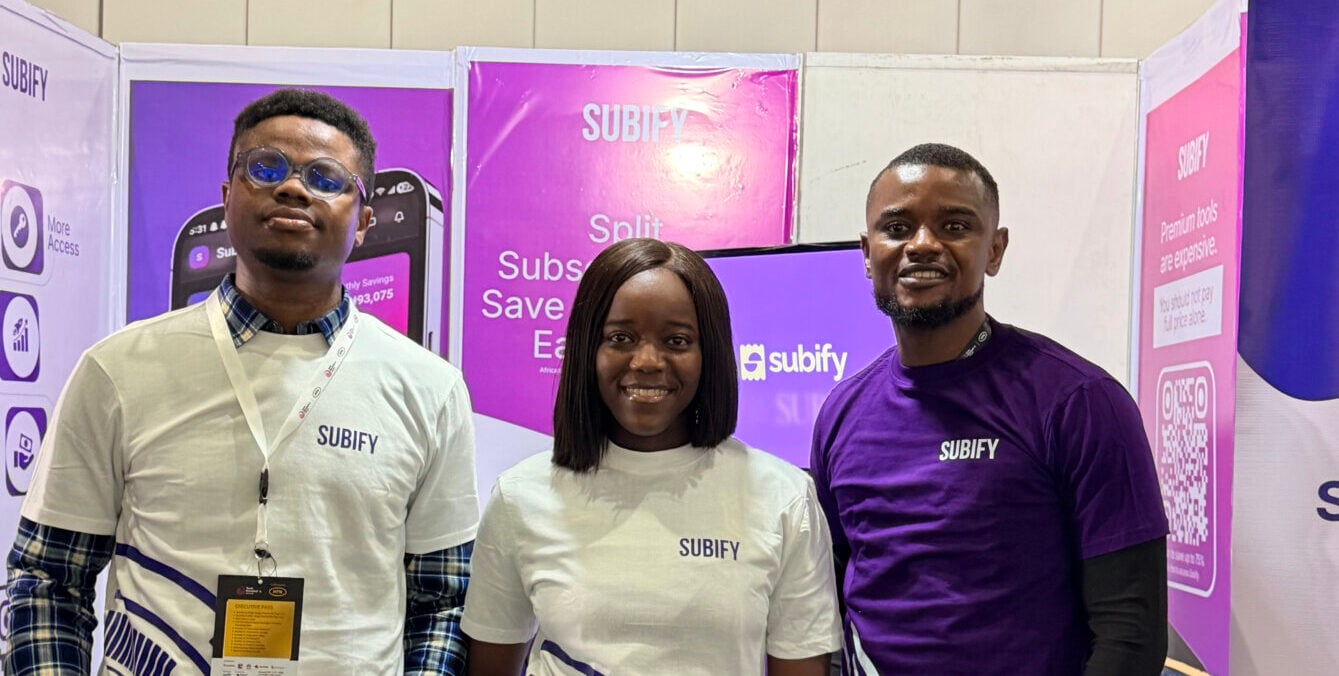
“People were always asking us to launch new software on the product. It was only logical for us to turn it into a full-fledged product to reach more people,” said Israel Oladipupo Ogunseye, Cofounder and CEO. Israel is a former PalmPay and Sterling Bank employee and Elizabeth’s sibling. Together with David, they make up Subify’s three-person founding team.
They started building the app in July 2025 and launched it at an exhibition event last month. The app is currently available as a web app.
How the model works
The model is straightforward. Instead of one person paying $200 for ChatGPT Pro individually, Subify purchases an enterprise plan and splits access across multiple paying users. Each person pays way less and gets the same features. Subscriptions currently available on the platform include CapCut, Dropbox, Apple Music, CXL, Adobe, Gemini, Grammarly, Masterclass, and others.
This is not account sharing. “Any app that does not allow for sharing options, we do not host on our platform,” said David. Apps like Netflix, which do not offer team, business, or enterprise plans, are absent from the platform entirely.
A pricing edge that makes Subify cheaper than going direct, even before the group-split savings apply, is that it can purchase some of the subscriptions in naira using virtual dollar cards.
The business makes money in two ways: a markup on subscriptions it hosts directly, and a marketplace model where external individuals can host their own subscription groups and pay Subify a cut. There is also an automated system that removes users who stop paying. So far, it has barely been needed.
“We haven’t had defaulters,” said David. “Rather, they help spread the product via word of mouth.”
What comes next?
Subify has grown without a marketing budget. When someone asks whether a particular subscription is available, the team sets up a group, posts it in tech communities, and the group fills almost immediately. Users have come in from Kenya, Ghana, and Cameroon without any paid campaigns. CapCut has been the most subscribed tool on the platform, driven by Africa’s growing creator economy. CXL has generated the most referrals because of the steep discount users get for exam access.
The trust question was solved before the app existed. It wasn’t a cold launch. It migrated a community that already trusted it.
“Community is very powerful. There is a trust factor built into the foundation of the brand,” the founders said.
Students are also a clear target. Up to 63.77% of digital piracy users in Nigeria are aged 18 to 25. A market survey the team conducted at the University of Lagos found strong willingness to pay at the right price on the spot.
Subify recently placed second among 100 startups at the Proof Lab competition held during Tech Revolution Africa 2.0 at Landmark Event Centre, Lagos. What set them apart from other pitching startups was that while everyone else was selling an idea, Subify had a working system with real users. They were then invited to a roundtable where angel investor Ashley Barrett awarded them a $2,000 grant on behalf of the Blank Table Group.
The startup is 100% bootstrapped. The grant money goes toward scaling operations. Subify is also in talks with software companies to establish direct enterprise plan partnerships and become an official distribution channel.
Get passive updates on African tech & startups
View and choose the stories to interact with on our WhatsApp Channel
ExploreLast updated: March 19, 2026


