




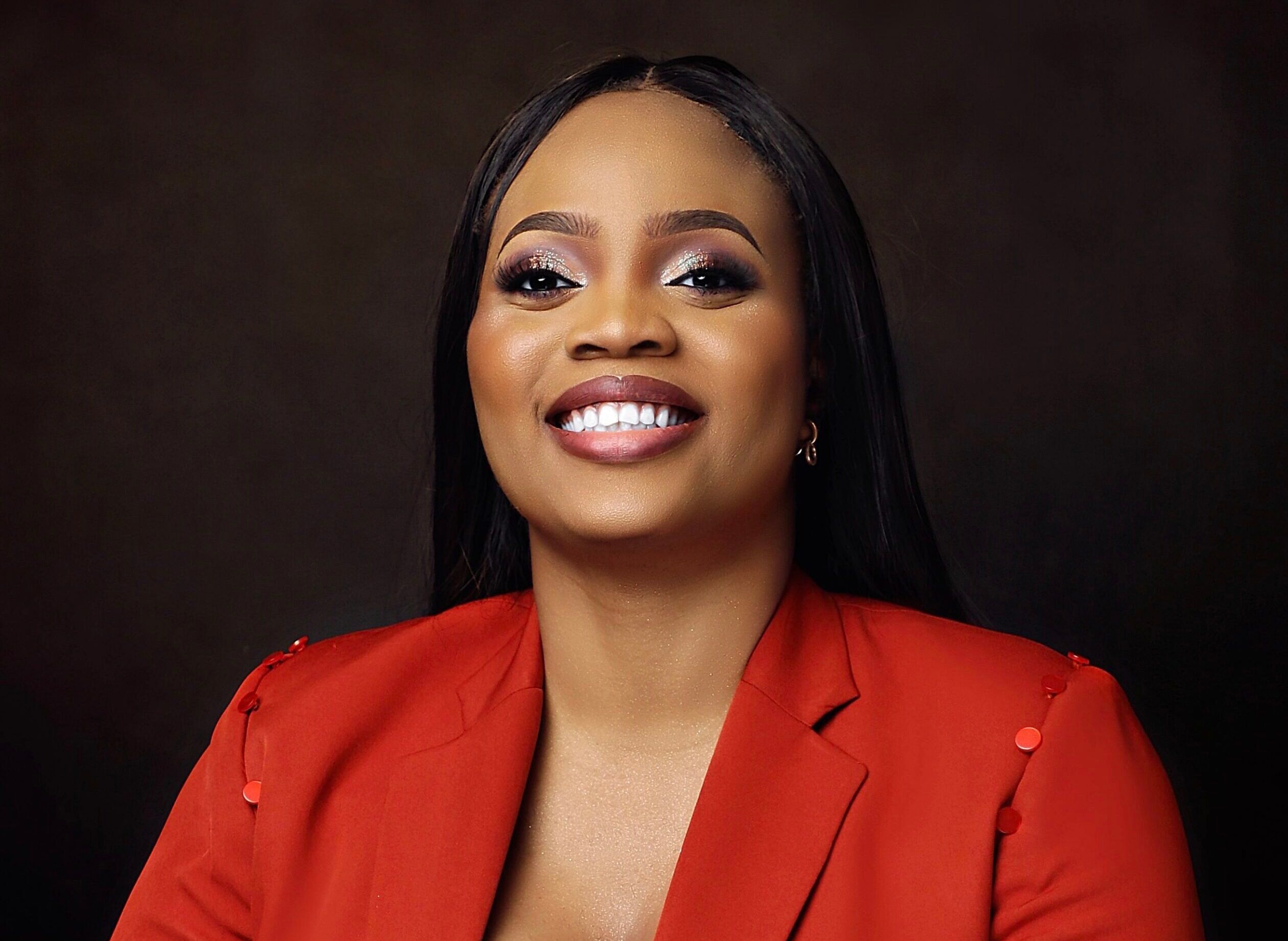
As part of this year’s International Women’s Day celebration, Condia spotlights Onyinye Stephanie Oguego, a co-founder at the fintech platform myStash Technologies.
Onyinye Stephanie Oguego did not set out to build a savings platform. She studied Management Information Systems at Ashesi University in Ghana, moved through roles at the International Labour Organisation, ECOWAS, and a handful of fintech startups, then landed at the Nigerian University of Technology and Management, where she met three people who would become her co-founders.
Oguego has been named one of Nigeria’s 22 most enterprising women and listed among 44 female founders of VC-funded fintech startups on the continent.
The interesting part is what she said when asked how she got here: “It feels like different points of my life have been leading to this point.”
She tells her story in this interview with Condia.
Q: How did you get your first tech job, and what did it actually teach you that no one could have prepared you for?
A: I didn’t enter tech through engineering. I entered through strategy and problem-solving.
Early in my career, I worked in consulting, where I spent a lot of time studying industries, analysing markets, and helping businesses think through growth and operational challenges. That exposure eventually brought me into close contact with fintech companies.
What no one prepares you for is how complex building products for real people actually are. On paper, everything looks neat: user journeys, product roadmaps, projections. In reality, the hardest part is understanding human behaviour and designing something people genuinely need.
That experience changed how I see technology. It’s not just about software, it’s about solving real economic problems at scale.
Q: How did you make your first million, and how did it feel different from what you imagined?
A: Interestingly, my first million came long before I entered tech.
While I was still in school, I used to bake cakes during holidays and sell them on order. At one point, a company placed a large order for cakes to be included in their Christmas hampers. Fulfilling that order meant producing hundreds of cakes in a short period of time.
That was the first time I crossed the one-million-naira mark in revenue.
What stayed with me was not the money itself but the lesson behind it: value creation is practical. If you solve a problem well and deliver consistently, opportunities compound.
Looking back, that experience planted the earliest seeds of my entrepreneurial mindset.
Q: What is the biggest economic trap keeping African women from building wealth?
A: The biggest trap is limited access to scalable capital.
Across Africa, women are entrepreneurial, but many of their businesses remain small because the financing available to them is often expensive, short-term, or insufficient for meaningful growth.
Until we solve the patient capital problem, many women will continue operating in survival entrepreneurship rather than wealth creation.
Q: How much capital has truly moved to women, and where is it actually going?
A: The reality is that relatively little capital has reached women-led businesses compared to the scale of the opportunity.
Even when funding is labelled as “women-focused,” it often concentrates around a small number of visible startups rather than the broader base of women-led businesses operating in the real economy.
The challenge is not a shortage of capable founders. The challenge is how capital is structured and distributed.
Q: What has happened in your career that might not have happened if you were a man?
A: Women sometimes have to demonstrate competence more explicitly in spaces where men are assumed to be competent by default.
Early in my career, there were moments when my ideas were scrutinised more intensely than those of my male colleagues. But those experiences also pushed me to become very rigorous about the quality of my thinking and work.
Over time, consistency becomes the equaliser.
Q: What has actually worked in advancing women economically in Africa? What hasn’t?
A: What works is real access to capital, capability building, and strong networks.
What has been less effective are initiatives that focus primarily on visibility without addressing structural barriers. Conferences and panels can be useful, but if they are not connected to financing, markets, or real opportunities, their impact tends to be limited.
Economic advancement requires infrastructure, not just inspiration.
Q: What woman do you look up to and why?
A: My mother.
She built a fashion business through years of craftsmanship, discipline, and consistency. Watching her work taught me that entrepreneurship is not glamorous — it is built through patience and the willingness to deliver quality work over long periods of time. That example shaped how I approach my own work.
Q: What books or ideas shaped you?
A: I’m drawn to books that explore purpose and systems thinking.
One that stayed with me is The Second Mountain by David Brooks, which reflects on purpose beyond individual success.
Much of my thinking today is shaped by a similar question: how do we build systems that allow more people to succeed?
Q: What would you tell a young girl in Africa who wants to become something?
A: Focus on building capability. The world rewards people who can think clearly, solve problems, and execute consistently. If you develop those abilities, opportunities will eventually follow.
Above all, don’t limit your imagination. Many of the careers shaping Africa today did not exist a generation ago.
Q: What are you quietly afraid of?
A: I think many ambitious people carry a quiet fear of wasted potential. When you’ve had exposure to opportunity and education, there’s a responsibility to use those advantages meaningfully. That awareness can be motivating.
The fear isn’t failure, it’s not doing enough with what you’ve been given.
Q: Has anyone tried to shrink you?
A: Early on, I realised that constantly reacting to those moments is exhausting. Instead, I focused on building credibility through the quality and consistency of my work. Over time, people stop questioning your presence when your work speaks clearly.
Q: What do you want to be known for beyond your title?
A: I would like to be known as someone who helped build things that outlast her.
Get passive updates on African tech & startups
View and choose the stories to interact with on our WhatsApp Channel
ExploreLast updated: March 21, 2026


