




In January 2025, Nigeria’s headline inflation rate, the total measure of price increases across the economy, stood at 34.80%. By January 2026, it had eased to 15.10%. A near 20-point decline in twelve months is a staggering shift, the kind of movement that signals a fundamental break in the economic weather rather than a routine data update.
The temptation is to treat each monthly release from the National Bureau of Statistics (NBS)—the government agency responsible for collecting and validating Nigeria’s economic data—as a standalone episode. But the numbers over the past year describe something more substantial. They tell the story of an economy that has moved through three distinct phases of price pressure to arrive at a place where the character of the inflation problem is genuinely different from where it started.
That change deserves more attention than it has received.
The numbers moved before the economy did
When headline inflation began tempering sharply in early 2025, the immediate reaction among analysts was suspicion. The NBS had just expanded its consumer price index, the basket of goods used to measure costs, from 740 to 960 items. While this rebasing is a standard statistical correction, it can create a massive drop on paper that doesn’t immediately match the price of tomatoes in Mile 12.
The timing made the optics worse. The NBS website had been offline for weeks following a cyberattack, and the first major release under the new methodology arrived as the platform came back online. Analysts were careful not to call it manipulation, but they did not celebrate it either. The Central Bank of Nigeria (CBN) held its benchmark interest rate at 27.50%, signalling that while the charts looked better, the ground truth was still too hot to handle.
Household surveys conducted in the same period showed staple costs still rising in many markets. The Jollof Index, which tracks what it costs to cook a meal for a family of five, recorded a 19% increase over six months—after rebasing. The new methodology had shifted the headline, but it had not shifted the experience of living in a high-cost economy.
So the first phase of disinflation was real in a narrow technical sense and unconvincing in every other sense. The question it left open was whether the moderation would survive once the base effects and statistical adjustments faded. Several months later, the answer started coming in.
How a punishing interest rate rebuilt the floor
By mid-2025, the cooling of headline inflation became more durable. This happened because of a simple but punishing calculation: the CBN kept interest rates high even as prices moderated. That gap—the real interest rate—became the most consequential fact in the economy. With the policy rate at 27% and headline inflation falling into the teens, Nigeria was offering a massive reward for holding the Naira.
The consequences of that decision flowed outward in a clear sequence. These high yields gave investors a reason to stay in Naira-denominated assets rather than convert to dollars and exit. That demand supported the currency, and as the exchange rate stopped lurching, the “pass-through” to consumer prices began tempering.
Fuel, raw materials, and dollar-linked products stopped accelerating in price because the currency was finally holding its ground. Foreign reserves, which had been under sustained pressure, recovered to levels not seen in years. Eventually, the CBN cut rates for the first time since the pandemic, a modest but symbolically significant concession that the worst of the inflationary episode had passed.
This was monetary policy doing its slower, less visible work. It wasn’t the dramatic rate hike that signals an emergency, but the patient maintenance of tight conditions long enough for confidence to return. By the final months of 2025, the disinflation was no longer just a story about how the NBS constructed its basket. It had a macroeconomic foundation.
Food prices eased, but core costs are now the wall
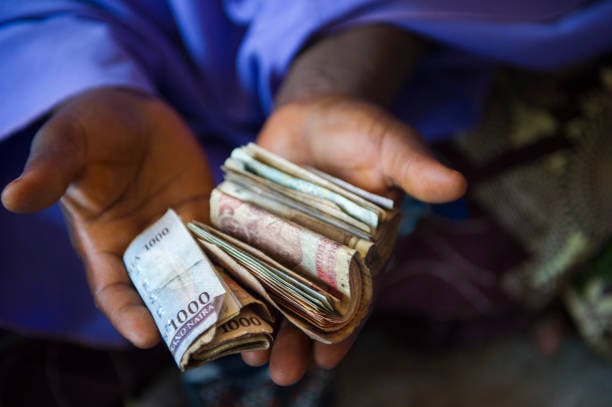
January 2026 brought one figure that quietly reframes the entire conversation: food inflation reached single digits (8.89%). For a country where food costs were quickening toward 40% in late 2024, this is a wide shift
The reasons are layered. A firmer naira lowered import costs, and petrol prices stabilised around ₦739, finally easing the transport costs that inflate every kilogram of food moving from farm to market.
It is important to understand why this shift is statistically significant. Often, a “base effect” makes the year-on-year data look better simply because the previous year was so catastrophically high. But in January, the month-on-month CPI was actually negative. This means prices didn’t just grow more slowly—they fell slightly from December. This was a genuine dip in the cost of living.
However, what the food number reveals about the rest of the economy is sobering. When you strip food out of the picture, core inflation, which covers rent, utilities, school fees, and transport, sits at approximately 17.7%. For the first time, core inflation is running above the headline rate of 15.10%.
That inversion matters enormously. For two years, Nigeria’s inflation was a food story, visible at every market stall. The response was emergency food programs and subsidies. But now, a quieter, “stickier” form of inflation has become the dominant pressure. Services inflation doesn’t care about a good harvest or a calm exchange rate week. It responds to wage dynamics, old contracts, and the cost structures businesses have built since 2022.
The shift from food-led to services-led inflation also reveals the limits of monetary policy. High interest rates are excellent at stabilising a currency, but they are far less effective at convincing a landlord to lower the rent when a lease comes up for renewal. That is the wall Nigeria’s disinflation is now approaching: moving from a crisis of prices to a crisis of deep-rooted costs.
Three things that could undo it
The stability Nigeria has achieved over the past twelve months rests on a combination of conditions that are real but not permanent. The high-interest-rate regime is what currently supports the naira and attracts global money, but it also makes borrowing painfully expensive for local businesses and eats into a government budget already heavy with debt. As headline inflation continues to temper, the Central Bank will face growing pressure to cut rates. The danger is that each cut reduces the yield advantage that keeps investors here. Done too quickly, a rate cut could trigger a currency slide, causing imported prices to start accelerating and undoing the very stability that anchored this recovery.
This monetary discipline also faces a looming test from the fiscal calendar. As Nigeria moves deeper into a political cycle, the historical urge to ramp up government spending usually outweighs the need for restraint. Whether it is through infrastructure outlays or public sector wage increases, injecting massive liquidity into the system at the exact moment the central bank is trying to keep it tight creates a tug-of-war that has derailed Nigeria’s progress before. When fiscal policy stays loose while monetary policy stays tight, the result is often a fresh wave of price pressure that the data cannot hide for long.
Finally, the single-digit food inflation of January 2026 is a welcome data point, but it isn’t yet a structural guarantee. The security conditions in the Middle Belt and the North—Nigeria’s primary farming zones—have not fundamentally changed, and the logistics of moving a harvest to a city market remain fragile. A single bad season or a fresh disruption in the supply chain would cause food costs to stop easing and start spiking overnight. Even with the current relief, Nigeria remains tethered to external realities like oil prices and global investor sentiment. A sudden drop in oil receipts or a shift in US interest rates could compress the current account, pressuring the naira and proving once again how quickly exchange rate stress translates into domestic pain.
What comes next
Nigeria has not solved its inflation problem; it has simply moved it to more manageable terrain. The acute emergency phase, the one defined by a collapsing currency and policy responses that felt permanently behind the curve, is over. What has replaced it is a technical, structural tug-of-war.
The goal now is to keep core inflation easing without crashing the currency, while managing a transition to a more growth-friendly environment. The 15.10% headline rate is finally within range of the government’s 15% budget target. The CBN has made its first symbolic cut. Foreign reserves are up, and the Naira has found its footing. These are genuine improvements earned through a painful process of adjustment.
But for the households who paid for that adjustment, disinflation is a technical term that doesn’t fill a plate. It means the speed of the price hike is slowing down, but it doesn’t mean prices are returning to where they were. That distinction is the gap between what the data shows and what the economy actually feels like.
For now, the data suggests the worst is behind Nigeria. The coming months will tell us if the stability that produced these numbers is strong enough to survive the pressures that have historically ended it.
Get passive updates on African tech & startups
View and choose the stories to interact with on our WhatsApp Channel
ExploreLast updated: March 23, 2026


