




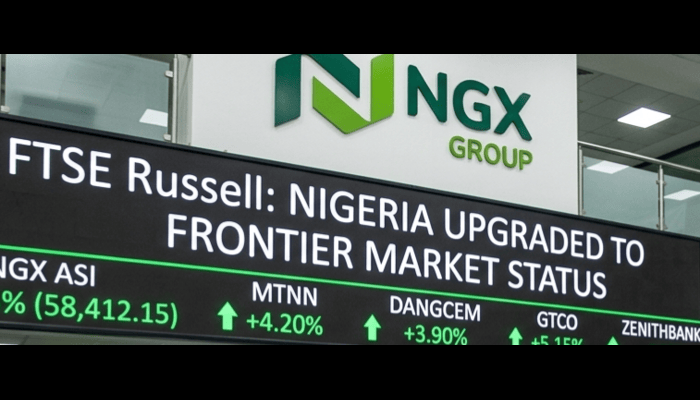
Nigeria will return to the FTSE Russell Frontier Market Index in September 2026. The index provider confirmed the reclassification from Unclassified to Frontier status on April 7, 2026.
The FTSE Russell Index Governance Board approved the decision after recommendations from its advisory committees. Nigeria had lost its frontier status due to foreign exchange issues that limited investor access.
Since March 2020, liquidity problems in the FX market have affected access to Nigerian equities. Investors faced delays in moving funds out of the country, and the gap between official and parallel exchange rates widened.
This led Morgan Stanley Capital International (MSCI) to remove Nigerian securities from its Frontier Markets Index in February 2024. FTSE Russell had already moved Nigeria to Unclassified status in September 2023 for similar reasons.
Conditions began to change after FX reforms by the Central Bank of Nigeria. By early 2025, market participants confirmed that FX backlogs and repatriation delays had cleared. FTSE Russell then placed Nigeria on its Watch List in October 2025.
The firm said Nigeria now meets its market quality criteria for Frontier status. The key change is improved FX liquidity and the ability of investors to move funds without delays.
The reclassification will take effect during the FTSE Global Equity Index Series review in September 2026.
Frontier market status shows that a country’s market meets basic standards for access and liquidity. It also means funds that track the index will allocate capital to Nigerian equities.
These include MTN Nigeria, Dangote Cement, GTCO, and Zenith Bank.
FTSE Russell said some issues remain. FX liquidity and transaction costs are still concerns, and the derivatives market is underdeveloped. Nigeria’s shift to a T+2 settlement cycle was noted as progress.
Temi Popoola, CEO of Nigerian Exchange Group, said the decision reflects improvements in market access and infrastructure, but added that more reforms are needed.
Fiona Bassett, CEO of FTSE Russell, said the classification is based on how easily global investors can access a market.
The impact on the ecosystem
Public markets and venture funding are different, but they are linked indirectly. A country’s index status affects how global investors assess risk across all asset classes.
Nigeria, Kenya, South Africa, and Egypt attracted most of Africa’s venture funding in 2025. Startups across the continent raised $4.1 billion in equity and debt, up 25% from 2024, according to Partech.
Nigeria remained one of the most active markets by deal volume.
However, early 2026 data shows a slowdown. No Series B rounds were recorded, and some startups turned to structured financing instead. Development finance institutions filled part of the gap.
The reclassification does not fix these funding gaps. But it places Nigeria back in a recognised category for global investors and reduces the friction around investing in the country.
Currency risk remains a key issue. Exchange rate swings affect revenues, valuations, and returns for investors. The same FX stability that led to this reclassification will determine if Nigeria keeps its status.
FTSE Russell said it will continue to monitor the market before the September 2026 update. MSCI has not yet restored Nigeria to its Frontier Markets Index, stating it needs more time to assess the FX reforms.
Get passive updates on African tech & startups
View and choose the stories to interact with on our WhatsApp Channel
ExploreLast updated: April 8, 2026


