




Apple recently introduced the $599 MacBook Neo, its first serious attempt at a truly entry-level laptop. In markets like the U.S., that price places it squarely in the same range as the Windows laptops and Chromebooks that usually dominate classrooms.
Nigeria changes that equation. By the time exchange rates and reseller pricing settle in, the Neo will likely land around ₦800,000 or more locally. At that price, it stops looking like a budget Mac and starts competing with several older MacBooks that already exist in the Nigerian market.
This guide looks at 5 MacBooks you can buy in Nigeria for around ₦800k or less that may offer better value than the new Neo, depending on what you actually need.
Key Specifications of the MacBook Neo
| Category | Specification |
|---|---|
| Processor | Apple A18 Pro chip with integrated 5-core GPU and 16-core Neural Engine |
| Memory | 8GB unified memory (not upgradeable) |
| Storage | 256GB SSD (base) / 512GB SSD option |
| Resolution | 2408 × 1506 pixels |
| Colour Support | 1 billion colours |
| Graphics | Integrated Apple GPU |
| Battery | 36.5Wh battery |
| Battery Life | Up to 16 hours video streaming / ~11 hours web browsing |
| Camera | 1080p FaceTime HD camera |
| Audio | Dual side-firing speakers with Spatial Audio + dual microphones |
| Keyboard | Magic Keyboard (no backlight on base configuration) |
| Trackpad | Large Multi-Touch trackpad |
| Ports | 2× USB-C ports + 3.5mm headphone jack |
| External Display | Supports one external display up to 4K |
| OS | macOS |
| Weight | ~1.23 kg (2.7 lb) |
| Build | Aluminum chassis |
| Colors | Silver, Indigo, Blush, Citrus |
| Security | Touch ID available only on the 512GB model |
| Launch Date & Availability | Announced March 2026; pre-orders opened immediately with availability starting March 11 |
| Starting Price | $599 (Education pricing starts at $499) |
On paper, the MacBook Neo does what it’s supposed to do. It delivers the familiar Apple build, a bright display, silent performance, and long battery life at the lowest price Apple has ever offered.
But in Nigeria, that $599 starting price lands close to ₦800,000 once it reaches local sellers. At that level, the conversation changes. You are no longer choosing between a cheap laptop and an expensive one. You are choosing between the Neo and several MacBooks that are already proven.
Many of them are not brand new, but that has rarely stopped professionals or students in Nigeria. The local market runs on well-maintained devices, often just a few years old, that still deliver strong battery life, reliable performance, and better overall value. As always, the usual rules apply: inspect carefully, check battery cycles where possible, and buy from sellers you trust.
Here are five MacBooks Nigerians can realistically buy for around the same money.
Apple MacBook Air (M1, 2020) – ₦700,000 – ₦800,000
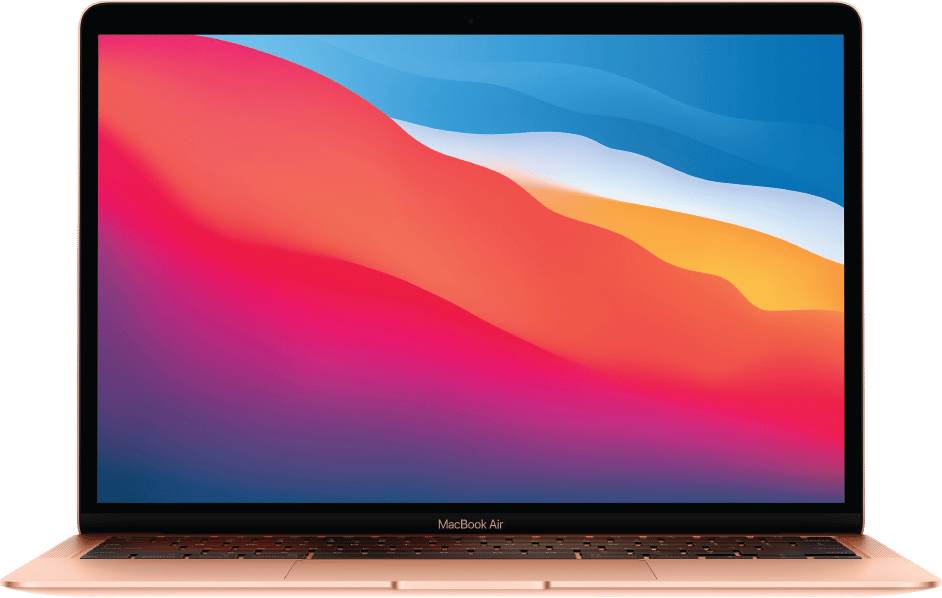
Processor: Apple M1 (8-core CPU) | Display: 13.3-inch Retina (2560×1600) | RAM: 8GB (configurable to 16GB), 256GB SSD (up to 2TB options) | Battery Life: Up to 18 hours | Ports: 2× Thunderbolt / USB-C | Weight: 1.29 kg
Apple’s transition to its own silicon began with the M1 MacBook Air, and it immediately reset expectations for what a thin laptop could do. Even today, it remains one of the easiest MacBooks to recommend in this price range.
The M1 chip still handles everyday work comfortably, from writing and research to light editing and multitasking. Battery life regularly pushes well past a full workday, and the fanless design keeps the laptop silent during use. The Retina display is sharp, the Magic Keyboard is reliable, and the overall build still feels modern despite being a few years old.
Compared with the newer MacBook Neo, the biggest advantage here is the maturity of the hardware. The M1 chip has already proven itself over several years of real-world use, and performance remains strong enough that most users will not feel limited by the 8GB memory configuration. In practical terms, it offers a more balanced package for roughly the same money.
Apple MacBook Air Intel 2020 – ₦600,000 – ₦700,000
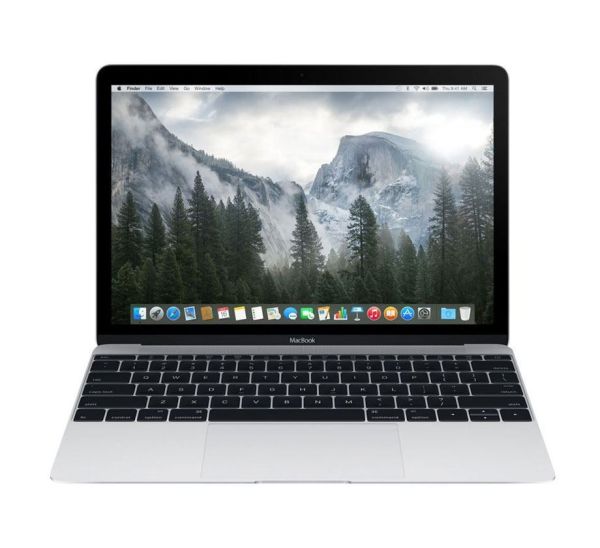
Processor: Intel Core i5 | Display: 13.3-inch Retina | RAM: 8GB – 16GB, 256GB – 1TB SSD | Battery Life: Up to 7 hours | Ports: 2× Thunderbolt 3 | Weight: 1.29 kg
The 2020 Intel MacBook Air is the final version Apple released before the move to Apple Silicon. Physically, it looks almost identical to the later M1 model, with the same thin aluminium body, Retina display, and improved Magic Keyboard that replaced the older butterfly design.
For students and everyday users, it still handles the basics comfortably. Writing, research, browsing, and media playback are all well within its range, and the starting storage moved up to 256GB, which is still what many base MacBooks ship with today.
Where the newer MacBook Neo might appeal is efficiency and silence from its mobile-class chip. But in practical terms, the 2020 Air often wins on flexibility. Many units in Nigeria ship with larger storage or 16GB RAM configurations, something the Neo’s fixed 8GB memory cannot offer.
At around ₦600k–₦700k, it sits comfortably below the expected Neo price while still delivering the modern MacBook design and a balanced spec for schoolwork, office tasks, and general productivity.
Apple MacBook Air (2019) – ₦500,000 – ₦600,000

Processor: Intel Core i5 (8th gen) | Display: 13.3-inch Retina (2560×1600) | RAM: 8GB, 128GB / 256GB SSD | Battery Life: Up to 12 hours | Ports: 2× Thunderbolt 3 | Weight: 1.25 kg
The 2019 MacBook Air remains one of the most common used Macs in Nigeria, largely because it served as Apple’s entry-level laptop for several years. It keeps the slim aluminium design the Air is known for and includes Touch ID for quick logins.
Performance comes from an 8th-generation Intel Core i5. It is not the fastest machine here, but it handles everyday work comfortably. Writing, research, browsing, and light productivity are well within its range.
The 13-inch Retina display is still a strong point. At 2560×1600 with True Tone support, it remains sharper and more comfortable for long reading sessions than many laptops in the same price range.
Compared with the MacBook Neo, the 2019 Air does not have Apple-silicon efficiency, but it often sells ₦200k–₦300k cheaper, while still delivering the familiar MacBook build, Retina display, and reliable battery life for a full workday.
Apple MacBook Air (2018) – ₦450,000 – ₦520,000
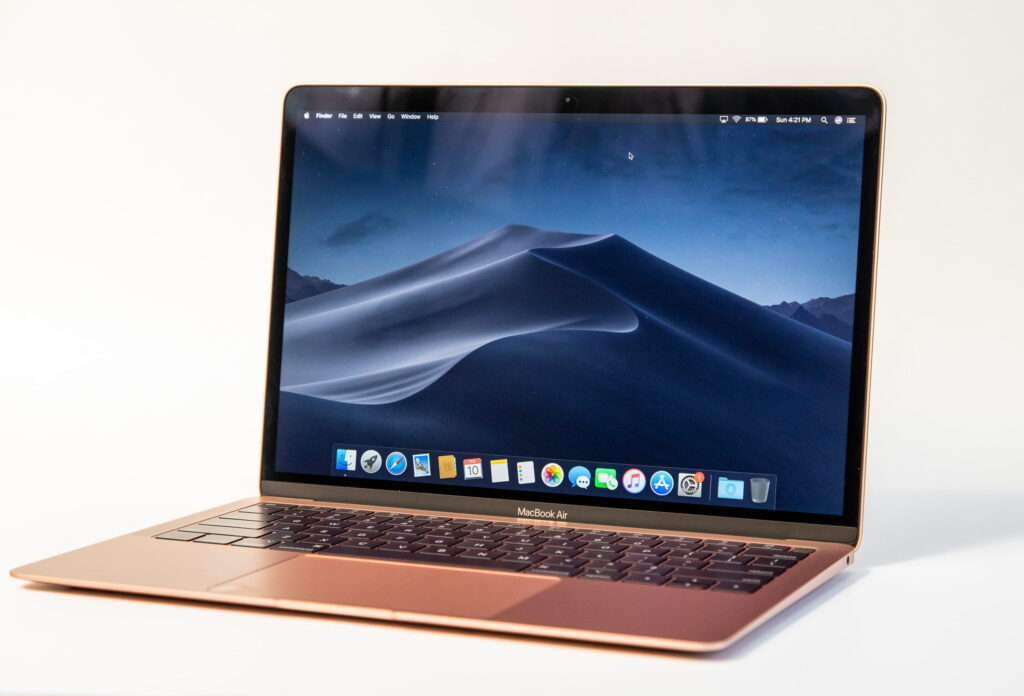
Processor: Intel Core i5 | Display: 13.3-inch Retina | RAM: 8GB, 128GB, 256GB SSD | Battery Life: Up to 12 hours | Ports: 2× Thunderbolt 3 | Weight: 1.25 kg
The 2018 MacBook Air marked the shift to the modern Air design: a Retina display, slimmer bezels, and USB-C replacing older ports. It remains one of the cheapest realistic entry points into the Mac ecosystem while still feeling recognisably “MacBook” in build and finish. The 13.3-inch Retina display hits a comfortable balance for everyday work, and the aluminium chassis still feels sturdier than most laptops in the same price range.
It runs on Intel’s Core i5 and ships with 8GB RAM and up to 256GB SSD, which is more than enough for browsing, documents, presentations, and light creative work. Battery life still stretches close to a full workday, and the lightweight 1.25 kg build keeps it easy to carry around campus or between meetings.
Unlike the Neo, you get proper Thunderbolt 3 ports that support charging, external displays, and fast data transfers, making docks and accessories easier to use. It is not the fastest Mac on this list, but at roughly half the Neo’s Nigerian price, it delivers the same core Mac experience for students or professionals who mainly need reliability, portability, and a solid display.
Apple MacBook Pro 13‑inch (2017) – ₦550,000 – ₦650,000
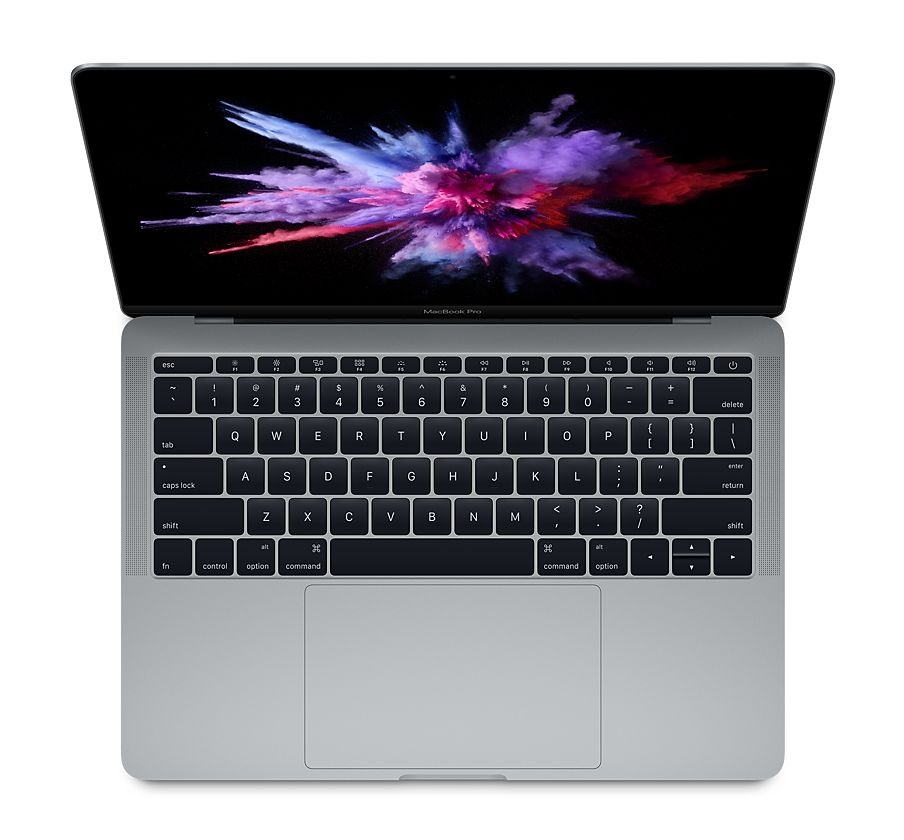
Processor: Intel Core i5 | Display: 13.3-inch Retina | RAM: 8GB – 16GB, 256GB – 512GB, SSD | Battery Life: Up to 8 hours | Ports: 2× Thunderbolt 3 | Weight: 1.37 kg
If the goal is slightly stronger performance than the Air models, the 2017 MacBook Pro still holds up well in this price range. It runs on a 7th-generation Intel Core i5 and pairs the familiar aluminium design with a sharp 13-inch Retina display, a large trackpad, and a keyboard that still feels solid for long typing sessions.
Battery life typically lands around eight hours, which is lower than the Neo’s advertised endurance, but the Pro balances that with more performance headroom for heavier multitasking and creative work. It also offers Thunderbolt 3 connectivity for faster data transfer and charging.
For buyers who want more computing muscle than the Neo’s entry-level setup, the 2017 Pro remains one of the more capable MacBooks available within the same Nigerian price bracket.
Comparing the five best sub‑₦800k MacBooks:
| Attribute | MacBook Air M1 (2020) | MacBook Air 2019 | MacBook Air 2020 Intel | MacBook Pro 2017 | MacBook Air 2018 |
|---|---|---|---|---|---|
| Starting Price | ₦800,000 | ₦600,000 | ₦695,000 | ₦635,000 | ₦520,000 |
| Battery life | Excellent | Good | Good | Good | Fair‑Good |
| Portability | Very light | Very light | Very light | Light | Very light |
| Performance | Very fast for daily tasks | Adequate | Adequate‑good | Adequate‑good | Adequate |
| Best for | Single best pick near ₦800k | Lowest good price | Balanced RAM under ₦700k | Solid build under ₦650k | Cheapest workable Mac |
Get passive updates on African tech & startups
View and choose the stories to interact with on our WhatsApp Channel
ExploreLast updated: March 10, 2026


