




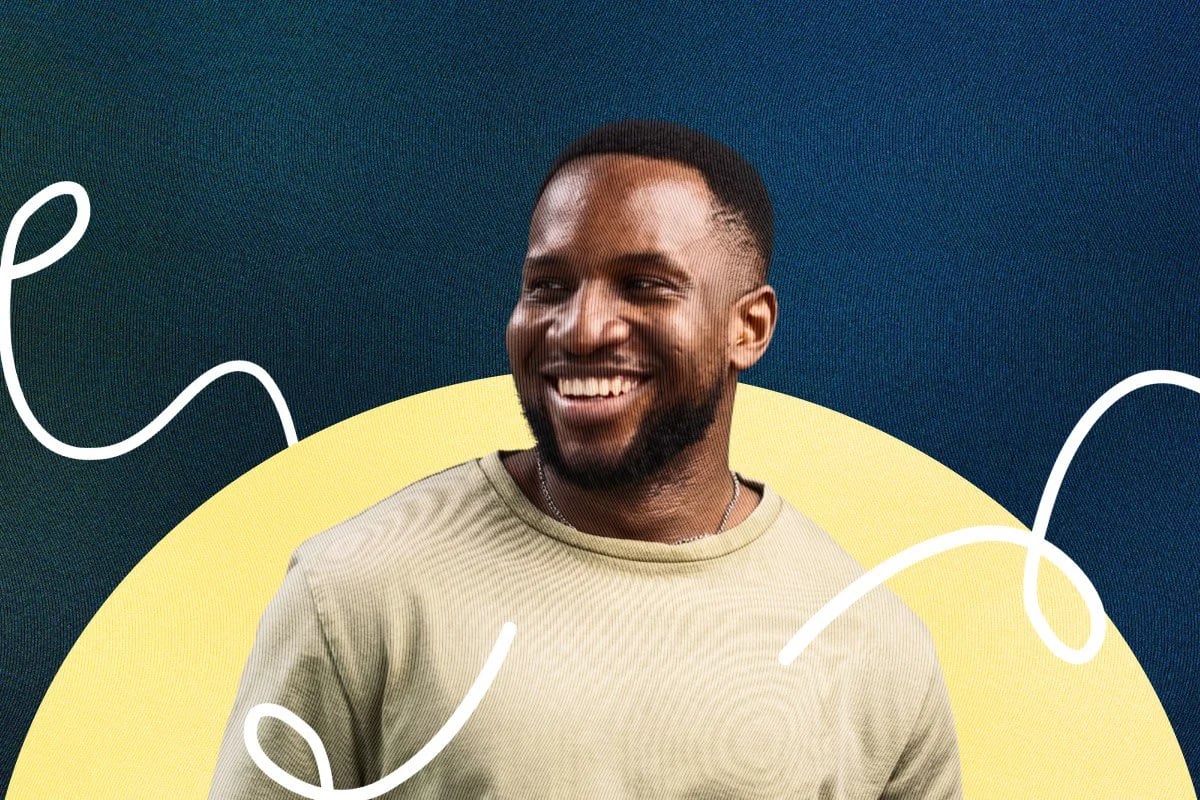
In this week’s edition of Level Up, we’re spotlighting Onyekachi Mbaike, who joined Paystack as the youngest person in a room full of pros. Over nine years, he moved from execution to ownership, designing products, leading teams, and solving new challenges every six months.
In this conversation, he talks about the moments that defined his growth, how he knew when to stay or move on, and how AI is finally making design feel a little more fun.
If your career were a movie, what would it be called and why?
Chasing Curiosity. That’s really the simplest way to describe it. I never had a five-year plan. Most of my career has been following whatever seemed interesting at the time and trying to get better at it. One thing leads to the next, and the direction just keeps unfolding.
Tell us about your journey into tech. What sparked the interest?
I studied Computer Science partly because I wanted a laptop. I had been in boarding school and shared a desktop at home, so CS felt like the surest way to finally have my own machine.
Architecture was the other option I considered, but I wasn’t deeply attached to it. Once I got into the program, I discovered that people actually program computers and tell them what to do. I also realised a lot of what gets built is painful to look at and use. That curiosity about how things could be better is what led me to UX design.
What were you doing before you joined Paystack?
Before Paystack, I was doing a mix of things. I had been freelancing since around my third year in university, building different products for people while still in school.
At the same time, a few of us were running a small food delivery hustle on campus. Students would place orders, we’d pick up food from canteens and deliver it to their hostels.
The logistics were already messy, but the real problem was payment. Most of the time we were operating on credit. We’d pick up the food first, then start looking for the person who ordered it. Sometimes they’d be in a completely different building. Even after finding them, we’d still be dealing with things like finding change.
At one point, we tried setting up an online payment gateway, but the providers we spoke to wanted something like ₦150,000 upfront. That was completely out of reach for us at the time, so we just dropped the idea.
That experience stuck with me. So later, when Paystack showed up trying to fix online payments for businesses, it was easy for me to immediately understand why it mattered.
What skill ended up mattering most as your career progressed?
Communication, more than any technical skill. When I was younger, my communication wasn’t great. When you’re worried about proving yourself, you tend to overcomplicate things instead of just saying, “I don’t know how to do this. Can you help me figure it out?”
Learning to say that changed a lot. Design reviews stopped being moments where I needed approval and became collaborative problem-solving. The process that works is simple: short, frequent check-ins. This is what I heard. This is what I think we’re building. This is where I think we should go. What do you think?
Once you do that consistently, the work moves very differently.
You had been freelancing for a while. What made you decide it was time to commit to one place?
A few things lined up at that time. I already knew Ope, who later became Paystack’s first designer, from work we had done outside the company, so there was some trust in the people there.
The company itself was also starting to make noise. The ecosystem was growing, and seeing a Nigerian startup get into YC felt significant.
But the bigger thing was that freelancing had started to feel scattered. I had been building things for different people since my third year in university. I enjoyed it, but I wanted a place where I could go deeper on one product. The opportunity came at the right time.
If a younger version of you could see you now, what would surprise him the most?
That younger version of me carried a lot of pressure. I was probably the youngest person at the company at the time, working with people I respected deeply, and I felt like I had to know everything. In those first few months, I was very tightly wound about simply being good enough.
I think that younger Kachi would actually feel relieved. Not just at how competent things eventually became, but at how many people I’ve been able to support because I now understand what that pressure feels like. Helping newer people not feel the way I did when I first walked in.
And then there’s the scale of it. Paystack went from twelve people in a room to critical internet infrastructure for Nigeria. Watching that happen, and being part of it, would probably be mind-blowing to who I was at the start.
Was there ever a point where the weight of the work almost pushed you to step away?
There wasn’t a single dramatic crisis. It was more that the weight of the work accumulated over time.
One thing that helped was that Paystack had a sabbatical programme for long-serving employees. About five years in, I took three months off. That reset helped more than I expected. It gave me space without forcing a drastic decision.
Outside of that, the honest answer is that I was lucky. Most of the time I doubled down rather than considered walking away. The question that kept me steady was always the same: does this still serve me? As long as the answer stayed yes, everything else felt manageable.
What did growth look like for you over the nine years?
Looking back now, the biggest shift was autonomy. When I joined, I needed almost everything handed to me. Requirements, scope, direction. By the end, it was more like: give me the general problem and I’ll figure out what needs to happen and who should be involved. That movement from execution to ownership is probably the biggest change.
And it was never just design. Over those years, I was a designer, a frontend engineer, I refactored codebases, I managed projects, led teams, and handled support. There was always somewhere new to point your skills.
One of the reasons I stayed so long is that every six months, there was a new big problem to solve.
What project or period are you most proud of?
Interestingly, I’m answering this in my final week at Paystack.
My last year here is the period I’m most proud of. I went deepest into leading the design team. That became my biggest priority alongside everything else. It was probably the hardest I worked in nine years, but also the most meaningful.
Outside of that, I did a lot of work on Zap. I was there from when it was just an idea through to launch.
That project brought almost everything I’d learned together at once. Designing it, writing some of the iOS code, managing the timeline, pitching internally for more resources. It was one of those moments where all your skills converge on the same problem.
What’s your take on AI and what it’s changing in product work?
One thing that has always frustrated me about product work is how fragmented the process is. A PM writes requirements, a designer creates wireframes and mockups, then after all that effort, the output is basically a set of nice pictures. Someone else has to write the code and rebuild what you spent time creating in Figma.
That handoff model is slow. Every transfer introduces friction and things inevitably get lost along the way.
What AI is starting to do is compress that entire pipeline. Fewer people can now move through more of the process end-to-end. And because the basics move faster, you finally have room to spend time on the things that used to get cut. The small refinements, the animations, the details that make something feel right instead of just functional.
If you enjoy building, this moment honestly feels like Christmas.
What’s the most practical way a new product designer can improve quickly?
Find people doing better work than you and copy them. Not to take credit for it, but to reproduce and truly understand what they’re doing differently.
That process teaches you why your own work isn’t there yet. You start noticing small things. The colours they choose are within a certain range. Their spacing around text is tighter. The hierarchy is clearer. Those details are invisible until you try to replicate them.
And the bigger thing is this: design skill isn’t something you’re born with. The people who seem naturally talented usually just started before you met them.
How has your idea of success changed over the years?
Early on, I wasn’t thinking about success in big terms. It was mostly about proving I was good enough to be there.
Now it’s a bit wider than that. The work still matters, and financial reward, of course, but so do other parts of life: family, community and the kind of problems you choose to spend your time on.
What you want shifts depending on where you are in life. I’m in a different phase now, so the answer isn’t the same one I would have given back then.
What does your time outside of work usually look like?
I mostly just build other things. I genuinely enjoy making stuff, so I’m almost always tinkering with something outside my actual job. Lately, it’s been things like 3D printing. I’m trying to get into woodworking as well. I write code for fun and build little tools for myself.
I also like Lego sets. Anything that lets me physically or digitally create something from scratch tends to pull me in.
Want to read more career stories like this? Subscribe to the Level Up Newsletter.
Get passive updates on African tech & startups
View and choose the stories to interact with on our WhatsApp Channel
ExploreLast updated: March 15, 2026


