




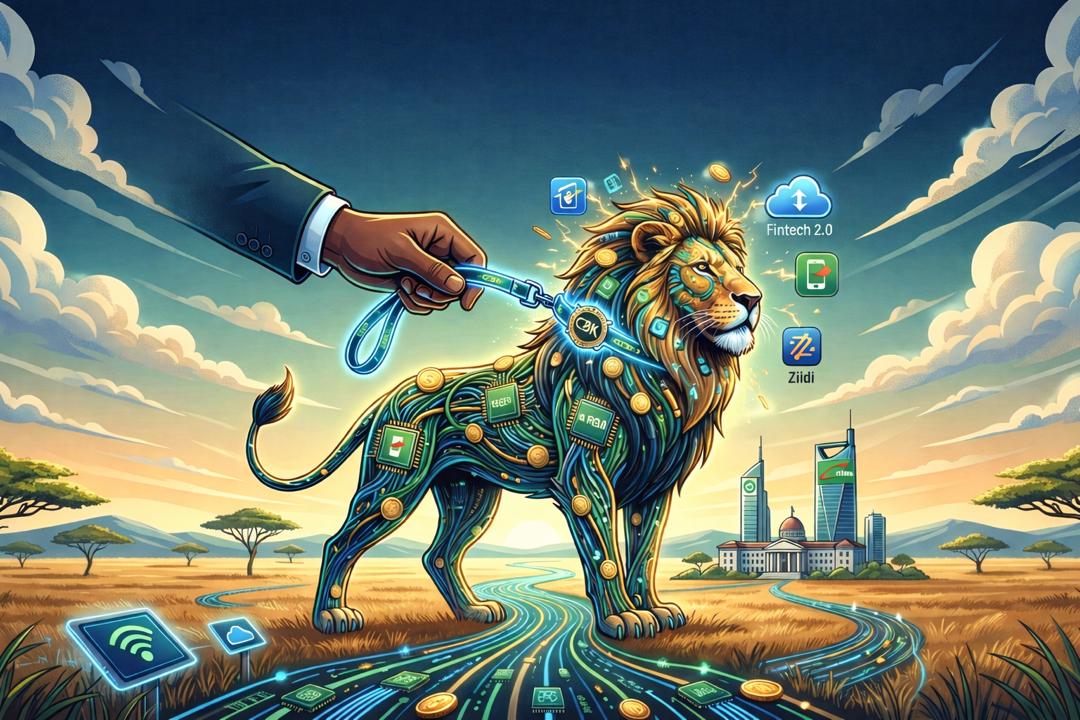
M-PESA, the fintech heart of the telecommunications giant Safaricom, has been the central nervous system of Kenya for nearly two decades. But as of 2026, it finds itself between a government desperate to plug budget deficits and a regulator terrified of a systemic wobble.
M-PESA processes roughly $300 billion annually, over twice Kenya’s total GDP. With over $1.9 billion in customer funds sitting in its trust accounts across the country, if M-PESA sneezes, the entire Kenyan banking sector catches pneumonia.
Even though its market share has dipped slightly from its peak, it still commands 89% of Kenya’s mobile money market.
This dominance has made the Central Bank of Kenya (CBK) uneasy. The regulator needs Safaricom to succeed to keep the economy moving, yet they are terrified of its power. In January 2026, the CBK branded M-PESA a systemic risk, signaling that the entire national economy was too dependent on a single company’s health.
The CBK had reached a plan to slash transaction fees by 57% by 2028, dropping average fees from KES 23 to just KES 10, a move expected to make M-PESA’s transaction-fee revenue stream unsustainable.
By pushing its own Fast Payment System (FPS), the CBK is also challenging M-PESA’s closed-loop model, where money typically moves only between M-PESA users. And as if that’s not enough, the government is selling part of its Safaricom shares to plug budget deficits.
The preemptive strike: Fintech 2.0
Safaricom didn’t wait for the axe to fall. In September 2025, just days before the government unveiled its fee-cutting strategy, Safaricom launched Fintech 2.0, a massive technical strike that effectively turned M-PESA into super-infrastructure.
In a market like Nigeria, the fintech roles are fragmented: NIBSS handles the switch, Moniepoint or Nomba provides business tools, OPay handles the consumer wallet, and Piggyvest manages wealth. Safaricom’s Fintech 2.0 merges all of these into one.
How they did it:
- The Switch: They moved to a cloud-native architecture that handles 12,000 transactions per second. By being highly reliable, they made the government’s FPS project look obsolete even before birth.
- Business Banking: Through Daraja 3.0, they opened their guts to developers. Businesses can now build and host services directly inside the M-PESA Super App, making it the operating system for Kenyan commerce.
- Wealth Management: As if to counter the 57% fee cut, they pivoted to Ziidi. If they can’t make money on the transfer of cash, they will make it on the wealth sitting in the wallet. The launch of Ziidi Trader yesterday—February 10, 2026—allows users to trade stocks directly on the NSE.
Earlier this year, Safaricom CEO Peter Ndegwa appeared before a joint sitting of parliamentary committees to address the government’s plan to sell a 15% stake in the company and allay public anxiety that selling more shares to Vodacom would turn Safaricom into a foreign company and weaken Kenyan regulatory control.
“Safaricom remains a Kenyan company, listed on the Nairobi Securities Exchange (NSE), and subject to the hawk-eyed oversight of the Central Bank of Kenya (CBK) and the Communications Authority,” he said.
“No amount of share transfer changes the fact that our license is domiciled here.”
From a gatekeeper that charges for entry, Safaricom is attempting a massive transformation into an ecosystem that thrives on volume and value, betting to remain unsinkable even as the regulatory tide rises.
Get passive updates on African tech & startups
View and choose the stories to interact with on our WhatsApp Channel
ExploreLast updated: February 11, 2026


