



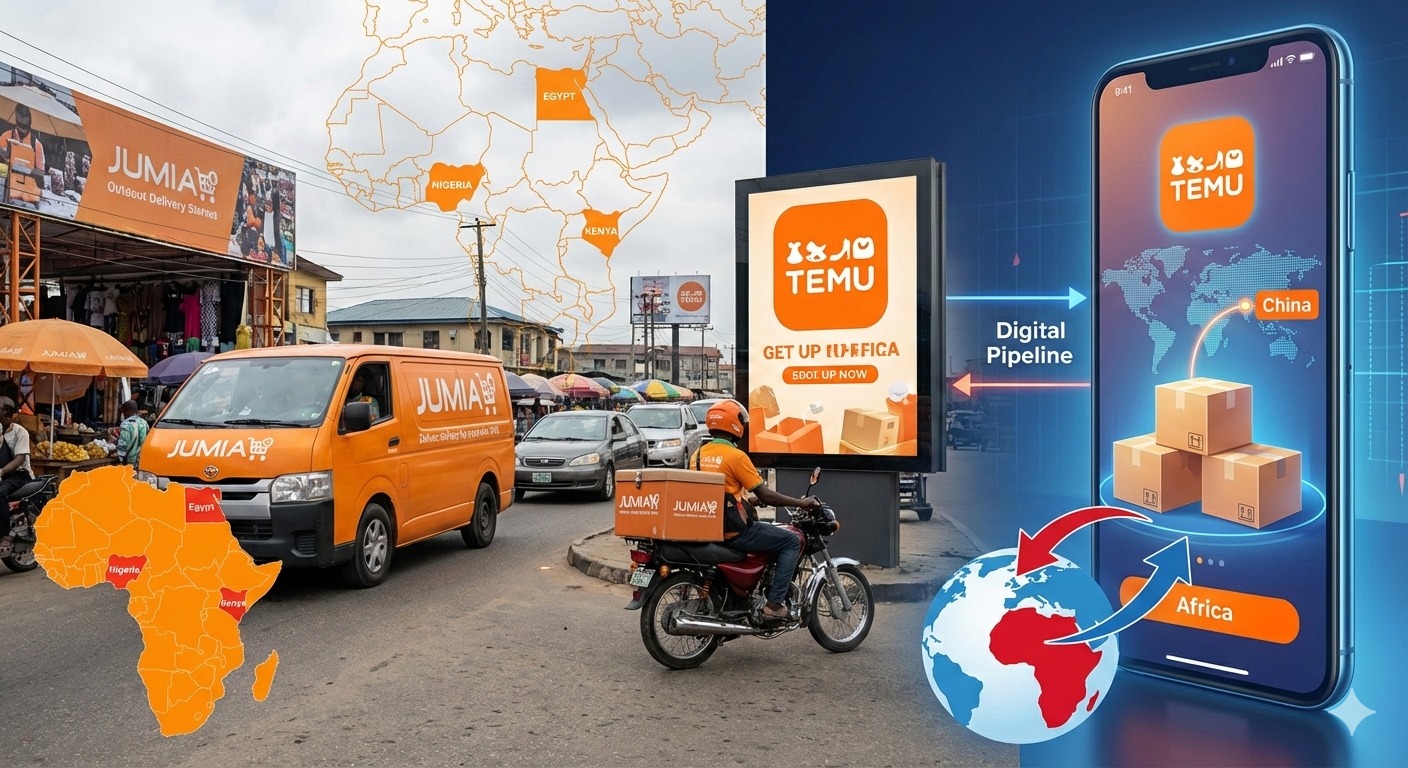
For over a decade, Jumia was the ‘Amazon’ of Africa, pioneering logistics in infrastructure-poor regions and building trust in markets wary of online payments. But a new phase has begun, characterized by guerilla warfare for market share, and an existential battle against a deep-pocketed rival from the East: Temu.
The conflict is defined by Jumia’s need for profitability and Temu’s pursuit of ubiquitous presence.
In February 2026, Jumia confirmed its exit from Algeria. Despite its potential, the country accounted for barely 2% of Jumia’s total Gross Merchandise Value (GMV), yet required significant operational overhead to maintain local warehousing and delivery fleets.
The exit was the final act in a painful twelve-month strategic contraction. Jumia had already shuttered operations in Tunisia and closed Zando, its dedicated fashion arm in South Africa, late in 2024.
It appears the company could no longer afford to subsidize complex markets for minimal returns, especially under intense pressure from investors to break even quickly.
The orange wave
While Jumia was pruning its operations, Temu was flooding the continent with capital. The Chinese e-commerce giant’s entry into Africa was a blitzkrieg of digital advertising and low prices.
Temu’s model is radically different from Jumia’s. While Jumia spent millions building physical infrastructure—warehouses, delivery vans, and pick-up stations—in Africa, Temu built a digital pipeline directly from factories in China to consumers’ doorsteps.
In South Africa, the combined pressure of Shein and Temu’s ultra-cheap fashion cornered nearly 40% of the online apparel market by 2025, directly forcing Jumia’s hand in closing Zando. Even in Algeria, where Temu had no official presence, resellers were buying bulk goods from Temu and selling them locally on social media, undercutting Jumia’s official prices without paying for local overhead.
Temu was winning the price war, but the battle for the African consumer was far from over.
The stalemate
By retreating from peripheral markets, Jumia has fortified itself in its three core strongholds: Nigeria, Egypt, and Kenya. In these markets, the fight has devolved into a stalemate where Temu’s cheap prices are colliding with the hard realities of African infrastructure.
Nigeria is the heaviest battleground. Temu launched here with massive ad spending in late 2024, briefly topping app store charts. But by mid-2025, the Temu fever had cooled. Nigerian consumers, burned by long delivery times (often 15-20 days) and inconsistent product quality from Temu, likely began drifting back to the reliability of Jumia.
Jumia’s ability to offer 24-to-48-hour delivery in Lagos and Abuja, combined with the crucial option of cash on delivery (which builds trust), proved formidable. In late 2025, Jumia Nigeria reported a significant rebound in Gross Merchandise Value (GMV), proving that speed and trust still hold a premium over rock-bottom prices.
In Egypt, Jumia has survived by adapting to severe macroeconomic headwinds. Facing currency volatility, Jumia pivoted away from heavy, unprofitable spending toward a marketplace model for local sellers, de-risking its balance sheet.
Temu, meanwhile, has hit friction. Egypt’s complex customs regulations and import taxes have frequently resulted in surprise fees for customers upon delivery, souring the cheap Temu experience. Jumia’s established local presence allows it to navigate this bureaucracy better than its cross-border rival.
In Kenya, the battle is defined by geography. While Temu can service Nairobi, it struggles to reach the rest of the country efficiently. Jumia has leaned into this by expanding its network of hundreds of pick-up stations into secondary cities and rural towns. By integrating deeply with mobile money giant M-PESA, Jumia serves consumers that Temu’s international shipping model simply cannot reach.
The counter-punch: Jumia goes to the source
Realizing it could not win a price war against China while buying through intermediaries, Jumia made its boldest strategic pivot yet in 2025. The company opened a major sourcing office in Yiwu, China, the world’s capital of small commodities and the same sourcing ground used by Temu.
By establishing a direct line from Yiwu, Jumia can procure goods at near-Temu prices, but with a critical difference: instead of shipping slowly to individual consumers, Jumia ships in bulk to its African warehouses. The end game? Chinese factory pricing combined with Jumia’s 48-hour local delivery.
As 2026 progresses, the fight for Africa is a grueling war of attrition, pitting the bottomless marketing budgets of Temu against the hard-won logistical trenches of Jumia.
Get passive updates on African tech & startups
View and choose the stories to interact with on our WhatsApp Channel
ExploreLast updated: February 18, 2026


