




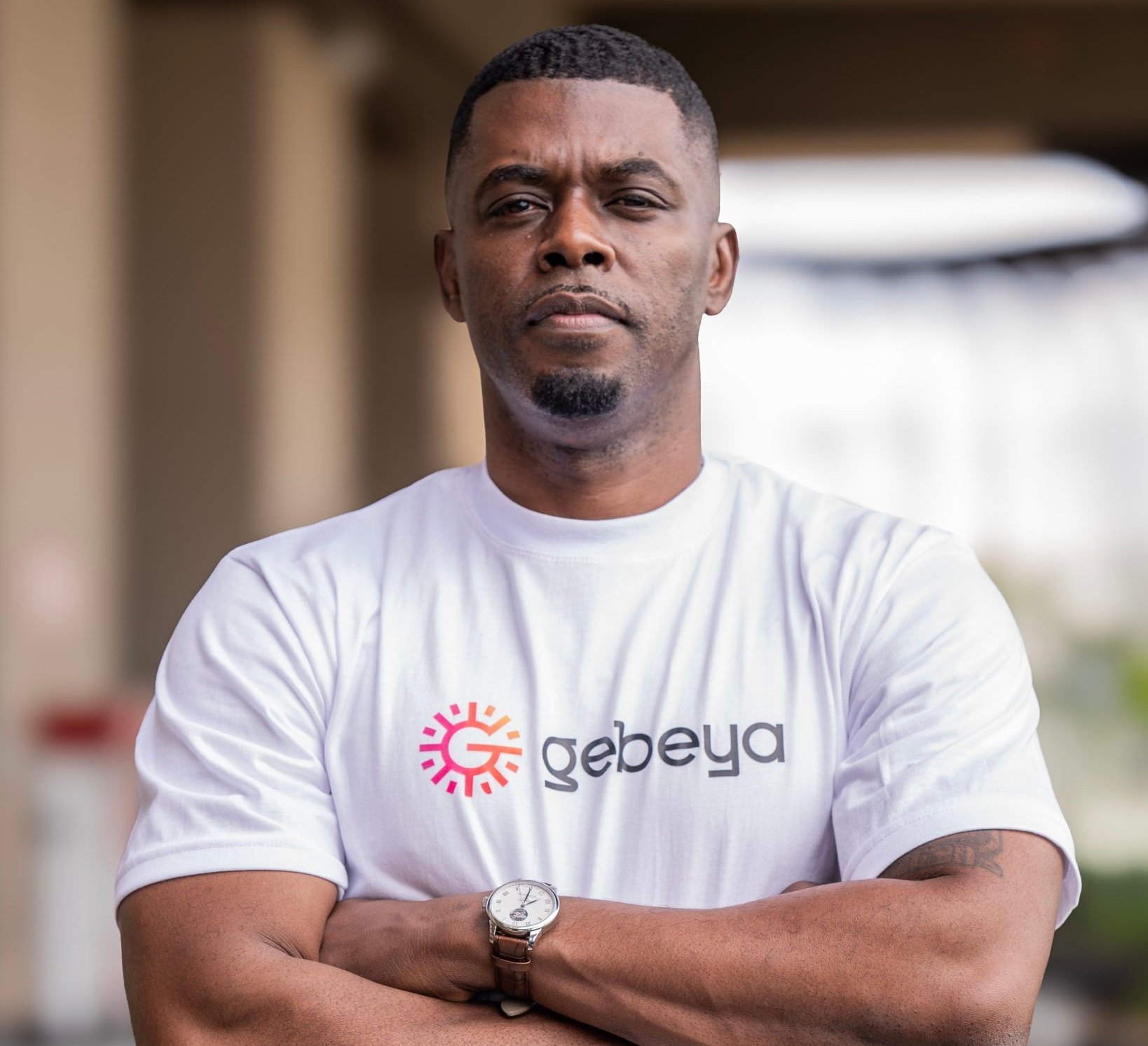
Gebeya Dala, an AI-powered vibe coding and creator platform, has surged to 85,000 users in just four months.
Owned by Gebeya Inc., a SaaS-enabled talent marketplace co-founded by Ethiopia-based Amadou Daffe, the tool grew through a surgical understanding of Africa’s realities.
Launched in October 2025, Dala is designed to enable anyone, from barbers to lawyers, to build functional apps, websites, games, and digital comics without writing a single line of code.
By simply describing their vision via text or voice in local languages like Yoruba, Swahili, or Amharic, users leverage a Model Context Protocol (MCP) that orchestrates between global LLMs like OpenAI and Google Gemini to generate production-ready code.
Dala also offers mobile-first accessibility, low-bandwidth optimization, and integrated local payment systems like Flutterwave and M-Pesa.
Its rapid evolution from a simple vibe coding app builder to a multi-dimensional creative suite was driven entirely by the ground-up demands of its early users.
After launching with core software tools, the team noticed a surge in younger creators attempting to build interactive characters, prompting the release of a digital comic book and gaming features just weeks later.
By shipping new, user-requested modules every three weeks, Gebeya has transformed Dala from a utilitarian business tool into a vibrant engine for cultural and digital identity.
Here’s how they did it:
The anti-SaaS distribution strategy
While many Western AI tools assume you have a high-speed MacBook, a stable USD credit card, and a penchant for complex dashboards, Daffe realized that for many Africans, the internet is actually WhatsApp, Facebook, or Telegram.
“So, what we did was, ‘Okay, where are the people who use WhatsApp? How are they using it? Can we plug in our agent on top of it?’” Daffe told Condia.
“That was it. And then we hired a company, two companies actually.”
Gebeya partnered with distribution firms to onboard users where they already lived. And by lowering the cost of acquisition to roughly 50 cents per user, they reached users who would never have discovered a traditional SaaS tool.
Gebeya has raised over $4 million in seed and pre-Series A funding from heavyweights like Partech Africa, Orange Digital Ventures, and Inclusion Japan (ICJ). But the true financial unlock for Dala appears to be a strategic infrastructure partnership with Cassava Technologies late last year.
By leveraging Cassava’s pan-African data centers and NVIDIA-powered GPU-as-a-Service, Dala may have avoided the astronomical costs of renting Western cloud space, allowing the company to redirect its capital toward aggressive distribution.
The partnership also addressed the latency gap, slashing app response times from 6 minutes to 1.2 minutes, making it viable for users on 3G and 4G networks.
Multilingual AI and the MCP advantage
One of the biggest barriers to AI adoption in Africa is the language wall. Dala solves this by using the Model Context Protocol (MCP) to Africanize Western LLMs.
When a user prompts in Yoruba, the system uses the MCP to give the AI geographic and cultural context before it even starts thinking.
“It’s a little server that, if I know where you’re coming from, say you prompt and I know you’re from Nigeria, I can immediately set the context to Nigeria,” Daffe told Condia, explaining how the MCP works.
While Dala is a pioneer in localization, Daffe is the first to admit that the platform faces a fundamental linguistic hurdle: many African languages lack direct equivalents for modern technical terms like ‘software,’ ‘server,’ or ‘backend.’
Rather than claiming to have solved this deep-seated vocabulary gap, Daffe frames Dala as a bridge that meets the user halfway. The platform’s MCP works to interpret the spirit of a user’s intent, translating their local descriptions into technical logic without forcing them to learn English jargon.
Leveraging the 10%
While aggressive distribution fueled the mass-market surge, Dala owes part of its velocity to a high-trust inner circle. Roughly 10% of Dala’s users transitioned from Gebeya’s legacy marketplace of software engineers, according to Daffe.
This community is a decade-long trust moat that dates back to 2016, when CEO Daffe left Silicon Valley to return to the continent. His mission began with Coders4Africa, an initiative that built one of the largest networks of software developers across Africa.
This community-first growth model appears to be the blueprint for the AI era. Much like the Stockholm-based Lovable, which used its 50,000-strong GitHub community to reach 300,000 users in its first month, Gebeya has proven that in Africa, a decade of building human talent is one of the ways to successfully launch an AI tool.
Dala’s killer feature is creative empowerment. Whether it’s a merchant building a delivery tracker or a teenager creating an African manga, Dala achieved an 8% conversion rate—nearly triple the industry average—by allowing people to pay in local currency.
By wrapping Western ‘brains’ in African ‘context’, Gebeya is building the foundation for a truly sovereign African digital future.
“My philosophy is, ‘Let’s let these people build,’” Daffe told Condia. “Eventually, we’ll have enough strength to build our own language model.”
Get passive updates on African tech & startups
View and choose the stories to interact with on our WhatsApp Channel
ExploreLast updated: February 24, 2026


