




Microsoft turned 50 last year and spent most of the celebration explaining how it survived its own irrelevance. IBM marked the same milestone in 2011, deep into the long retreat from hardware dominance that had defined its first half-century. Fifty years in technology is usually the point where a company finds out whether what made it great was a moment or a model, and whether the instincts that built the first era can survive contact with the second.
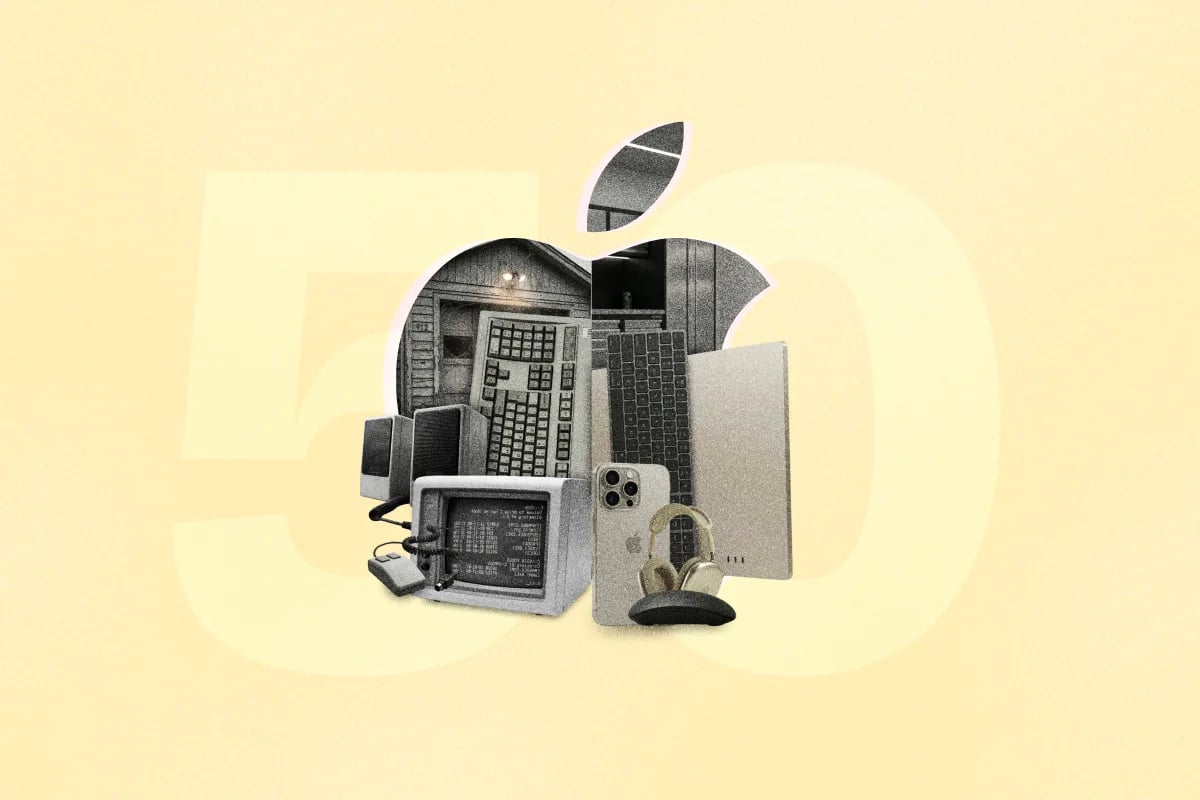
Apple reaches that mark on April 1, sitting above $3 trillion in market capitalisation, with an installed base of over 2.5 billion active devices and a services business generating nearly $100 billion a year.
Last year, Eddy Cue, the man who runs that services division, said during testimony in a U.S. antitrust case that artificial intelligence could make the iPhone irrelevant within a decade. The comment moved through the news cycle and disappeared. That is the more honest place to start thinking about what this anniversary actually means.

How fifty years becomes a system
The version of Apple’s history that gets told most often is a product story: the Apple II, the Mac, the iPod, the iPhone. A line of objects that kept redefining what people thought technology could feel like, narrated by a founder whose aesthetic instincts often looked like a kind of prophecy.
That story is true, and also incomplete. What Apple built over fifty years is less a sequence of products than an architecture. The iPhone was not the destination. It was the door into something larger.
Once enough people had walked through it, Apple built an App Store on the other side, a controlled marketplace through which hundreds of billions of dollars in economic activity now flow each year. It is where developers build, where competitors distribute, and where every company running in the most consequential technology race of this decade has to pay Apple a cut just to reach the people on the other side of the glass.
That structure is easiest to see now, in the current AI cycle.
Apple collected nearly $900 million in App Store fees from AI apps alone in 2025, with ChatGPT accounting for roughly three quarters of that figure, and is on pace to cross $1 billion this year. It has done so without building a competitive frontier model, without winning anything in the AI race, and simply by being the platform through which people access the companies that are.
Which is what makes the next phase harder to read. Apple is no longer trying to win the race in the usual sense. It is already embedded in how the race reaches people.
Jobs built the door. Cook built the business behind it
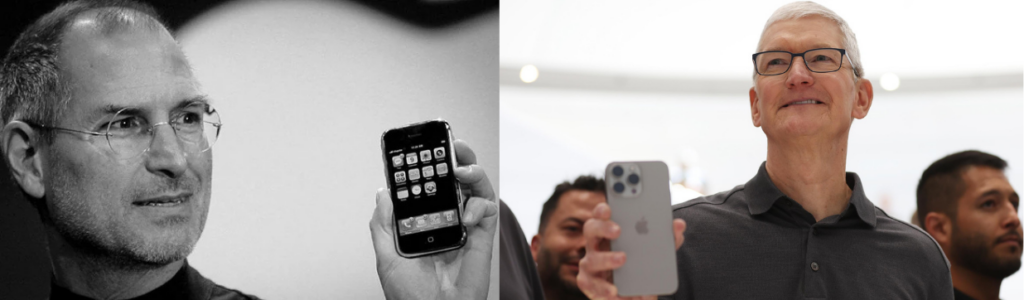
Making sense of Apple’s position today means sitting with one of the most instructive CEO succession in corporate history, because Steve Jobs and Tim Cook were not just similar leaders running the same company across different eras. They were different people shaping different phases of the same idea. Jobs was a product man who built things people wanted to hold, treating the resulting platform as a mere byproduct of compelling hardware. His successor, however, understood Apple as a sovereign ecosystem and spent more than a decade building a business on top of it.
When the leadership changed in 2011, Apple’s market capitalisation was roughly $350 billion. Today, it sits above $3 trillion. The engine behind that climb is not the iPhone alone, but a $96 billion services business—a massive architecture of iCloud, Apple Music, and licensing fees constructed quietly inside a hardware company. These segments grow faster than the devices themselves and carry significantly higher margins, a shift that happened for years without most people fully registering what was being built.
The mechanism is straightforward enough once you see it. Switching away from Apple is not contractually difficult; it is psychologically expensive, because a decade of photos, messages, passwords and subscriptions accumulates inside the ecosystem in ways that make leaving feel more disruptive than it is worth. Apple’s chief executive recognised this dynamic early, turning a $96 billion revenue stream into a triumph of patient architecture rather than product development.
Jobs built the entry point. The current era has been defined by building everything that happens after you walk through it. What neither leader fully solved is what happens if the door itself stops being the one people want to use, which is precisely what Cue was pointing at, and the exact vulnerability the next fifty years will begin to test.
What experimenting costs at this size
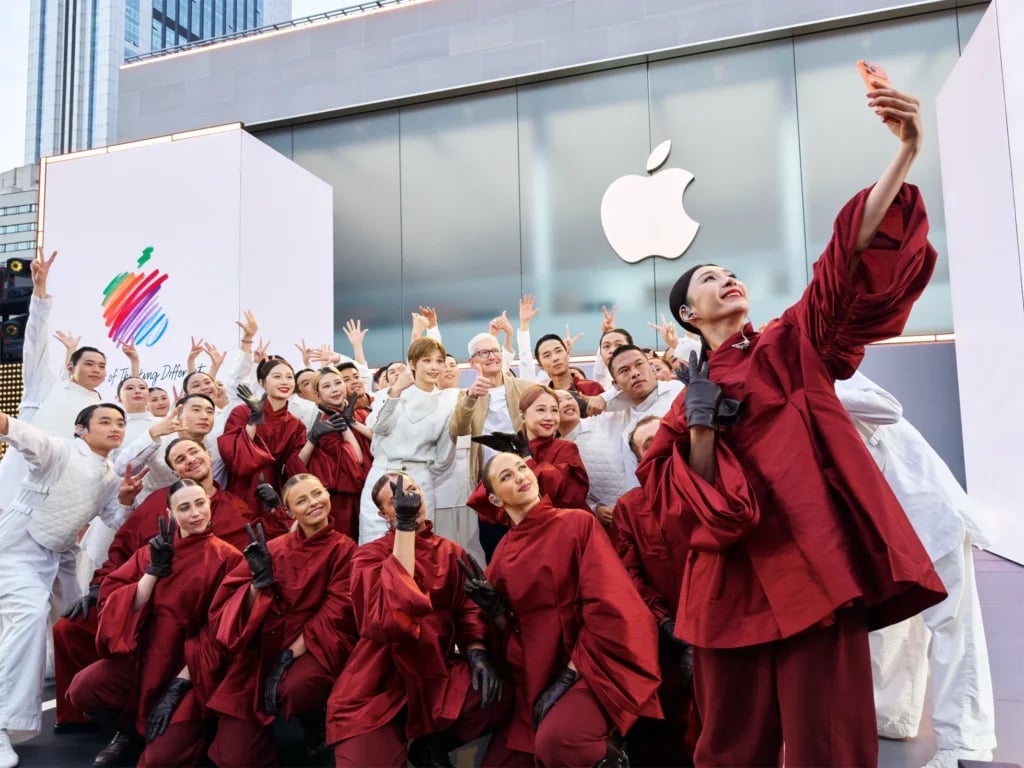
Fewer than 500,000 people bought the Apple Vision Pro in over two years, and by mid-2024, Apple had quietly stopped ordering a second round of components because the sales rate meant it already had years of supply on hand. The easy reading of that is a bad product decision, but the more revealing reading is what it demonstrates about what experimentation costs inside a company of Apple’s scale.
Every product Apple ships is a signal to financial markets, a test of the brand, and a commitment of engineering resources running into the billions before a single unit reaches a customer, which means the margin for failure has narrowed in direct proportion to how large and important Apple has become.
The Vision Pro was Apple attempting to do what it has always done, pioneer a new form factor before the market existed for it, under conditions that make that kind of pioneering structurally punishing in ways it never was in a garage in Los Altos. Fifty years of success does not make a company more willing to fail. It makes failure more expensive, more visible, and more difficult to absorb without it becoming a narrative about decline rather than a necessary cost of trying something new.
Two dependencies, one balance sheet
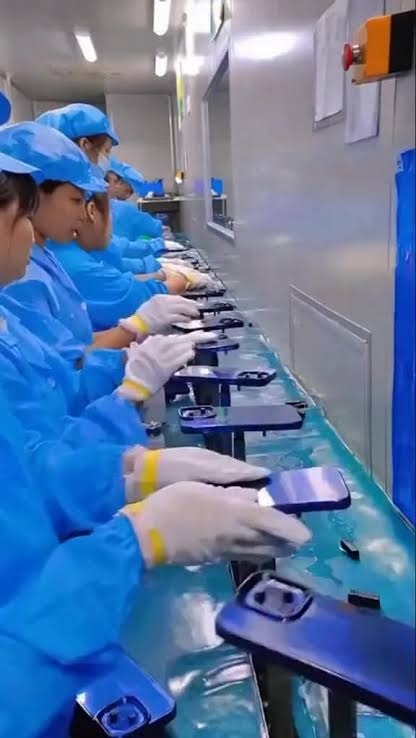
The manufacturing version of this problem is the most visible, defined by the distance between what Jobs called impossible in 2011 and what Cook is now forced to attempt. When Jobs told President Obama that those jobs “weren’t coming back,” he was being precise about the sheer density of the Chinese supply chain.
A decade ago, the math was insurmountable; estimates suggested a fully American-made iPhone would cost $3,500, with labour alone accounting for a $200-per-device premium. Yet today, Cook stands in the White House announcing a $500 billion investment in domestic manufacturing, shipping Mac Minis from Houston and AI servers from Texas. It is a measure of how much the geopolitical world has changed around Apple, even as the underlying dependency remains stubbornly fixed.
Despite the domestic pivot, 9 out of 10 iPhones still emerge from China, leaving the company carrying the largest tariff exposure in American tech while the supply chain roots remain as deep as they were when Jobs said extraction was unrealistic.
This physical tether to the past is mirrored by a software dependency that is less reported but perhaps more revealing. In January 2026, the irony of Apple’s position became undeniable when it confirmed that Google’s Gemini would power the next version of Siri. For years, Google paid billions to be the default search engine—a deal now under legal fire—but now the relationship has inverted: the company that once displaced Microsoft by making computing feel personal is relying on its most capable AI competitor to make its own products work.
This reliance signals a deeper friction within the cathedral Cook built. With the departure of its top AI executive and the delay of the 2026 Siri upgrade, the product layer is visibly struggling to keep pace with the world outside. Meanwhile, the App Store, the $30 billion engine of the services business, is being challenged in courts on three continents simultaneously.
None of these cracks are individually fatal, but together they describe a company whose platform is strong enough to keep collecting its fee even as the innovation that justified that fee begins to stall.
What the second fifty years asks
For five decades, Apple’s had a shape that was easy to trace in retrospect. They built the Mac, the iPod, and the iPhone by betting that the world would eventually show up where they were standing. They were willing to be wrong in public until the rest of us caught up. But that kind of radical freedom is exactly what makes Cue’s admission so uncomfortable to sit with on an anniversary like this one.
The installed base of 2.5 billion active devices and the record-breaking margins are all real. The services revenue too. Yet all of this rests on a single, ageing assumption: that the iPhone will remain the sun that the digital world revolves around. For the first time in a decade, that assumption is being tested.
At fifty, Apple’s not struggling in any conventional sense. It is navigating the gravity of its own success and the difficulty of building a new door when the one you already have is still the most valuable door in the world.
Get passive updates on African tech & startups
View and choose the stories to interact with on our WhatsApp Channel
ExploreLast updated: March 24, 2026


