




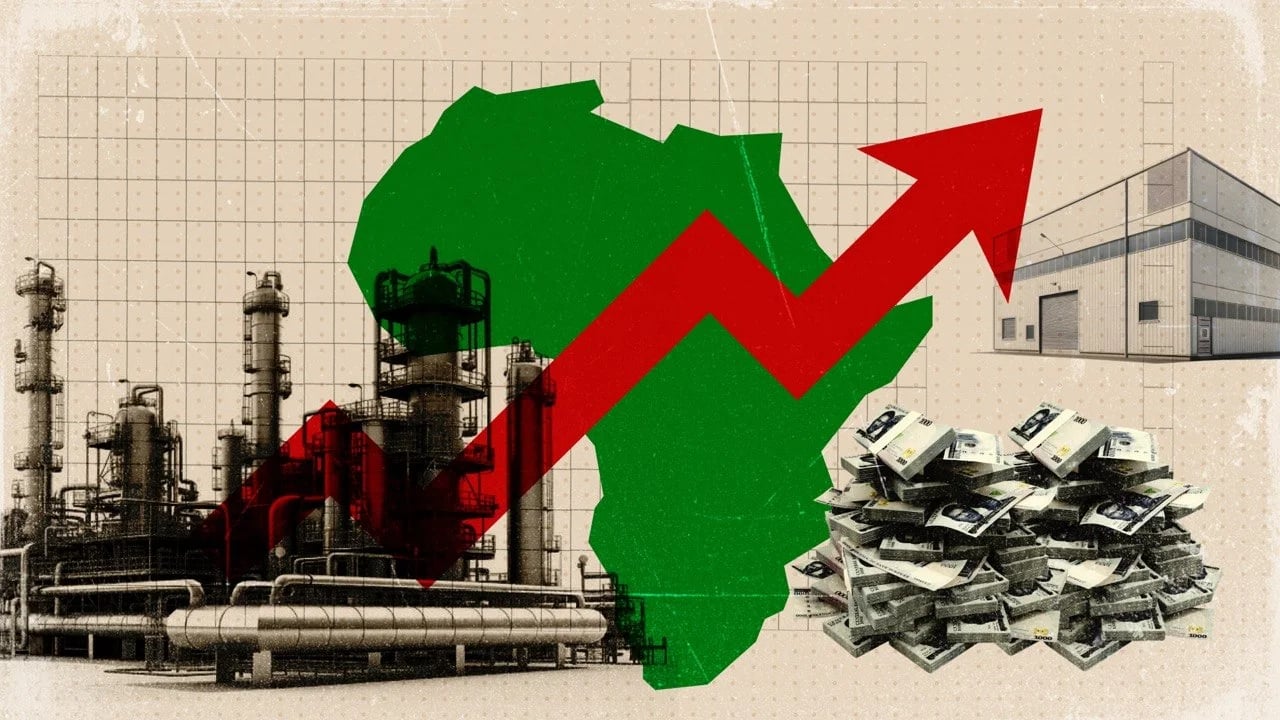
In 2021, African startups raised capital largely through equity, and fintech absorbed a disproportionate share of it. Venture investors were underwriting scale first and asking hard questions later. By 2025, that posture had changed. More than $1 billion flowed through non-equity instruments last year, with debt financing alone reaching about $1.6 billion, the highest level recorded on the continent. At the same time, cleantech surpassed fintech in total capital raised, reflecting a growing preference for businesses tied to energy, logistics and other essential infrastructure.
That change points to something deeper than sector rotation. Investors are still deploying capital, but they are doing so with greater attention to structure, currency exposure, and cash flow durability.
Kanessa Muluneh, founder of the investment firm Nyle, operates within this adjusted landscape. Her approach to deploying capital offers a concrete example of how investors are navigating this cycle.
Pricing the convertibility risk
For an investor wiring capital into Nigeria or Egypt, the central risk is often not the startup’s burn rate but convertibility. While the legal framework guarantees the right to repatriate profits and capital, foreign exchange liquidity has at times made that process uneven. Aviation and manufacturing firms in Nigeria have reported sizable backlogs of unrepatriated earnings in recent years, underscoring how quickly access to dollars can tighten.
Exchange-rate dynamics add another layer. During periods of stress, the spread between official and parallel markets has widened enough to impose a material cost on foreign inflows. Even where recent reforms have narrowed that gap, underwriting still accounts for the possibility that capital converted today may not retain equivalent value tomorrow. A $1 million transfer may land intact, but its effective purchasing power depends on how and when it is deployed, and how easily proceeds can move back out.
“We don’t send a lump sum into a local account and hope for the best,” Muluneh told Condia. “Capital goes out when it’s needed, and it goes directly to where it’s needed.”
In practice, funds are released in phases tied to specific operational requirements. Equipment sourced from Shanghai or software licensed from San Francisco is paid for directly from offshore accounts in dollars or euros, rather than converted locally and left exposed in a naira or pound balance.
The rationale is straightforward: limit exposure to currency volatility and reduce the risk of capital being caught in FX bottlenecks. In a funding cycle that has tilted toward structured and non-equity instruments, this deployment model reflects a wider preference for control and sequencing. Founders secure what they need to operate, and investors determine precisely when currency risk enters the equation.
Trust is not a strategy for private capital
For years, much of the capital flowing into African ventures, especially from the diaspora, moved through informal networks. Remittances into Sub-Saharan Africa have long exceeded foreign direct investment, yet most of that money has gone to consumption or loosely structured projects rather than regulated investment vehicles. In markets where ownership disclosure was inconsistent and enforcement uneven, personal trust often replaced formal verification.
Recent reforms are changing that. Nigeria’s corporate law now requires disclosure of beneficial owners through a central register, part of a wider push to formalise transparency. But public registries are still maturing, and paperwork alone does not eliminate risk.
Muluneh builds around that gap. Her firm runs standard financial and legal checks, then adds what she calls “backdoor due diligence” to verify reputation, political exposure and operating history through independent local networks. “Documents show compliance,” she says. “We still need to confirm how the business actually runs.” The approach reflects a broader shift toward structured oversight rather than relationship-based investing.
The limits of consumer-driven scale
Capital is not retreating from consumer retail and soft tech out of pessimism. It is retreating because visibility has narrowed. In a cycle where debt financing has risen sharply and investors are underwriting against cash flow rather than projected scale, the inability to forecast margins has become a structural constraint.
Muluneh describes African retail as fundamentally informal in its pricing mechanics. Prices are often negotiated at each layer of the supply chain rather than anchored in fixed supply contracts, which means gross margins shift with bargaining power, currency swings and seasonality. For institutional capital, that instability is difficult to model. If today’s input cost is fluid, projecting a three-year return becomes uncertain.
The broader funding shift reinforces this caution. As structured debt and non-equity instruments gain ground, capital is moving toward businesses with clearer revenue visibility. Retail, particularly in fragmented informal markets, struggles to offer that clarity.
Saturated consumer tech faces a related but distinct strain. Building a product is cheaper than it was five years ago. Scaling it to institutional standards is not. Senior engineering talent, compliance infrastructure and cross-border regulatory requirements impose costs that compress margins early. In fintech especially, heavier oversight across major markets has raised the operational floor. When those costs meet currency volatility and import competition in consumer goods, the path to profitability tightens further.
By contrast, infrastructure and healthcare operate on a different demand base. As Muluneh puts it, “Businesses pay for power because they must operate. Patients pay for medicine because the alternative is not viable.” That does not eliminate risk, but it creates a revenue floor that investors can model with far greater confidence.
In the current funding climate, that difference carries weight.
Human capital as the next infrastructure
If 2025 was about financing the grid, the next decade will be about sustaining the people who rely on it. Muluneh sees healthcare as the most durable allocation in that shift. “A parent will stop eating before they stop paying for a sick child’s medicine,” she says. The point is not rhetorical. Health spending behaves differently from other household categories. Even during currency shocks, families absorb rising costs rather than defer care.
That resilience sits against a structural weakness. Across Africa, roughly 70 to 90% of medicines are imported. In Nigeria, local production has historically covered only about a quarter of demand. The rest is exposed to exchange-rate volatility, freight costs and external supply cycles. When currencies weaken, drug prices move almost immediately.
For Muluneh, this is less about healthcare delivery and more about economic continuity. Energy and logistics move goods; pharmaceutical supply chains keep the workforce functioning. In many cities, the pharmacy already serves as the first point of care because hospitals are costly and access is uneven. That makes the pharmacy the most critical node in the value chain.
The investment case, then, sits upstream in local manufacturing and distribution systems that reduce import dependence and cushion currency risk. With the continent’s working-age population set to surge by 2030, healthcare stops being social policy and becomes economic infrastructure. A productive workforce is not a given; it has to be financed.
Get passive updates on African tech & startups
View and choose the stories to interact with on our WhatsApp Channel
ExploreLast updated: February 26, 2026


