



Across Africa’s growing creator economy, the challenge is no longer just building an audience. The harder part is getting paid.
Many creators earn income from platforms and clients outside their home countries, yet the financial systems that move those payments into local bank accounts remain slow, expensive, or unpredictable. That friction is pushing a growing number of creators toward stablecoins—digital tokens pegged to major currencies like the U.S. dollar—not out of belief in crypto, but because they move money faster.
The shift reflects a wider trend already underway across the continent. Stablecoins now account for a large share of digital-asset transactions in Sub-Saharan Africa, where users are adopting them primarily for payments and cross-border transfers rather than trading.
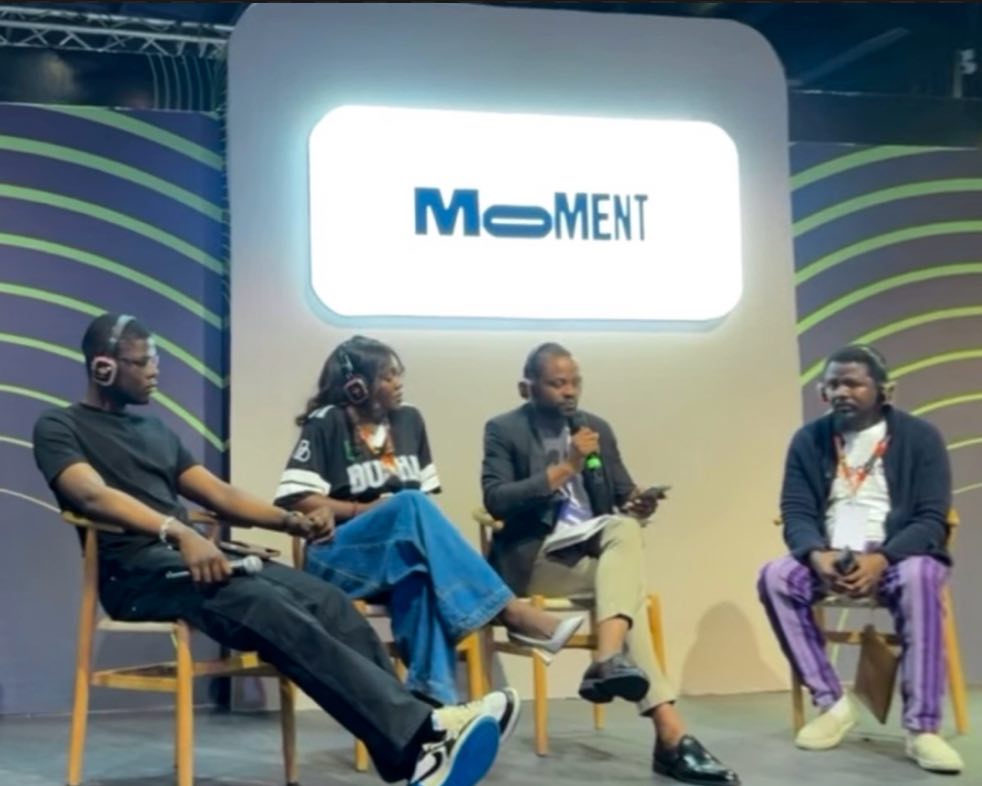
Those dynamics framed a discussion at “Beyond Banks: How Digital Assets are Powering the Next Generation of African Creators,” a panel held during Mainstack’s Moment 2026 event in Lagos. Speakers included Jeremiah Mayowa, CEO of Jeriod; Ngozi Okonye, Head of Brand and Communications at Busha; and Hakeem Oriola, Chief Technology Officer at Kredete.
“Stablecoins have made it possible for creators to earn in different currencies and use Jeriod to swap back to naira,” Mayowa said.
For creators earning from overseas audiences, the appeal is practical. Stablecoin transfers can settle within minutes, while traditional international payments may take several days and carry multiple conversion fees.
Yet the panel made one point clear: digital assets are not replacing banks.
What is emerging instead is a hybrid payment stack. Stablecoins handle the movement of money across borders quickly, while banks remain essential for settlement, compliance, and converting funds into usable local currency.
That hybrid model is beginning to define how global income flows into Africa’s digital economy.
The shift is happening at a moment when the continent’s creator industry is expanding rapidly. Nigeria’s creator economy alone is valued at about $3.1 billion and could grow several times larger this decade.
As that ecosystem grows, the infrastructure that moves money between global platforms and African creators is becoming just as important as the platforms themselves.
Oriola argued that regulatory clarity will also shape how these systems evolve.
“The Genius Act is helping fintechs build compliance, so now you get paid without even understanding the crux of it all,” he said.
His comment reflects a broader shift in financial technology: the complexity of payments is moving deeper into the infrastructure layer, while the user experience becomes simpler.
In that model, creators do not need to understand blockchain networks or foreign-exchange mechanics. They simply receive earnings and convert them into local currency when needed.
Still, the panellists warned that access to new financial tools does not remove the need for caution.
“Do your own research,” Okonye said.
Oriola added that many Nigerians overlook the terms attached to financial platforms.
“Nigerians should learn to read the policies and the fine print,” he said, pointing to refund rules and platform conditions that often go unnoticed.
Those warnings highlight a key tension in Africa’s digital finance boom. Payment tools are evolving rapidly, while financial literacy is still catching up.
What the discussion ultimately showed is that creators are not chasing crypto trends. They are responding to a basic problem: how to receive global payments quickly and use them locally without friction.
Stablecoins offer one answer to that problem. Banks, meanwhile, remain essential to the system’s trust and regulation.
The future of creator payments in Africa may not belong entirely to either one. Instead, it is likely to be built on both.
Get passive updates on African tech & startups
View and choose the stories to interact with on our WhatsApp Channel
ExploreLast updated: March 15, 2026


