



2025 marked a significant course correction for the African tech ecosystem. It also came with the popular mantra of a return to unit economics. The collapses were few and far between, demonstrating an ecosystem maturity from 2023. The mergers were quick and hastily done, even though the figures were not conveniently disclosed.
Condia spoke to 17 leaders in the ecosystem about the year–wisdom they gained from hardship, and visions that are still as clear as day, even through uncertainty.
As we round up 2025, here are their predictions of what the ecosystem will be in 2026.
“2026 will be the year of consolidation” – Segun Cole, CEO, Maasai VC:

The M&A Wave: 2026 will be the year of consolidation. Well-capitalised “African Giants” (Moniepoint, OPay, Interswitch) will aggressively acquire smaller startups that have product-market fit but lack the runway to scale solo. Nigerian startups will stop being “Nigeria-only.” Success in 2026 will be defined by revenue diversification across the CFA zone and East Africa to mitigate Naira volatility. We will see “Centaur” startups, companies hitting $100M+ in revenue with less than 100 employees, powered by deep AI integration in engineering and customer support.
“By 2026, Marketplaces, logistics, mobility, climate-adjacent infrastructure, and B2B services will regain attention”- Femi Oriowo, Carbin Africa CEO and co-founder

By 2026, African tech, especially Nigeria’s, will look leaner, more disciplined, and far less romantic than it did during the hype years.
First, capital will be scarcer but smarter. The era of large cheques for vague growth stories is effectively over. AI will stop being a buzzword and become invisible infrastructure. The winners won’t be “AI startups” per se, but companies using AI quietly to reduce costs, automate operations, and improve margins in logistics, mobility, fintech operations, customer support, and compliance.
We’ll see a return to operational businesses. Marketplaces, logistics, mobility, climate-adjacent infrastructure, and B2B services will regain attention because Africa still runs on physical systems. Software alone won’t win; software that controls or optimises real-world assets will. Regulation will tighten, not loosen.
“State-backed programs like iDICE, NSIA, will become the new engine for Nigerian startups” – Omolade Akinwumi, Co-founder & CEO, Ule Homes

The coming year will be about “disciplined optimism.” Funding is returning, but investors now favour solid numbers over fancy stories. As traditional VCs pull back from early stages, I expect state-backed programs like iDICE, NSIA, and Timbuktoo to step in, becoming the new engine for Nigerian startups. The biggest opportunities lie in Payments, Marketplaces, and Energy, areas where we still face huge gaps. At Ule Homes, we’ve seen this firsthand, and we’re proving that tech can make housing more affordable through better credit.
“Founders who learned to operate lean between 2023 – 2025 will outperform in 2026” – Mohammed Ebrahim, CEO Africa AI

After the correction years, the African tech ecosystem, particularly Nigeria, is entering a capital-disciplined phase. Funding won’t disappear, but it will concentrate around companies with real revenue, operational leverage, and regulatory clarity. Founders who learned to operate lean between 2023 – 2025 will outperform. Expect AI agents deeply embedded in fintech operations, customer support, underwriting, logistics planning, and compliance. Teams will remain smaller, senior, and output-driven. The era of large junior-heavy teams is over for most startups.
2026 will see increased consolidation with fintechs buying fintechs, infra players absorbing vertical tools, and global companies acquiring African distribution rather than building from scratch. Nigeria will still dominate deal volume and talent, but founders will be judged harshly on governance, compliance, and risk management. The ecosystem is less forgiving now. One area that has quietly become impossible to ignore is online gambling.
“2026, the year of cryptocurrency”- Bidemi Oke, CEO, FlashChange

2026 will offer the cryptocurrency and digital assets industry more structure. In the overall startup landscape, funding will continue to rebound, but it will reward discipline and practical metrics even more precisely. AI is already starting to shift from hype to margin improvement, and startups that cannot show real unit economics will struggle.
“In 2026, a more mature market will take centre stage”- Opemipo Dara, Ecosystem Builder and Venture Scout

If 2025 taught us anything, it’s that the African tech ecosystem is nimble enough to pivot in the face of global macro turbulence, yet stubbornly determined in its pursuit of problem-solving at scale. We saw funding markets recover, a sprinkling of big raises that turned heads, ongoing excitement (and anxiety) around AI automation, and the sobering reality of workforce reductions that reminded us that hype without fundamentals doesn’t pay the bills.
2026 will likely be the year fundamentals take centre stage. After the heady days of 2021–2024, when many startups raised first and learned later, 2025’s market corrections nudged founders and investors toward discipline. In 2026, I expect a more mature capital market in Africa, a reduction in dependency on donor-funded models for funders, fund of funds, enterprise support organizations and even social enterprises, but increased interest in sustainable funding models. I also expect to see a lot of experimentation and growth in smaller ecosystem hubs outside the major cities and the Big 4 African tech country hubs. There is alot of groundwork happening in places like Ilorin, Ibadan, Port Harcourt, Mombasa, Lome, Kumasi, Douala, Addis Ababa, Dakar, Pretoria, Assiut, Tangier and more. These may produce the next generation of African unicorns long before global markets notice.
“Valuations will reset in 2026” – Matthew Davis, Partner and CEO at Renew Capital

Looking ahead to 2026, I expect a more disciplined ecosystem: valuations continuing to reset, capital becoming more selective, and founders focusing earlier on real business fundamentals. I’m cautious on venture debt – used well, it can help, used poorly, it can hurt – and I’m hopeful we’ll see more local investing (from angels and local funds).
“Cross-Border settlement will create more interoperability but also higher compliance bars for SME fintechs” – Deepankar Rustagi, CEO of OmniRetail

By 2026, many of the most important “fintechs” won’t look like banks; they will be commerce, software or distribution platforms with finance quietly built in. Globally, SME fintech is shifting from standalone lenders to “SaaS + payments + credit” bundles – think Shopify Capital, Toast, Stripe Capital, etc.
In West Africa, we’re seeing the same architecture emerge inside B2B commerce and POS networks – including what we’re building at OmniRetail: you digitise orders, payments and inventory first, and then credit becomes a natural extension of that data rather than a separate product.
As we enter the new year, I expect more solutions designed in Nigeria to export playbooks to the rest of Africa and other emerging markets – not just in payments, but in SME banking, agent networks, and B2B trade.
By 2026, “default alive” and “cash-efficient growth” will be the norm, not the exception, for African tech. Open banking, instant payment rails and regional systems like PAPSS for cross-border settlement will create more interoperability but also higher compliance bars for SME fintechs. The winners will be the companies that treat regulation as a design constraint, not an afterthought.
“Capital will be more selective, but also more patient” – Olugbeminiyi Idowu, Founder and Managing Director, Talking Drum Communications

In 2025, the water of the tech ecosystem found its proverbial level. After some regulatory tightening, funding corrections and the inevitable recalibration that followed the hype cycle, the ecosystem moved through a trough of disillusionment and emerged with a more grounded sense of what is actually possible.
In 2026, I expect this realism to translate into a healthier, more durable ecosystem. Capital will be more selective, but also more patient. Founders will be building with clearer paths to revenue, stronger unit economics and a deeper understanding of the environments they operate in.
We’ll also see fewer companies chasing abstract “African scale” narratives, and more focusing on solving very specific, high-impact problems in payments, logistics, health, energy and public infrastructure – sectors where technology is no longer a nice-to-have, but mission-critical. Regulation, while still imperfect, will increasingly be shaped through engagement rather than confrontation, as governments recognise tech as infrastructure rather than experimentation.
“2026 is predicted to see further financial unlocking for EV infrastructure, driven by bold players” – Oladimeji Timothy, Country Lead, inDrive
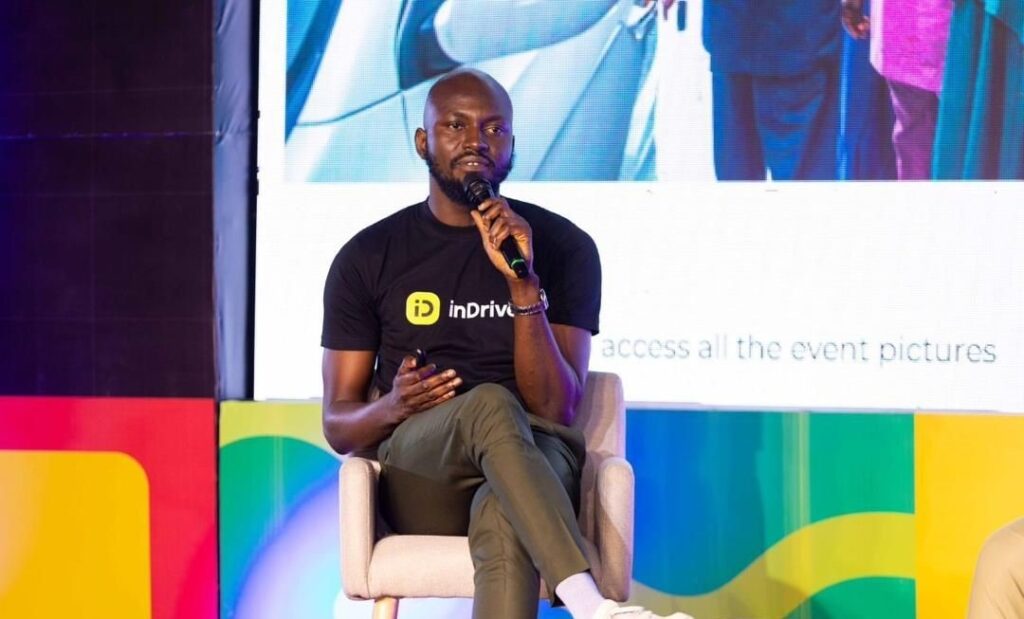
My 2025 prediction regarding a new leap in EV infrastructure has panned out. Significant investments from players like Qoray, Oando, Saglev etc have catalysed this growth, substantially increasing the number of charging stations. We are seeing a growth in the number of players eating the frog and solving the chicken or egg problem of EVs vs Charging stations. Furthermore, advancements in EV technology bringing accessible home charging is increasing access to charging rapidly. The fastest and most scalable of this innovation are the battery swap stations.
Logistics and Marketplace: The prediction that logistics companies would need marketplaces is evident in several outcomes: the successful fundraising and expansion of Chowdeck into Ghana, Dellyman’s partnership with Temu, Kwik’s partnership with Ali Baba etc. These events underscore the critical role of a marketplace in ensuring viability and growth in last-mile logistics.
2026 is predicted to see further financial unlocking for EV infrastructure, driven by bold players and more flexible banking conditions, influenced by stable macroeconomic metrics (which gets better pre-election years). This will facilitate B2B vehicle financing, a crucial step for the sector’s growth.
Growth of Dark Stores and Cloud Kitchens: The coming year is poised for a surge in dark stores and cloud kitchens, catalyzed by model change for distribution as seen by players like Chowdeck, Omnihub and so on. User preference change and population density growth will also put a strain on the logistics resources available
“2026 will be the year when we see startups reduce their marketing teams” – James Ogunjimi, Founder & CEO, Skeepy

2026 will be the year when we see startups reduce their marketing teams, not necessarily because budgets are shrinking, but because AI agents will genuinely become a regular feature in technical marketing departments. We’ll also see marketing budgets shift dramatically toward automation and data infrastructure. There will be more local AI models built for specific Nigerian contexts, and they’ll gain more acceptance than some generic global tools. With the wave of policy changes and the introduction of new policies across Nigeria, as well as foreign policies that affect Nigeria, startups focused on compliance should have a strong 2026.
“AI will no longer be treated as an experiment or a buzzword; it will sit at the core of operations across enterprise systems” – Aisha Abdulaziz, CEO of Legend Internet Plc
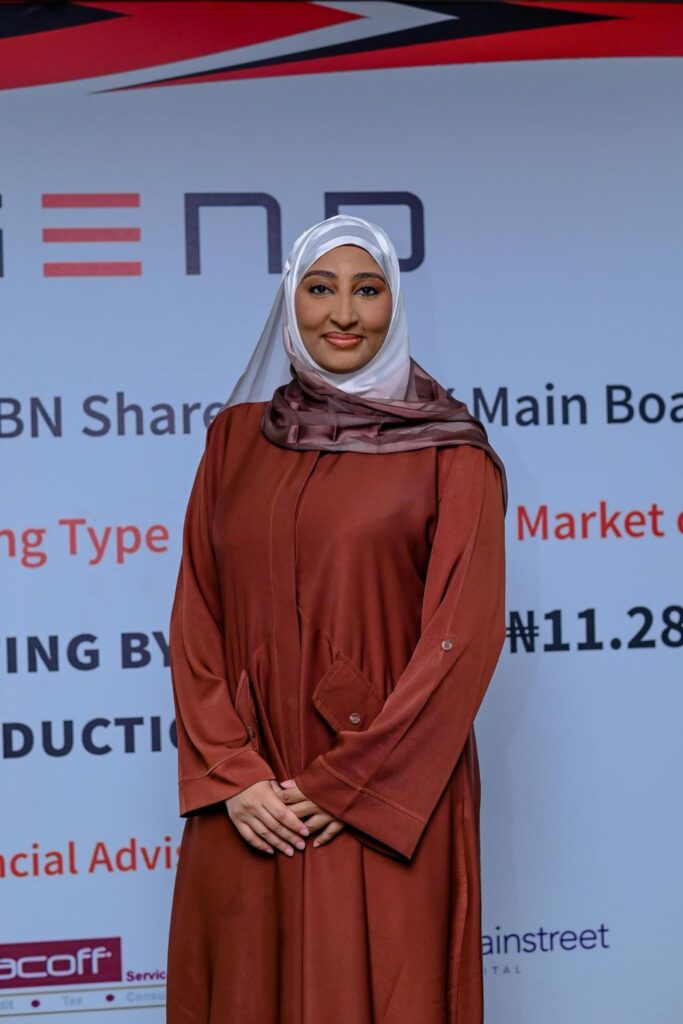
By 2026, I believe African and, particularly, Nigerian tech will be more disciplined, execution-driven, and infrastructure-led. We’re already seeing a clear shift away from growth-at-all-costs toward sustainability, strong unit economics, and real customer value.
AI will no longer be treated as an experiment or a buzzword; it will sit at the core of operations across fintech, connectivity, customer experience, and enterprise systems. I also expect more consolidation in the ecosystem—fewer startups overall, but stronger, more resilient companies. Nigeria will continue to hold its place as one of Africa’s leading innovation hubs, not by noise, but by depth and impact.
When it comes to startups to watch in 2026, they won’t necessarily be the loudest or the most heavily funded. The ones that will stand out are those solving foundational problems. AI-native companies built for local context, fintechs strengthening payments and financial infrastructure like our MailPay, and platforms enabling productivity, connectivity, and commerce at scale will lead the way. Their edge won’t be hype, it will be execution.
Ultimately, 2026 will reward founders who truly understand Africa, build with resilience in mind, and turn technology into sustainable, defensible businesses. That’s where lasting value will be created, and that’s the future I’m most excited about.
“In 2026, investors will increasingly prioritise startups with clear unit economics, revenue models, and path-to-profitability” – Kingsley Ezenwa, Head, Corporate Communications & Marketing, Bankit Africa

Investors will increasingly prioritise startups with clear unit economics, revenue models, and path-to-profitability. Gone are the days of unchecked burn; 2026 will be about capital efficiency and measurable impact.
AI adoption will deepen not just as a buzzword, but as a practical tool for fraud detection, credit scoring, personalised financial products, and conversational banking, driving better inclusivity and lower operational costs. We will witness closer alignment between regulators and innovators, particularly around digital identity, open banking, and secure data practices. This collaboration will unlock broader participation while safeguarding consumers. Nigeria, as the continent’s most populous economy and a leading tech hub, will continue to set the pace, driving innovation not just for local markets but for exportable fintech solutions across Africa and beyond.
2026 will be a year where resilience meets innovation. Africa’s tech ecosystem will advance beyond hype to value creation, driven by startups that combine technology, trust, and tangible user impact. Bankit embodies this shift—championing financial inclusion, customer empowerment, and the next phase of digital banking in Africa.
“In 2026, more startups will invest in the attention economy through video content” – Samuel Kemeshi, Founding Partner/CMO, FirstFounders

Predictions for 2026:
- Investors’ investment appetite will increase. We might see total funds raised in 2026 by Nigerian startups get closer to 2022 numbers (~$1.2Bn).
- More founders will focus on healthy and sustainable growth, prioritising lean teams with high efficiency over VC-funded scale.
- AI will become even more integrated into workflows. Team sizes will shrink as a result.
- More startups will invest in the attention economy through video content.
“2026 will be the year African edtech moves from experimentation to infrastructure” – Divine Iloh, co-founder of SabiScholar

2026 will be the year African edtech moves from experimentation to infrastructure. We’ve spent years proving that digital learning works on the continent. Now the harder question is: can it work at scale, offline, and for the students who need it most? The startups that win will be those building for Africa’s reality. This shift from “can we build it?” to “can we scale it?” will define the sector.
I also expect AI adoption to mature beyond the hype cycle. The real breakthrough will come when AI is seamlessly integrated into products that solve everyday problems. Think AI-powered diagnostic tools in rural clinics, smart tutoring systems that adapt to individual learners, or predictive logistics for last-mile delivery. The winners won’t be companies that market AI; they’ll be companies that make AI work in products.
For Nigerian tech specifically, I see funding returning, but with stricter filters. Investors are prioritising unit economics and profitability over growth metrics. Therefore, I expect to see fewer flashy announcements but stronger, more sustainable companies emerging.
“In 2026, there will be a lot of focus on compliance as tax reforms kick in” – Babatunde Akin Moses, CEO and co-founder at Sycamore

Predictions for 2026:
- A lot of focus on compliance as tax reforms kick in
- Compliance-related startups will spring up in an attempt to get people to comply
- Lots of players and consumers will play in the capital market as Dangote lists
- More startups to embrace more debt as commercial papers become more popular, and rates go down (following the steady decline in inflation)
- African startups to continue to focus on the application layer of AI as opposed to LLMs
- Open banking kicks into full swing
- More M&As, as smaller startups would be unable to raise follow-on rounds
“In 2026, the market will reward fundamentals far more than hype” – Folayemi Agusto, CEO of Tix Africa

In 2026, I expect the Nigerian and African tech ecosystem to look more disciplined and more consumer-facing.
First, the “growth at all costs” era keeps fading. The bar will be higher: clear unit economics, tight execution, predictable cash flow, and ROI-driven growth. Founders will still build ambitious companies, but the market will reward fundamentals far more than hype.
I also have a hunch we’ll see more founders building B2C again. As the rails get better, more people will take on consumer problems.
Get passive updates on African tech & startups
View and choose the stories to interact with on our WhatsApp Channel
Explore


