




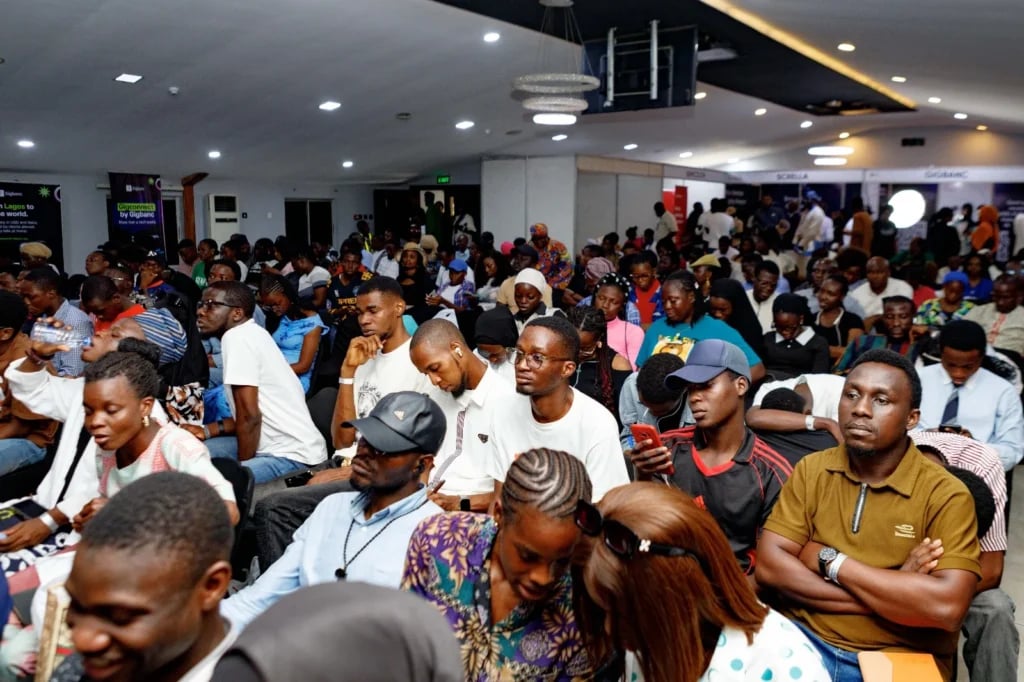
On a lively Saturday in Lagos—October 25, 2025—hundreds of freelancers, digital creators, and remote professionals gathered at Ruby Hall, Zone Tech Park, Gbagada, for the inaugural edition of Gigconnect, hosted by Nigerian fintech Gigbanc.
From registration at 10:00 a.m. to the closing photo session at 4:15 p.m., the event maintained a steady rhythm, which was part conference, part festival. Between the panels, live performances, and networking sessions, attendees described it as “a festival of digital work,” underscoring the energy surrounding Africa’s fast-rising gig economy.
Founded in 2024, Gigbanc positions itself as a financial layer for Africa’s digital workforce, offering cross-border payment solutions including multi-currency wallets, virtual dollar cards, and foreign exchange capabilities. Since launch, the platform has helped over 100,000 global talents process more than $3 million in payments, a milestone that situates it among the few fintechs intentionally focused on the continent’s gig economy.
The opening remarks by Paul Omoregie Okundaye, CEO of Gigbanc, set the tone for the day: Gigbanc’s mission is not just to help African talents access the global digital economy but to help them thrive within it. “We want to make sure every African freelancer can work globally without financial barriers,” he said.
The first panel, “Mastering Skills, Mindset, and Tools for Global Digital Success,” featured media and business leaders including Lynda Aguocha, Onyinye Anene-Nzelu, and Paul Okundaye. Their conversation explored how technical proficiency must now pair with adaptability, mindset, and strategic use of digital tools. “It’s not just about having the skill, it’s about how you position that skill,” Aguocha noted.
In the breakout session “Landing High-paying Gigs: Client Acquisition and Retention,” Habeeb Ajijola, Head of Marketing and Growth at Gigbanc, walked freelancers through the psychology of building trust in global markets. Drawing from his own experience in scaling client pipelines, he emphasised that credibility compounds faster than visibility. “Freelancers who communicate consistently, deliver quality, and manage relationships like businesses don’t just get clients, they keep them,” Ajijola said.
Later, Ashley Immanuel, Co-founder and COO of Semicolon, delivered a keynote titled “Building Africa’s Digital Workforce: The Real Catalyst for Economic Growth and Global Competitiveness.” She emphasised that remote digital jobs are not a stopgap for unemployment but a long-term growth engine for the continent. “The more Africa produces digitally skilled professionals, the more leverage we create in the global economy,” she said.
Another highlight of the day was the panel on “How African Talents Can Thrive and Compete Globally.” Speakers Babatope Oni (Gigbanc), Daud Sulaimon Abiola (Skill Afrika), and Adebola ‘Rez’ Afolabi (Soft-Thread) underscored the importance of consistency, visibility, and excellence. “Build a reputation of delivering quality,” Afolabi said. “Opportunities will come from those who have experienced your work.”
In a lighter but equally competitive segment, freelancers participated in the Gig Hustle Challenge, a 60-second live pitch where participants showcased their skills to the audience. The challenge embodied the day’s theme—boldness, value, and speed—as contestants demonstrated how they sell themselves in a global freelance marketplace.
There were also performances by Kold AF and Tonie the Emperor, who provided musical interludes that complemented the event’s celebratory mood.
Beyond the programming, Gigconnect was more than a day out, it was a strategic statement. It signalled the emergence of a structured ecosystem for Africa’s gig economy, where fintech, talent, and community intersect. Gigbanc’s leadership sees the platform as part of the necessary infrastructure for freelancers to build sustainable, cross-border careers complete with access to global payments, financial literacy, and professional visibility.
For many attendees, the takeaway was clear: success in the global freelance economy depends on more than skill. Mindset, communication, branding, and network are equally critical. In an era where African professionals increasingly compete globally, platforms like Gigbanc are closing the infrastructure gap that once limited participation.
The company also used the event to preview upcoming features—Gigbanc for Business, gamified savings, and cashback on bill payments—hinting at a roadmap that blends finance with community and engagement.
As the crowd dispersed after the final group photo, the consensus was that Gigconnect had done something rare: turned an abstract idea—the future of digital work in Africa—into a tangible experience. In a continent where the opportunity cost of talent continues to rise, and where remote work increasingly defines the middle class, events like Gigconnect are not just gatherings, they are ecosystem builders.
Last updated: November 5, 2025


